2 months ago
80
2 months ago
80
My earliest reading memory
The Cat in the Hat by Dr Seuss, particularly the little red fan the cat holds in the tip of its tail. At the age of five, I was reading The Famous Five, getting to grips with Enid Blyton’s most complex characters, Aunt Fanny and Uncle Quentin. I was born in apartheid South Africa. The children in the Famous Five series had no human rights problems and it is set in Dorset, a landscape that was totally unknown to me. My bedroom window in Johannesburg looked out on a garden of bone-white grass and a peach tree.
My favourite book growing up
I was delighted to move on to the imaginative sophistication of The Lion, the Witch and the Wardrobe. CS Lewis’s lucky strike was to come up with the idea that a wardrobe was the portal to another world. Although she terrified me, I wanted to meet the White Witch, who rode on a sleigh pulled by white reindeer.
The book that changed me as a teenager
Chéri by Colette. For the sex and sadness about ageing and desire, which I didn’t quite understand aged 14, and because it was set in France, which I had never visited. It was unusual to read a novel in which the male character’s only power in life is his beauty. I read it on the bus to school when I was supposed to be reading John Keats’s Ode on a Grecian Urn.
The writer who changed my mind
Around my 40s it seemed to me that the late great JG Ballard had found an intellectually entertaining way to air his preoccupations and obsessions in his later fiction. A novel such as Cocaine Nights features a charismatic, tanned tennis coach with perfect white teeth, working at a Mediterranean resort for expats. He is really a psychopath, yet people seem to like him and would even vote for him if they had the chance. I could see this was a beguiling social and psychological critique disguised as a beach novel. It changed my mind about how to proceed with some of my own writerly preoccupations, a few of which feature beaches and swimming pools.
The books that made me want to be a writer
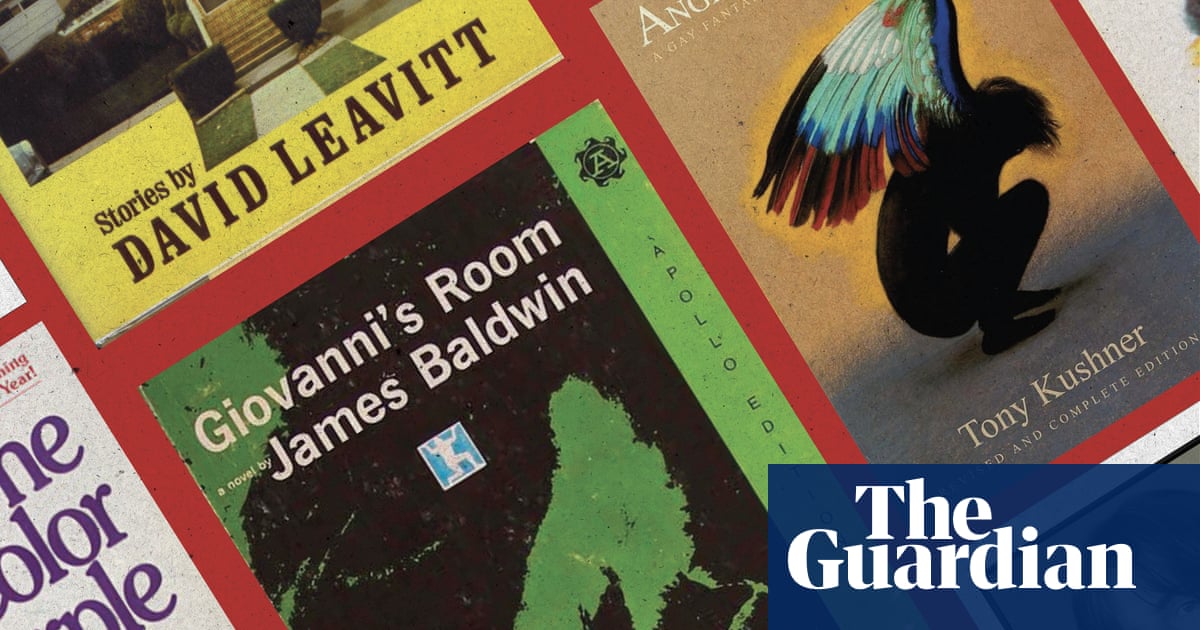
James Baldwin’s Giovanni’s Room and The Lover by Marguerite Duras remain the defining texts that steer my own writing. Why? The depth charge of the prose, its beauty and pain, plenty of wit and high emotion.
The book or author I came back to
I tend not to revisit books I totally could not get on with. We just have nothing to say to each other.
The book I reread
I return to Gaston Bachelard’s The Poetics of Space. His philosophical reflections on attics, cellars, corridors, nooks and crannies, doors and corners are always surprising and inspiring.
The book I discovered later in life
It would really be the book I rediscovered when I was writing my living autobiographies. I Know Why the Caged Bird Sings by Maya Angelou brings to life her childhood with her formidable grandmother in the brutal, racist American south of the 1930s. The massive blast of Angelou’s writing voice cuts through more conventional autobiographies: its truth, power, historical reach, her skilful lift from life into literature.
The book I am currently reading
Butter by Asako Yuzuki, a subversive 2017 novel about escaping from everyday misogyny. I love the scene in which the narrator, after enduring a day being undermined at work and a night of bad sex, slips out of her boyfriend’s bed at 2am to find a place that will serve her consoling noodles. With butter, of course.