3 months ago
134
3 months ago
134
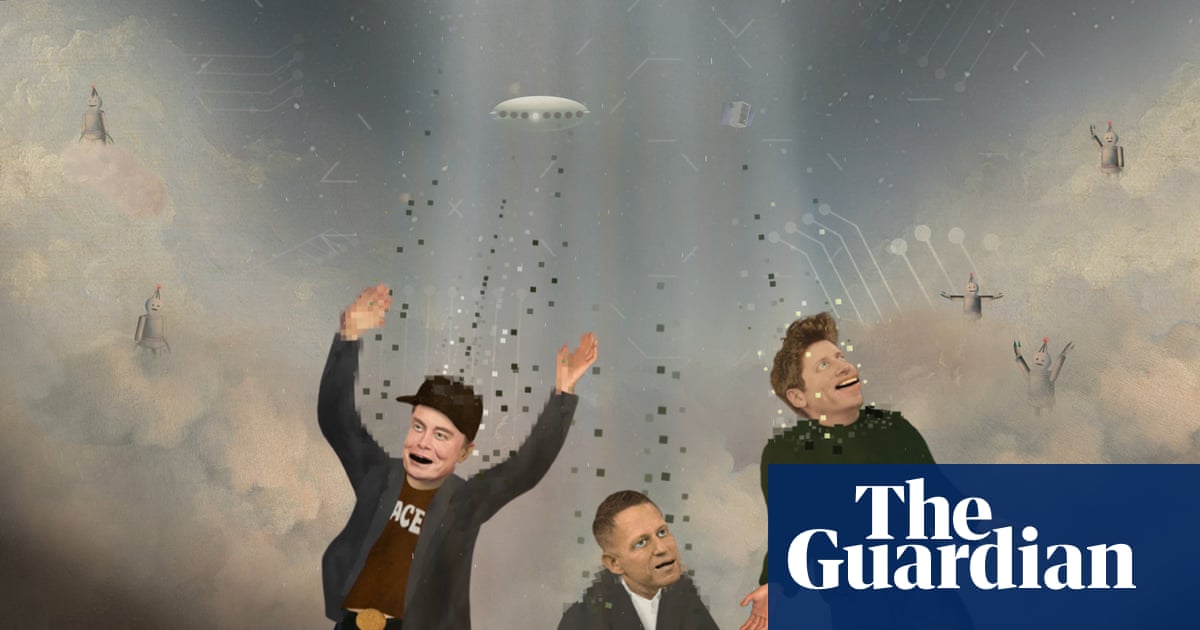
Earlier this year, a group of film-makers, commercial directors and AI industry influencers gathered in New York City for the Runway AI Summit – a daylong hype-fest, trumping up the potential of this new technology. During one talk, Rob Wrubel, co-founder and managing partner at San Francisco ad firm Silverside, talked up his work on the Coca-Cola company’s AI-generated 2025 Holiday Caravan ad. “What’s incredible about AI,” Wrubel said, “is that you can go from script to production is just two weeks!”
What Wrubel failed to mention was that the ad – with its computerized polar bears and fake-looking trundling delivery trucks – was widely despised by pretty much anyone who saw it. Indeed, the public distaste for the campaign became its own news story, spawning headlines like “People really don’t like Coke’s AI holiday commercial” and “Coca-Cola’s New AI Holiday Ad is a Sloppy Eyesore”. It may indeed have been quickly conceived – and it looked like it. Reached for comment about the backlash, Wrubel admits: “The conversation around the ad became almost as important as the ad itself because it surfaced questions the entire creative industry is wrestling with right now.”
Plenty of artists and creative-types have been sounding the anti-AI alarm lately. Thousands have signed open letters opposing infringement on their creative work, and copyrights. Major pop singers are announcing concerts with hand-scrawled notes posted on social media. Some have filed lawsuits against AI companies training off their work.
Now that spirit of rejection seems to be coalescing into its own design aesthetic – a move towards the conspicuously handmade, the janky, even the primitive. Call it “anti-slop”.
Where AI slop is slick and uncanny, anti-slop celebrates a more homespun feeling.
It’s present in the work of photographer and designer Michael Schmelling. Schmelling has designed photo books for the Rolling Stones, album art for singer Sharon Van Etten and recently a suite of covers for the novels of acclaimed Chilean novelist Roberto Bolaño, reissued by publisher Picador. These covers have a crude, scribbly, doodle-in-the-margins-of-a-high-school-notebook quality. They look like basement punk show posters or tattoo flash sheets (indeed, they were designed in collaboration with tattooist Mike Adams). They are even a little sloppy – but again, thoughtfully so. (This didn’t stop haters in the harshly critical annals of “lit twitter” from decrying them as “terrible”, “a shade too twee”, and, somehow, even “woke”.) But perhaps that’s the point – AI would never.
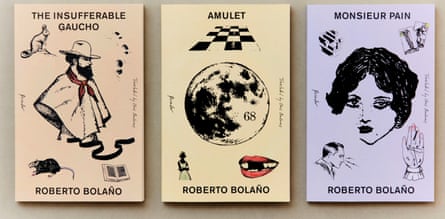
While Schmelling maintains that these designs weren’t deliberately devised as an affront to the increasingly dominant aesthetic language of AI, he does see a reaction taking place. “This AI stuff has just been rammed down our throats,” he says. “AI is everywhere. And all of a sudden there’s a backlash.”
“From a creative standpoint, AI is made off the backs of other people’s labor, and other people get rich off it,” he adds. “I’m totally opposed to that side of it.” Schmelling was recently commissioned to do some brand work, and asked if they could train their AI on illustrations they commissioned from him. He turned down the offer – “vehemently”.
Another creative endeavor being celebrated for its anti-slop credentials is Stoopid Buddy Stoodios’ Green Bay Packers video.
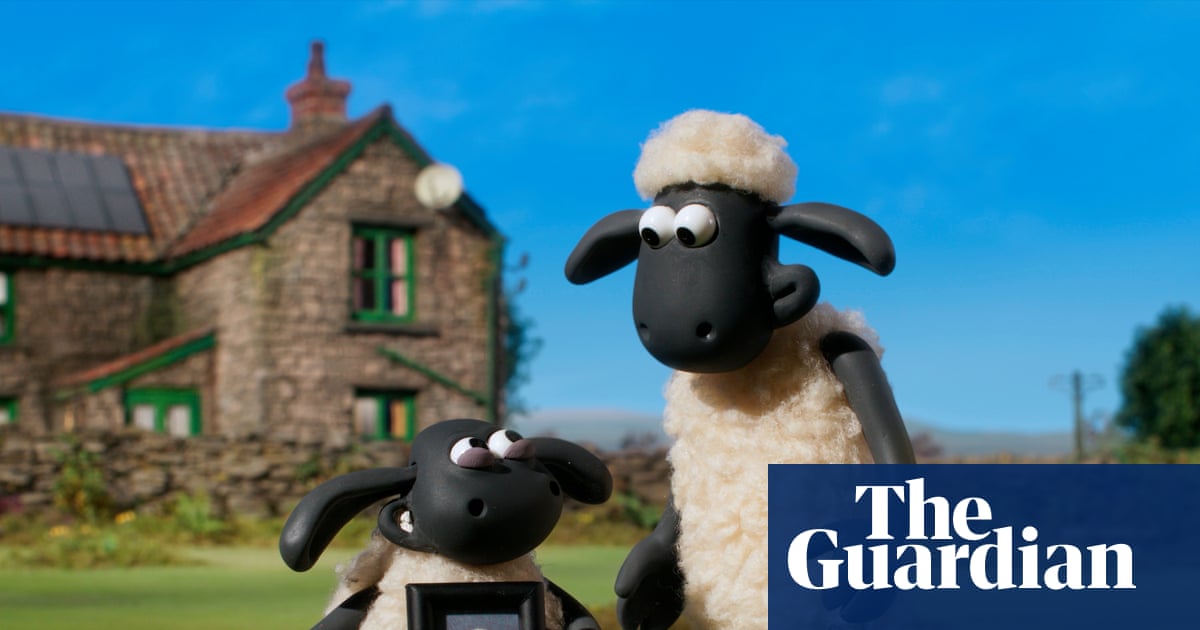
The spot featured the team’s marquee stars – Jordan Love, Tucker Kraft, Micah Parsons – rendered as 1980s-style action figures, battling anthropomorphic cheese curds in a old-school strip mall arcade. Conceived and produced by the Emmy-winning team behind the long-running animated comedy show Robot Chicken, the video was painstakingly stop-motion animated, like an old Gumby cartoon.
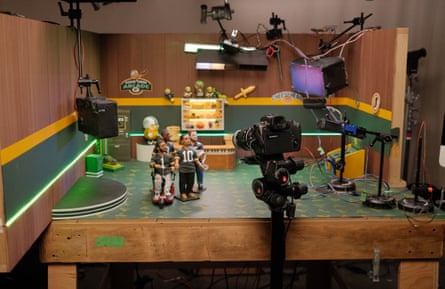
“We do everything here by hand,” says Stoopid Buddy co-founder John Harvatine IV. “The way the team responded, and the fans responded, was really encouraging.” In addition to the video itself, Green Bay’s social media team posted a behind-the-scenes making-of video, and sniped: “Your AI slop bores us.” (The comment may have been a bit of shade thrown at the NFL’s Arizona Cardinals, whose own schedule release video made extensive use of AI images.)
Harvatine maintains that Stoopid Buddy doesn’t have some hardline anti-AI politics and the studio uses some AI digital tools in their production process. But as he puts it: “When you get down to the creative process and what would be a fun story to tell, why would you want to just prompt that, and let something else spit out that story? We take that feeling through the whole process of making the props and the sets. We want to put ourselves in it.”
The present ascendancy of AI calls to mind another revolution in art and design: the arrival of mass-market photography in the late 19th century. As cameras popularized photorealistic images, painters and artists were forced – or, perhaps, freed – to move past realism as a standard. Impressionism, surrealism, cubism and countless other disciplines arose to reinterpret a reality that photographyseemed better equipped to merely depict. The surging sophistication and hyperrealism of AI-generated images may offer artists, designers and animators similar opportunities to create work that feels a little more bespoke, DIY and altogether more human.
At least – that’s the hope. Schmelling is a little more cynical. He’s anticipating a “backlash to the backlash”, in which some technologists, artists and the general public double-down on AI enthusiasm. He compares it to earlier conversations around programs such as Photoshop, which made it easy for artists and designers to touch up perceived imperfections. In turn, more analog-oriented artists began advertising their work with a big struck-through “PS” graphic. “Those conversations almost seem quaint now,” he says. “Everything comes out of our iPhone retouched.”