3 months ago
121
3 months ago
121
Introduction: Asian stocks fall as Iran and US exchange fire
Asian stocks have fallen sharply after Iran and the US exchanged their biggest round of fire since a ceasefire was agreed in April.
The US launched strikes against Iran after Donald Trump blamed Tehran for downing a US army helicopter near the strait of Hormuz.
The attacks triggered a wave of retaliatory strikes from Iran on Wednesday morning, with Tehran saying it had targeted Kuwait, Bahrain and Jordan.
Japan’s Nikkei index dropped 2%, while the tech-heavy South Korean Kospi slumped by about 6% – although it is still up by more than 70% in the year to date.
However, oil prices have actually fallen a bit this morning, with Brent crude – the international benchmark – down 0.2% to $91.28 a barrel.
Jim Reid at Deutsche Bank suggests that while investors are preoccupied with the conflict in the Middle East, “markets are also swinging between 1999-style AI exuberance and 2000-type tech crash fears.”
On the former, Brent briefly fell below $90 for the first time since April 17th yesterday before partially rebounding after Trump vowed retaliation following Iran shooting down a US helicopter. On the latter, the Philly Semiconductor Index fell by as much as -8.62% intra-day before recovering to -1.93% by the close.
European stock markets also look like they are poised for a muted start at the open today: futures for the FTSE 100 are pointing to just a 0.1% fall, while EuroStoxx 50 futures are down 0.1%.
Elsewhere this morning, new figures out of China show its factory gate prices rose at the fastest rate in four years, amid a sharp rise in energy prices triggered by the war in Iran.
The producer price index (PPI) rose 3.9% in May from a year earlier, National Bureau of Statistics data showed on Wednesday, above a 3.8% forecast in a Reuters poll and 2.8% rise in April.
It marked the third consecutive monthly rise in a row and the highest growth rate since July 2022.
Economists at the consultancy Pantheon Macroeconomics say that the rebound is “largely a cost push story, not stronger demand”.
Kelvin Lam, senior China economist, says:
Reflation is expected to continue in the near term due to the lasting impact of the war in Iran on imported energy costs, and of course the fading drag from from negative carry-over effect from last year, which most people forget.
While oil and gas futures markets are no longer pricing in a further escalation in the Middle East, uncertainty surrounding the peace talks and the effective reopening of the strait of Hormuz appears likely to linger in the near term. Despite the acceleration in the annual rate, monthly momentum slowed noticeably, to just 0.5% m/m from 1.7% a month ago.
This probably reflects two things. First, global energy markets are no longer expecting a broadening of the conflict as before, with a $150 per barrel scenario now looking increasingly unlikely, and prices have already fallen back from their highs. Second, China is relatively immune from an inflation pass-through point of view, with subdued domestic demand making it more difficult for producers to raise factory gate prices.
The agenda
-
9am BST: Deadline data for the CMA and Ofcom to report back to government on the Telegraph/Mail deal
-
1.30pm BST: US inflation for May, forecast to rise to 4.2%
-
2.15pm BST: Treasury Committee hearing on student loans
Key events
New global AI debt to surpass $500bn in 2026, Morgan Stanley predicts
AI companies are on track to borrow $570bn in 2026, according to estimates by the bank Morgan Stanley.
Big tech companies are increasingly taking out more debt to fund their huge investment needs – and the US bank has found that AI-related debt issuance stood at almost $236bn as of the end of May. That is four times higher than the same point last year, according to a report by Reuters.
There has been a flurry of fundraising activity in the tech sector in recent weeks – including from OpenAI, which has filed confidentially to go public on the US stock market. Anthropic, which makes the popular Claude chatbot, has also announced it was filing to go public.
The industrial and energy company Metlen Energy & Metals is the best performer in the FTSE 100 so far this morning, with its shares up 3.6%. It is followed by Primark owner Associated British Foods, which is up 2.2% and Tesco, which is up 1.8%.
Endeavour Mining, Relx and credit agency data business Experian are the biggest fallers, all down by about 2.3%.
European markets broadly flat at the open
European stock markets have opened broadly flat, as investors look ahead to a key US inflation reading due later this afternoon.
The UK’s blue chip FTSE 100 index has ticked up 0.1%. The German Dax and the French Cac 40 are also up by about 0.1%. The Stoxx Europe 600, which tracks the biggest companies on the continent, is up 0.07%.
Nicholas Hyett, an analyst at the broker Hargreaves Lansdown, says:
US May inflation data is due out later today, with economists expecting both core and headline inflation to tick up. Consensus is for headline CPI inflation to reach 4.2%, which would be the highest it’s been since April 2023, and following on from strong jobs data would put more pressure on the Fed to think about raising interest rates.
The US central bank is stuck between a rock and a hard place, with the President likely to take a dim view of rate rises, but higher oil prices are steadily pushing up prices across the economy.
From the Fed’s perspective, the good news is that WTI remains relatively flat at $88 a barrel despite the US and Iran exchanging fire overnight after the downing of an American helicopter overnight. That’s towards the lower end of where oil prices have been since the war in Iran started.”
We are 'garden-ready' for the World Cup, say Fuller, Smith & Turner pubs
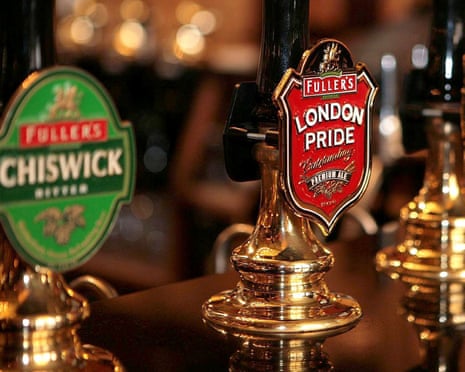
The Fuller, Smith & Turner pub and hotel chain has told investors it is “garden-ready” for the summer season and the World Cup football tournament.
Advanced bookings for the World Cup have been strong, it said – and “staycation” demand is strong too, with particular interest in the Cotswolds.
Its shares are up by about 7% this morning after revenue and profit for the year came in higher than expected, at £398m and £29.5m respectively.
Executive chair Simon Emeny said:
“The new financial year has begun well. Like for like sales for the first 10 weeks have risen by 4.4%, building on a strong comparative period last year and our underlying profitability continues to improve, maintaining the momentum we have built in recent years.
As we move into our summer season, preparations have gone well. Our garden investment programme has seen fresh space created for peak trading, advance bookings for the World Cup have been strong, and we are seeing increased demand for staycations benefiting our excellent rooms business.
The market is not impressed with WH Smith’s latest update – shares have slumped this morning by 16%.
Richard Hunter, head of markets at the broker Interactive Investor, says things are “going from bad to worse” for the retailer.
The capital raise comes at a time which will severely test investors’ patience and loyalty to the cause. Indeed, further investment into WH Smith will require something of a leap of faith as weaker consumer confidence has affected spend per passenger, a reduction in flights in the US has impacted airline capacity, while the Middle Eastern conflict has generally disrupted any progress which the group had been making.
…If the previous ‘annus horribilis’ for the group, where an overstated profit forecast led to a sharp decline in the share price and with the CEO unfortunately falling on his sword as a result seemed uncomfortable, matters have now taken a turn in what could be an existential time for the company. The capital raise, if successful, is designed to draw a line under any legacy issues while positioning the group to be underpinned by a stronger balance sheet with the company having less of a reliance on debt to grow.
WH Smith taps investors for funds as Middle East conflict hits profit
Elsewhere this morning, WH Smith has said it wants to raise about £100m as the conflict in the Middle East starts to affect its profit.
The high street retailer says it will place up to 26 million shares, or about 20% of its existing share capital, alongside a separate offer for retail investors in the UK.
It has also cut its pre-tax forecast for the year to a range of £75m to £90m, down from £90m to £105m, warning that the travel industry has been hit by lower passenger numbers and weaker consumer demand. It is the second time that it has downgraded its profit outlook this year.
And, to top it off, the company has said it anticipates a £150m writedown related to the review of its InMotion business in North America, its store exit programme and the restructuring of its business in the rest of the world.
Executive chair Leo Quinn said in a statement:
The business has a strong core and operates in attractive markets with ample scope for profit expansion, particularly in North America. However, we need much greater capital discipline and a laser focus on returns. In recent years, the outcomes from certain acquired businesses and contract obligations have been very disappointing. Our priorities are to build an efficient and effective foundation for WHSmith and use this to drive a growth strategy managed for profitability.
…There is no doubt that current economic uncertainty and its effect on consumer appetite for spending has created headwinds. In this environment, sorting legacy issues while investing in the core model requires the financial flexibility of a stronger balance sheet in lock-step with self-help. This placing is a prudent and proactive step to accelerate our transformation of what is, at heart, a good business with some great people and clear opportunity for profitable growth.
Shares in WH Smith are down by about 21% so far in the year to date.
Susannah Streeter, of the broker Wealth Club, says that the fresh round of conflict in the Middle East has seen “optimism seep away” from the markets – but the key driver today is likely to be the latest US inflation data, which will be released this afternoon.
The CPI numbers are set to show another painful rise in costs for consumers, who are already grappling with sharp increases in the costs of everyday goods.
The expectation is that the headline rate will rise to 4.2% year-on-year with a 0.5% jump in May. The big concern is that elevated wholesale energy costs are spreading and settling into the broader economy. The latest attacks in the Middle East indicate that the conflict is entrenched and increasingly hard to solve.
Introduction: Asian stocks fall as Iran and US exchange fire
Asian stocks have fallen sharply after Iran and the US exchanged their biggest round of fire since a ceasefire was agreed in April.
The US launched strikes against Iran after Donald Trump blamed Tehran for downing a US army helicopter near the strait of Hormuz.
The attacks triggered a wave of retaliatory strikes from Iran on Wednesday morning, with Tehran saying it had targeted Kuwait, Bahrain and Jordan.
Japan’s Nikkei index dropped 2%, while the tech-heavy South Korean Kospi slumped by about 6% – although it is still up by more than 70% in the year to date.
However, oil prices have actually fallen a bit this morning, with Brent crude – the international benchmark – down 0.2% to $91.28 a barrel.
Jim Reid at Deutsche Bank suggests that while investors are preoccupied with the conflict in the Middle East, “markets are also swinging between 1999-style AI exuberance and 2000-type tech crash fears.”
On the former, Brent briefly fell below $90 for the first time since April 17th yesterday before partially rebounding after Trump vowed retaliation following Iran shooting down a US helicopter. On the latter, the Philly Semiconductor Index fell by as much as -8.62% intra-day before recovering to -1.93% by the close.
European stock markets also look like they are poised for a muted start at the open today: futures for the FTSE 100 are pointing to just a 0.1% fall, while EuroStoxx 50 futures are down 0.1%.
Elsewhere this morning, new figures out of China show its factory gate prices rose at the fastest rate in four years, amid a sharp rise in energy prices triggered by the war in Iran.
The producer price index (PPI) rose 3.9% in May from a year earlier, National Bureau of Statistics data showed on Wednesday, above a 3.8% forecast in a Reuters poll and 2.8% rise in April.
It marked the third consecutive monthly rise in a row and the highest growth rate since July 2022.
Economists at the consultancy Pantheon Macroeconomics say that the rebound is “largely a cost push story, not stronger demand”.
Kelvin Lam, senior China economist, says:
Reflation is expected to continue in the near term due to the lasting impact of the war in Iran on imported energy costs, and of course the fading drag from from negative carry-over effect from last year, which most people forget.
While oil and gas futures markets are no longer pricing in a further escalation in the Middle East, uncertainty surrounding the peace talks and the effective reopening of the strait of Hormuz appears likely to linger in the near term. Despite the acceleration in the annual rate, monthly momentum slowed noticeably, to just 0.5% m/m from 1.7% a month ago.
This probably reflects two things. First, global energy markets are no longer expecting a broadening of the conflict as before, with a $150 per barrel scenario now looking increasingly unlikely, and prices have already fallen back from their highs. Second, China is relatively immune from an inflation pass-through point of view, with subdued domestic demand making it more difficult for producers to raise factory gate prices.
The agenda
-
9am BST: Deadline data for the CMA and Ofcom to report back to government on the Telegraph/Mail deal
-
1.30pm BST: US inflation for May, forecast to rise to 4.2%
-
2.15pm BST: Treasury Committee hearing on student loans