3 months ago
107
3 months ago
107
A blanket rule to house transgender women in men’s prisons, even when they pose no risk to others, would be a “fundamental denial” of their identity, the Scottish government has argued.
Placing a trans inmate in a prison that does not align with their lived gender runs counter to the aims of rehabilitation, Gerry Moynihan KC said on Thursday as he set out Scottish ministers’ position that a blanket rule on where prisoners are housed could contravene obligations under the European convention on human rights.
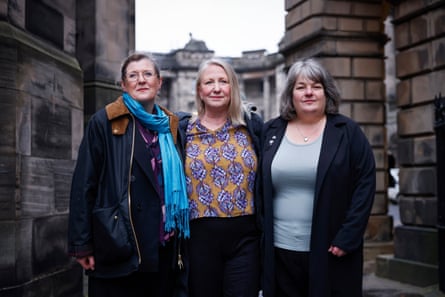
In its latest court battle with the SNP government, For Women Scotland is challenging guidance that says trans prisoners should be housed according to individual risk assessment, which the group argues is contrary to the supreme court’s ruling on women-only spaces.
For Women Scotland brought the original challenge that resulted in last April’s landmark ruling that the definition of a woman in equalities law refers to biological sex.
Arguing that the supreme court decision was “not a universal proposition” but only for the purposes of the Equality Act, Moynihan said: “Where a transgender prisoner does not pose an article 8 problem, does not threaten the rights of others – are we to have an absolute rule that says that they must be accommodated in a prison of their sex?
“Why? The sole reason is that they are to be classified as a man. Even though they live their lives as a woman. It’s a fundamental denial of their choice of gender. And it’s a fundamental denial driven only by semantics.”
On the final day of the hearing, Moynihan said that ministers could not ignore the risk of suicide that may arise from transgender prisoners being housed in facilities that do not align with their lived gender.
He added: “It’s all too easy to say [the supreme court ruling] says a man’s a man and woman’s a woman. The aim is to treat people in a way that is best for them in relation to their mental health and rehabilitation.”
The UK equalities watchdog, the Equality and Human Rights Commission (EHRC), told the court on Wednesday that the Scottish government had a duty to revise “outdated” guidance that had been superseded by the supreme court decision.
Intervening on behalf of the EHRC, Janys Scott KC, said it was “regrettable” that there was a “temporary hiatus” in available national guidance. The UK government is still considering new guidance, submitted by the watchdog in the autumn, on how public bodies and businesses should apply the ruling.
The judicial review ends as the SNP faces growing pressure over single-sex provision elsewhere in the public sector. Karen Titchener, who was appointed to the new role of patient safety commissioner last September, told Holyrood’s health committee this week that she had received complaints about female patients feeling unsafe.
Titchener asked: “Why aren’t we doing single-sex wards, particularly in mental health? We are talking about a vulnerable group.”