2 months ago
116
2 months ago
116
Simon Jenkins is right to ask why the debate on defence spending is limited to a question of more or far more expenditure (There is no immediate military threat to Britain. We should spend less on defence, 1 July). Two countervailing points are notably absent from parliamentary discussion and media reporting.
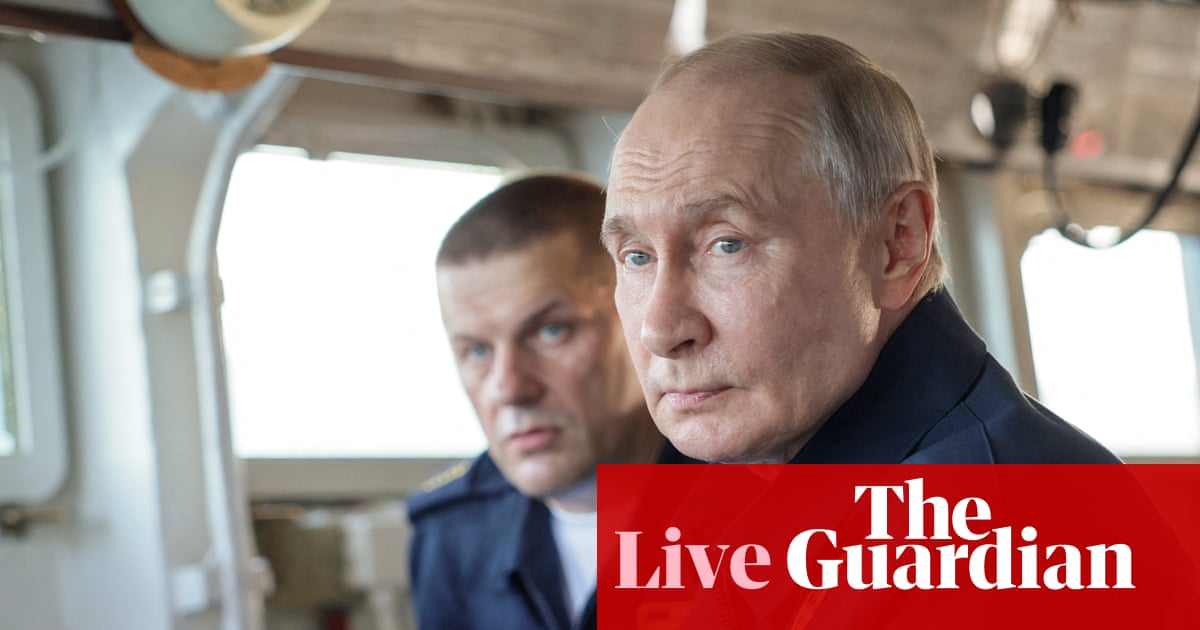
First, while Vladimir Putin’s Russia undoubtedly poses a serious security threat to countries in mainland Europe, ever higher defence spending is not necessarily the answer. The defence budgets of all the European Nato members are already far in excess of Russia’s. The central issue is therefore not more money but more political resolve, in particular, among the European members – where do they draw their red lines and what is their plan to bring Putin’s illegal war to an end?
Second, discussion of the government’s defence investment plan rarely acknowledges the growing cost of spending on nuclear weapons programmes, which, according to the public accounts committee, will rise from 18% to 25% of the defence budget. This expenditure funds not just the Dreadnought replacement for Trident (which is well behind schedule), but other programmes including £15bn on a new UK‑owned and developed nuclear weapon, Astraea.
Despite this, parliament has repeatedly complained that published information is too limited to allow meaningful scrutiny. In response, the government has proposed a new parliamentary committee to oversee nuclear defence expenditure, but it will be appointed by the prime minister, report only to the prime minister and meet in private. It is time for greater parliamentary scrutiny of nuclear weapons expenditure and programmes, and for a more informed public debate.
Steve Barwick
Chair, Nuclear Education Trust
As the saying goes, if you desire peace, prepare for war. In this regard, I find Simon Jenkins’s article shortsighted. While he is correct that the Ministry of Defence has countless issues, notably Ajax, cutting the funding of our armed forces is a sure-fire way to ensure that Britain is worse off.
While Mr Jenkins is technically right to say that there is no imminent security threat to the UK, he has missed the point. We live in a world where authoritarians are on the rise, and the UK proving that it can no longer feasibly defend Taiwan or eastern Europe is likely to spur China and Russia into military action against the UK and the rules-based order. Furthermore, Russia is already waging covert war against the west, launching cyber-attacks against infrastructure.
Mr Jenkins tells us that the defence budget could be spent on employment, welfare and growth. Yet the military provides all of those things. The armed forces are one of the biggest employers in the UK, drive innovation, and give the government the capability to respond to disasters, from providing emergency care on Tristan da Cunha to deploying aid in Venezuela.
Hector Tsukagoshi
London
I find Simon Jenkins describing Russia’s actions as “making a nuisance of itself” an appalling message. Just last week, Russia made yet another merciless attack to civilian targets in Kyiv, killing at least 20 and injuring many more. Russian atrocities are ruthless, lethal and indiscriminate, and they have no limits.
Don’t forget Salisbury, and the death of Dawn Sturgess by the novichok nerve agent. Last week, the Guardian also reported on Russian drone surveillance of nuclear sites in UK, France, Belgium and the Netherlands.
Jari Mäkelä
Helsinki, Finland