1 month ago
82
1 month ago
82
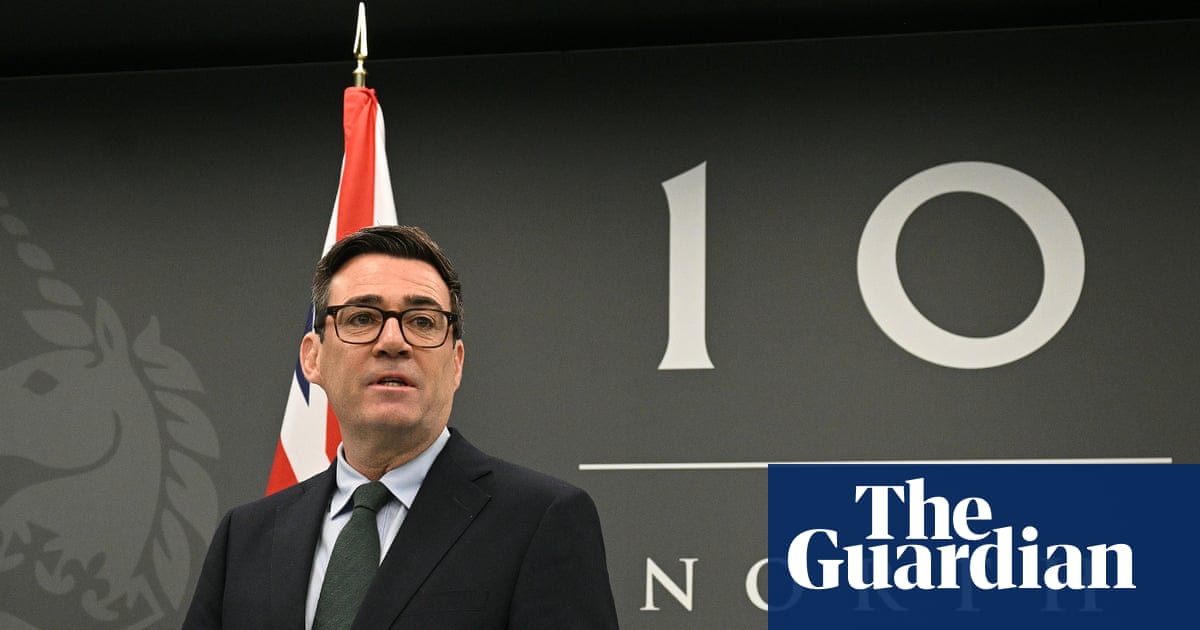
Andy Burnham has been in politics long enough to know that the largely friendly media coverage he’s received so far would turn hostile once he was inside Downing Street. And, within hours of becoming prime minister, some familiar predators were circling as they tried to decide whether to attack him for being too leftwing, too insubstantial or simply offering more of the same.
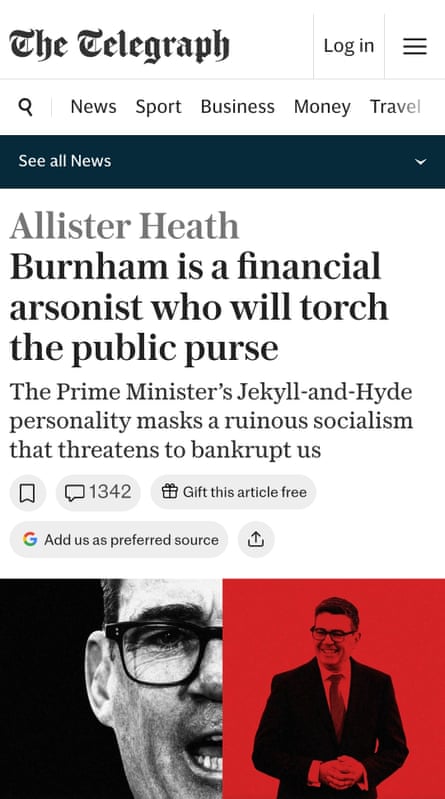
The Mail accused him of embarking on an unfunded “spending spree”, the Sun highlighted a series of “embarrassing” and “humiliating” moments that marred his first days in office, while the Telegraph declared he stood for nothing except “gimmicks” and “rehashing failed ideas”. Much of this, of course, goes with the territory of being a Labour leader.
But this grim process, one I have witnessed both as a political “lobby” journalist and as a communications director for Labour, has accelerated and become ever more gory as new adversaries emerge online. Orderly old methods of managing the news cycle with “a grid” of stories for newspapers and broadcasters have been replaced by the mayhem of a zombie movie. Keir Starmer was demonised out of all recognition and beyond reason by platforms such as Elon Musk’s X. And AI-generated images that purport to show Burnham promising that his new constituency of Makerfield will house more asylum seekers, or completely false claims that he once gave a public contract to his wife, have already circulated widely on social media.
In private, the new prime minister is intensely critical of this toxic and sometimes terrifying media environment. Over the nine years he spent away from Westminster as mayor of greater Manchester, Burnham is said to have watched – with a sense of dismay, disorientation and maybe dread – how social media algorithms fuel an individualist briefing culture that portrays politics as a shallow game of “who’s up and who’s down”. This has infected the mainstream press, which, by consistently elevating drama and unfolding chaos over policy and substance, gives alienated or angry voters the impression of politicians being more interested in themselves than people like them.
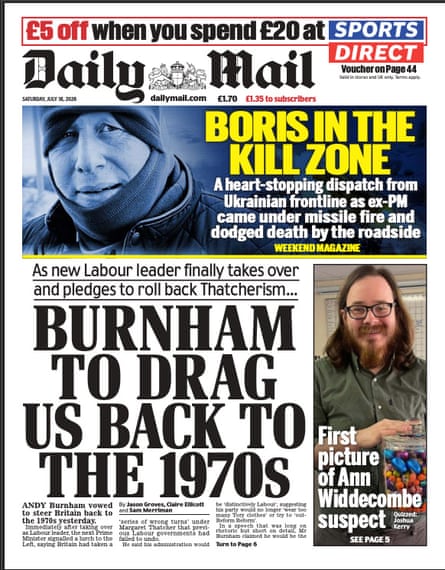
And, perhaps because Burnham has so recently benefited from the resulting instability, many restless Labour MPs now hope that Britain’s fifth prime minister in four years will be better suited to dealing with such challenges than his immediate predecessors. Certainly, he appears comfortable with modern forms of communication and to prioritise content for platforms such as Facebook, TikTok, Instagram and X. While retaining some of Starmer’s politically appointed press advisers, Burnham has brought his own digital team into Downing Street with him.
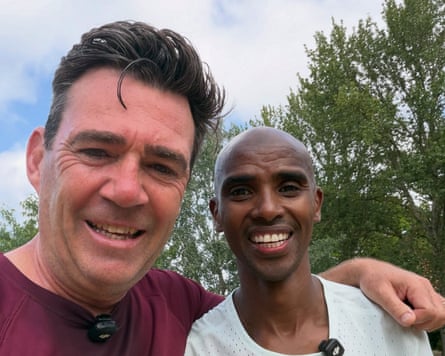
His willingness to take risks with social media videos, from self-deprecating dad jokes to dressed-down selfies, has helped him make a much-prized connection with voters on the platforms where most of them get their information. Admirers hope this strategy means he can tell a story about himself and his programme that resembles not so much Donald Trump or Nigel Farage but that of another progressive mayor – New York’s Zohran Mamdani. In a recent post where Burnham was shown with a sign saying “Ask Andy Anything” and taking questions from passersby in Cardiff, he mentioned to one of them that his father had Alzheimer’s before going on to explain that this was why he cared so deeply about reform of the social care system. By contrast, Starmer, who appeared uneasy with social media, generally shied away from opportunities to explain policy through personal experiences such as his late mother’s disability or his brother’s cancer diagnosis, which was kept secret until after he had died.
Yet the new PM’s apparent openness to people he meets on the street has not, so far, been extended to lobby journalists. Between winning the Makerfield byelection a month ago and becoming prime minister, he made two speeches and took no questions at either of them from the media, while doing just three interviews, which included a podcast mostly about football with Gary Lineker. Although political editors invited to join him in the Downing Street garden on Monday afternoon included one from the Sun, a newspaper that Burnham has previously shunned for its coverage of the Hillsborough disaster, the whole lot of them were limited to a total of four questions.
Aides insist there is no deliberate effort to avoid scrutiny – indeed he spoke at length on Sunday to the BBC’s Laura Kuenssberg. They say other journalists will get their chance before long as part of a new “integrated” communications strategy. And, for what it’s worth, I sympathise with his desire to have important speeches covered in their own right rather than be overshadowed by journalists grandstanding with “gotcha” questions afterwards. Nor can those outlets, such as the Mail or GB News, that are so obviously intent on throwing rocks at him really whinge too loudly if Downing Street decides to limit their access and opportunities to do so.
after newsletter promotion
There is more justifiable concern, however, about some of the shenanigans last week over who would be appointed as the new chancellor. In what appeared to be a coordinated operation by those claiming to know Burnham’s mind, multiple journalists were told this would be Shabana Mahmood, along with some disobliging remarks about Ed Miliband that appeared all too reminiscent of the anonymous factional briefing that too often characterised Starmer’s government.
Even the Financial Times, a newspaper that treads very carefully because it has the capacity to move markets, was confident enough to declare Mahmood was “set to” get the job after being told this by three separate sources. It is possible, of course, that Burnham really had not made any decision at the time, or that he changed his mind in the days before John Healey was appointed. And yet there appears to be more than a little satisfaction about the lobby’s humiliation within the prime minister’s wider circle, with one saying that journalists had “learned the hard way only to trust official spokespeople in future”. There may also have been an effort to work out who was responsible for leaks by giving those suspected of unauthorised briefing false information that then appeared in the newspapers. Either way, these are dangerous tactics from a new administration that will need to be trusted by the more responsible end of the Westminster media when, inevitably, the going gets rough.
One journalist who covered Burnham for many years in Manchester says he can get “prickly” in such circumstances. And there is scepticism that the PM’s “blokey” – if slightly one-geared – social media personality will always work so well when the algorithms of such platforms are tuned more to “rage bait” than a reasoned explanation about the long-term benefits of devolution. Indeed, if the “medium is the message”, Burnham cannot allow his communications to become too reliant on new forms of media that are so often open sewers of hate and lies. One of his closest advisers in No 10 acknowledges the current good vibes will fade, and indicates his team are preparing for tougher times ahead by studying ways of “inoculating ourselves” against online disinformation, before adding: “What can I say? We will do our best.”
Perhaps the best thing Burnham can do now is just grow a thicker skin. He will need it.
-
Tom Baldwin is a former assistant editor of the Times and a former senior adviser to the Labour party. He is the author of Keir Starmer: The Biography