3 months ago
175
3 months ago
175
An Austrian mountaineer is to appear in court accused of gross negligent manslaughter after his girlfriend died of hypothermia when he left her close to the summit on a climb that went dramatically wrong.
The 33-year-old woman, identified only as Kerstin G, froze to death on 19 January 2025, about 50 metres below the summit of the Großglockner, Austria’s tallest mountain, after an ascent of more than 17 hours with her boyfriend, Thomas P, 36.
Prosecutors argue that Thomas P’s alleged poor judgment and willingness as the more experienced climber to take risks make him criminally liable for her death, in a case that could have implications for mountain sports and which has prompted debate in Austria and beyond.
If found guilty, Thomas P could spend three years in prison.
The couple had set out on the morning of 18 January but conditions deteriorated, leaving them struggling in darkness against a temperature that fell to almost -9C, a wind chill of -20C, and gusts of up to 45mph, the court in Innsbruck will hear when the trial opens on Thursday.
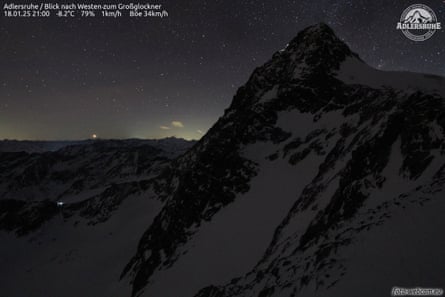
Thomas P left Kerstin G at about 2am in a state of exhaustion and unprotected when he descended the mountain to fetch help.
He denies manslaughter. His lawyer, Kurt Jelinek, called Kerstin G’s death “a tragic accident”.
The senior public prosecutor Hansjörg Mayr and his team are citing the legal concept of the “tour guide acting as a courtesy” in the case, which designates the person with more experience and knowledge and the key decision-maker as having most responsibility.
The prosecutors therefore accuse Thomas P of failing in his responsibility as the more experienced climber, listing nine major errors. These include forging ahead with the climb despite the fact Kirsten G had “never undertaken an Alpine tour of this length, difficulty and altitude and despite the challenging weather conditions”.
The couple had started out two hours later than advised and had not been sufficiently equipped with emergency bivouac equipment, the prosecutors said. Neither had Thomas P advised Kerstin G that the snowboard boots she was wearing were inadequate for the terrain.
Prosecutors also allege Thomas P was negligent in failing to turn back and question why, despite his partner’s exhaustion, he failed to make an emergency call before nightfall and did not send distress signals to a passing rescue helicopter.
“Around 2am, the defendant left his girlfriend unprotected, exhausted, hypothermic, and disoriented approximately 50 metres below the summit cross of the Großglockner,” Mayr said.
Jelinek disputes the prosecutor’s version, saying the couple had organised the tour together, and were “sufficiently experienced, adequately prepared and well-equipped”, with “relevant Alpine experience” and “in very good physical condition”.
More than 7,000 people climb the 3,798-metre-high (12,461ft) Großglockner every year. About 200 deaths of mountaineers have been recorded there, but none has attracted as much attention as that of Kerstin G.
Her mother, Gertraud G, who is due to give evidence, has said she does not hold Thomas P responsible for her daughter’s death and has spoken of a “witch-hunt” against him.
In a recent interview with the German weekly Die Zeit, Gertraud G said she was upset at the way in which her daughter, who she said had discovered her passion for mountain climbing during the pandemic, had been depicted.
“It makes me angry that Kerstin is being portrayed as a stupid little thing,” she said. “Kerstin was in top physical condition. And she had already mastered far more difficult climbing tours, both alone and with her boyfriend.”