3 months ago
106
3 months ago
106
My British Trust for Ornithology wetland bird survey includes patrolling a storm beach, which, at this time of year, has huge piles of rotting wrack thrown up by the gales. They’re made up of hand-like fronds of laminaria, bladderwrack with its buoyant bubble vesicles, sugar kelp and the long “washing line” strands of non-native sargassum seaweed that arrived from Japan on Pacific oysters and ships’ hulls in recent years.
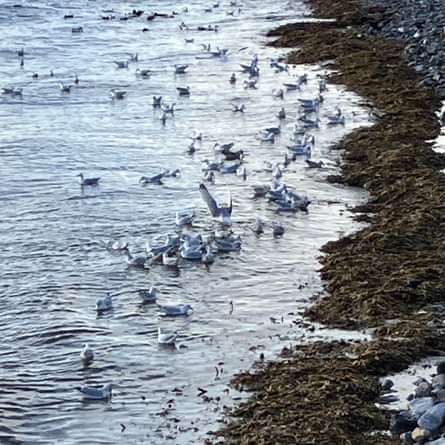
These slimy, smelly heaps are generally unpopular with passersby – some even call for their removal – but for wildlife they are a food source of the highest quality.
Ripped from rocks on the sea floor by surging tides, the weed is now rotting on the beach and a breeding ground for all manner of tiny creatures: nuisance kelp flies, shrimp-like sand hoppers, molluscs, worms – all of it food for birds. Waders are the expected beneficiaries, but among the unexpected I see rooks digging for invertebrate life, skylarks, stonechats and pied wagtails, rock and meadow pipits, all hawking flies that hatch from the mounds.
Corvids make sure they don’t miss out: choughs, with their matching red beaks and legs, dig deep into the mounds, throwing bits of wrack around to access the rich pickings. Extremely scarce across the UK, choughs do well on the island, with many sustained by these noxious piles. They’re joined by ravens and hooded crows, the local name for which is “Mr Grey-backs”. Just as the birds gather, so too do the humans looking for rarities: a ghostlike hen harrier drifts over the terrain, and perhaps I glimpse a merlin zooming through, looking for hapless small birds.
In springtime my survey of this beach becomes more difficult, as the heaps are upturned by the high tides. Waves rip the knots of weed to pieces, spilling their living load into the water attracting huge numbers of gulls, wigeons, teals and eiders. Silvery fins of bass and mullet break the surface, gobbling up the offerings.
Today as I count, I search through the swirling flocks for the black-headed gull that has spent the last three winters here – it was ringed 1,000km away in Norway. Truly, birds come from far and wide to savour the local fare.