6 hours ago
17
6 hours ago
17
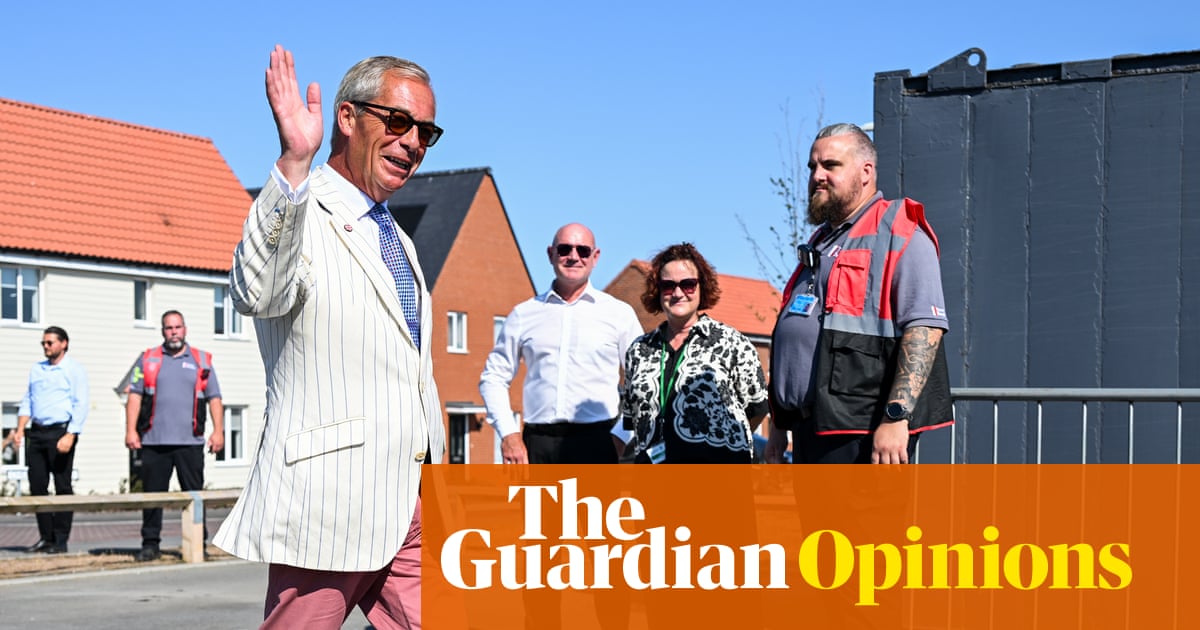
It’s a shame Nigel Farage ducked the announcement of his victory in the Clacton byelection, which confirmed his return as MP for the seat he had needlessly resigned from just a few weeks earlier. You’d have thought he would have loved it. It was the culmination of a stunt, an exercise in politics as performance. It was a display animated by – and seeking to inflame – grievance, a million miles away from the hard, grinding work of tackling the problems that underlie those grievances. It was an attempt to deflect scrutiny, distract attention and evade responsibility. It was, in other words, everything nationalist populists like him excel at. Indeed, the only thing.
Reform UK said Farage stayed away because Essex police had warned of a “credible threat” to his security, a claim swiftly denied by Essex police. (Add a flexible approach to the truth to that list of nationalist populists’ talents.) Still, it was a slightly odd claim to make. Recall Farage’s favoured explanation – there are others – for the undeclared £5m gift he received from the Thailand-based crypto billionaire Christopher Harborne, which prompted the very parliamentary investigation that so riled the Reform leader he felt compelled to quit his seat and seek a preemptive not guilty verdict from the people of Clacton: namely, that he needed the money to pay for private, enhanced security. It seems £5m was not quite enough to ensure the lucky recipient would be safe standing next to a man dressed as a bin.
Unless, maybe, security was not the whole story. Farage also said he skipped the count because he didn’t want to be “demeaned and humiliated by nobodies”. Quite right. If Nigel Farage is to be demeaned and humiliated, it should be by people of standing. As it happens, he may get his wish. Now that he’s an MP again, the probe into the multiple financial questions that surround him, including over the undeclared support he received from the convicted fraudster George Cottrell, has resumed. A finding against him could necessitate yet another byelection, except this time the major parties will not repeat their boycott and he will have to do battle with opponents even more formidable than an aristocratic trash can.
Naturally, Farage regards the likes of Count Binface and Baron von Thunderclap as beneath him, perhaps because it would be painful to admit the crucial thing they all have in common. To understand what that is, look no further than the man who is both Farage’s hero and the exemplar of nationalist populism.
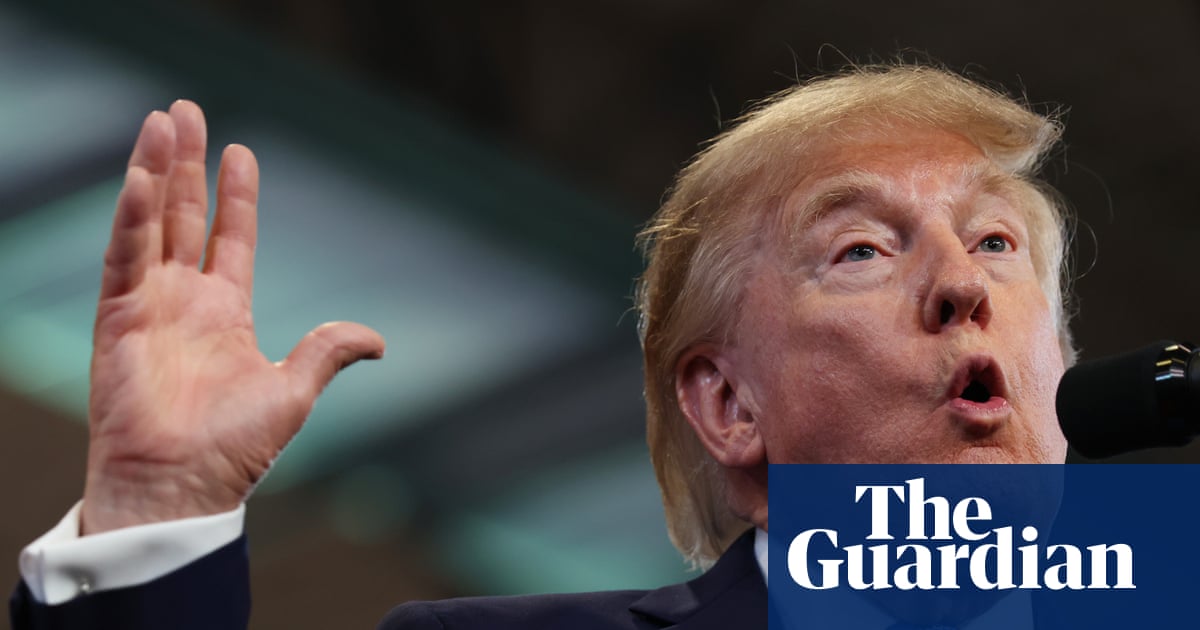
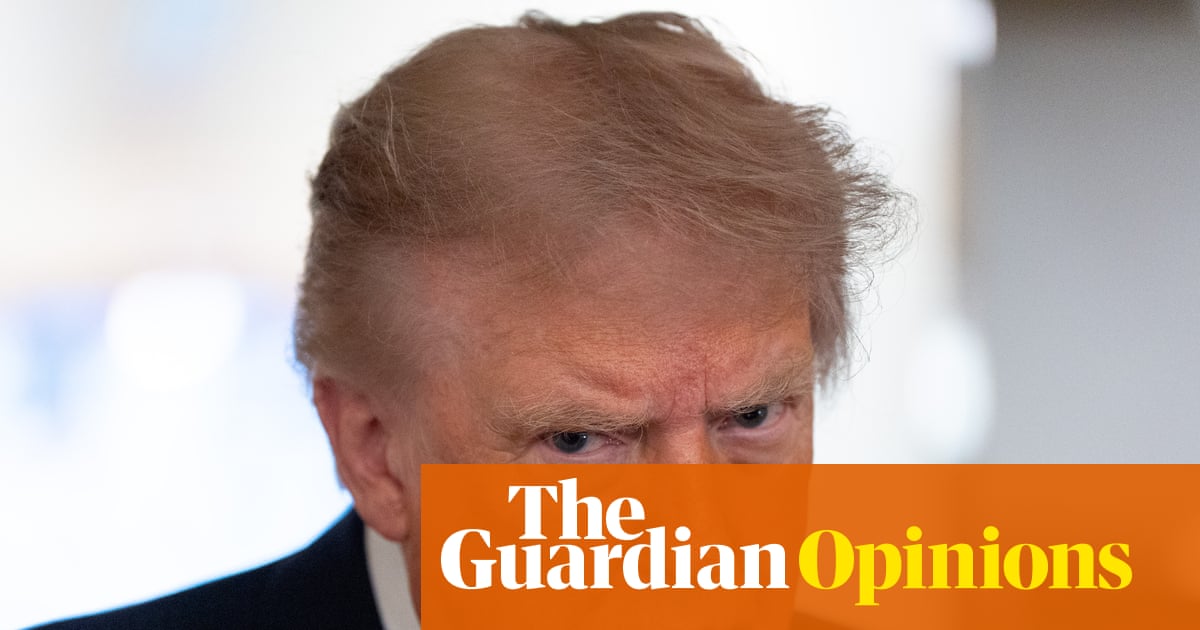
Ten years ago, less than five months after the Brexit referendum that represents Farage’s greatest triumph, Donald Trump rode a similar wave of US discontent with the status quo and did it in a similar way – by railing against an ill-defined establishment that had ruined everything. A vote for him would make it all better because, as Trump put it: “I alone can fix it.” In 2024, he was elected once again, on a similar promise.
That victory proved Trump’s mastery of a certain strain of politics. His gift for seizing public attention, for channelling a society’s collective anxieties and for persuading people that a simple remedy is at hand, is unrivalled. While Farage plays the same tunes, Trump is the virtuoso.
And yet, look at what happens once the carnival of the campaign is over and the governing begins. Trump’s record is disastrous. He was elected to tackle inflation, which he claimed was out of control under Joe Biden, but inflation is higher now than it was in November 2024, when he defeated his predecessor. Petrol prices, the indicator Trump repeatedly invoked on the stump in 2024, have leapt up. This, more than any other single factor, helps explain why Trump’s approval ratings have cratered, falling to just 34%.
And yet Trump, whose appeal centred on his persona as a successful businessman – a persona that held, despite a career of failure and serial bankruptcy – is doing almost nothing to improve the economic fortunes of those who voted for him. I don’t mean that he’s trying to pull various policy levers and they’re not working. I mean he’s not trying. As Jonathan Swan, co-author of Regime Change, an eye-popping account of the first 15 months of this second Trump term, told me for the Politics Weekly America podcast: “He’s bored by economic policy.”
Of course, those petrol prices did not rise all by themselves. What drove up the price of oil was the decision that seems set to define this presidency: the war on Iran that began on 28 February. It has proved a calamity. It has failed to achieve any of the admittedly shifting goals Trump declared for it: there has been no regime change in Tehran; Iran’s nuclear threat remains unchecked, while its nuclear ambition is now surely greater, if only to deter a repeat of that US-Israeli attack. And it has barely set back Iran’s conventional capability, judging by the regime’s continuing ability to strike its neighbours. As if all that were not bad enough, Trump has succeeded in making the Iranians stronger than they were on 27 February, by handing them an economic weapon of mass disruption, a chokehold on the global economy in the form of their control of the strait of Hormuz.
after newsletter promotion
Trump can do the performance, claiming to have “obliterated” the enemy one moment or to have made a breakthrough peace deal the next – but performance is all it is. While the Iranian missiles keep coming, the US military is fast running out of the munitions it needs either to intercept or hit back. Trump’s top general warned him of this danger from the start, but Trump waved away those objections, convinced that the war would be over quickly. Trump’s gut told him that Iran would go the way of Venezuela, that it would be fast and easy. His gut was wrong.
It keeps happening the same way. Trump will announce an agreement with Iran or between Hamas and Israel, only for it rapidly to become clear that no deal has been done. Trump lacks the patience for the long, painstaking, detailed work such diplomacy requires. He wants the sugar-rush of a social-media post or a headline. Put simply, he is a maestro of politics as it is now conducted, but he is useless at governing.
In this, the nationalist populists who take their lead from Trump are no different. They are good at raging at how things are, but incapable of making them better. They can articulate resentment and exploit grievance, but they cannot cure the ills that fuel that unhappiness. This, ultimately, is what unites Farage with Trump and indeed with those 33 “nobodies” who fought the byelection in Clacton. They are all protest candidates. It’s just that some of them get elected.
-
Jonathan Freedland is a Guardian columnist
-
Do you have an opinion on the issues raised in this article? If you would like to submit a response of up to 300 words by email to be considered for publication in our letters section, please click here.