2 months ago
89
2 months ago
89
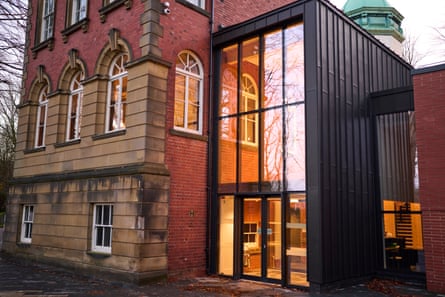
Outside the impressively grand, Edwardian baroque building in Durham are two wooden benches, each dedicated to men who died too young.
They were, the inscription reads, both “sacked and victimised” during the 1984-85 miners’ strike. Yet they’re in grounds that look as if they might have been owned by rich, exploitative mine owners.
The building is Redhills, the headquarters since 1915 of the Durham Miners’ Association, which has reopened after a £14m restoration with a hugely ambitious purpose that aligns with the original aims of the site.
Redhills is considered one of the world’s finest trade union buildings. Famed for its “pitmen’s parliament” and regarded as “Durham’s other cathedral”, it was once named as one of the 10 buildings that helped change Britain.
Andrew McIntyre, the interim CEO of Redhills, said it was far more than just a building. “You’re kind of standing on the spot where the welfare state was first imagined,” he said. “It has always had an aura … a magic.”
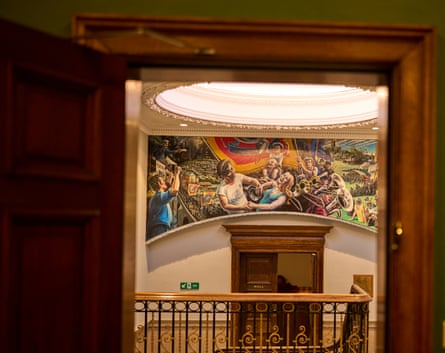
The building has been slowly, quietly reopening since the restoration was completed this year. It decided against a grand reopening event in favour of a softer relaunch but it has not gone unnoticed.
“We’re barely open and all of our guided tours are sold out into next year,” said McIntyre.
Bill Moir, who will be leading tours, took the Guardian around what is few people’s idea of what a miners’ hall should look like.
“It was designed like this so that the men of the coalfields, when they came to represent their pits, would enter an entrance hall equally as glorious as the entrance hall of the owners of coalmines,” said Moir. “It was built on this grand scale to equal anything built by the aristocracy.”
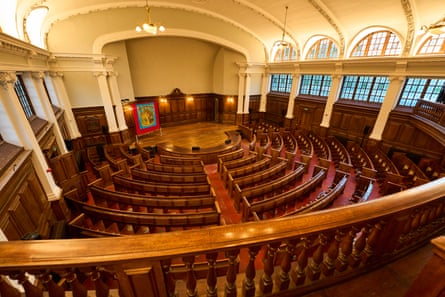
The restoration has been long and painstaking but much-needed. The Austrian oak chamber where the “pitmen’s parliament” convened looks magnificent today, “but if you had come here three, four years ago, not only would the smell of mould nearly knocked you out, but the floor was starting to deteriorate, it was just rotten”.
It was built, said Moir, in the style of a Methodist chapel in the expectation there would be “collaboration and cooperation” rather than combative discussions.
It was here that miners discussed ideas of a welfare state, long before this was created in Britain, as well as community infrastructure, models of universal healthcare and levels of fair compensation
That history drives the new Redhills, said McIntyre.
The restoration was part-funded by the national lottery but before the bid, Redhills consulted communities. “We asked people what they wanted the future to be and they were absolutely adamant that it wasn’t a museum and it shouldn’t be a heritage centre. They didn’t want us to build a memorial or a mausoleum to the past.
“They were arguing that it’s the beating heart of a living culture, not just the brass bands and the banners.”
There will be weddings, funerals, conferences and concerts at Redhills but the bigger idea is that it becomes a kind of mothership of cooperative endeavour.
“People are enormously proud of where they’re from, of their heritage, of their family history, of their mining heritage and culture, but what they lack is hope,” said McIntyre.
The new Redhills wants to replicate what the Durham Miners’ Association was doing 100 years ago when it was creating a kind of working-class commonwealth and building parks, sports grounds, houses for aged mining families and more.
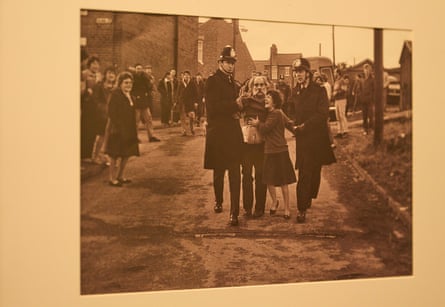
The first project is centred around the once prosperous village of Horden in east Durham, a place that already has Ensemble 84, a theatre company led by the acclaimed theatre director Mark Dornford-May and which, earlier this year, staged a new Lee Hall version of Bertolt Brecht’s Mother Courage.
McIntrye says there are opportunities for homes to get cheap heat from mine water, to have the community take control of housing stock and then after that, why not social care?
“The council is paying out millions of pounds but they’re paying it to private companies who are skimming off a huge percentage of the budget and just taking that as profit and that’s being shipped out of Durham straight away,” said McIntyre.
Since the pits closed 40 years ago, people in Durham have waited and waited for governments to come and do things, he said. “How many elections have we had since the pits started closing? Not many of them seem to have changed much.”