2 months ago
126
2 months ago
126
Ed Miliband is facing a dilemma, apparently. Reform UK is suggesting new oil and gas licences in the North Sea as a way to cut fuel bills and they’re steadily gaining cheerleaders – not just in the media, but also in some trade unions.
Labour – having swept into power on a green-friendly manifesto, much of which has already been abandoned, but the kernel of which was to prioritise green over fossil energy – is in a bind. It’s plain that fresh exploration of the North Sea would run counter to the party’s every principle, and particularly those of Miliband, whose legacy will be his career-long commitment to the scrappy, dogged, surely often tedious and dispiriting legislative fight against climate breakdown. And yet, equally plainly, the pressure from Nigel Farage is only going to get more intense: he has framed the issue of North Sea oil and gas versus renewables as an elemental fight between the common man and the elites. The wokerati doesn’t care about your cost of living crisis, while the hard right does.
The war in the Middle East is bolstering Reform’s narrative, reinforcing a sense of scarcity and fear, the perception that we’re all being thrown around by elite whim, and the craving for some bordered independence from the world’s chaotic energy markets. The oil crunch hasn’t even hit yet, since most of the world is living off oil that set sail before Donald Trump’s bombardments started. As prices spike and we find ourselves in yet another cost of living crisis, unleashed by yet another autocratic maniac, no amount of rationalisation will gate off the feeling that the government should be doing more, should have prepared better, should have got us out of this mess. Nobody will be blaming Reform and, realistically, nor could they: Farage makes a lot of noise, but his influence on the world stage is limited. But he can have a huge influence on the national narrative.
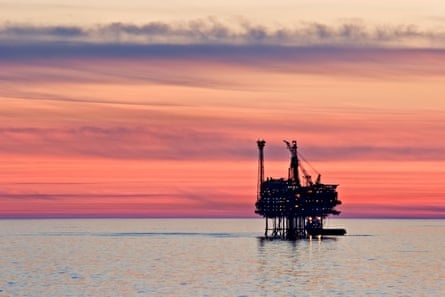
This plan has already started to work, and it’s showing in bizarre ways: recent polling found that more Greens are in favour of North Sea drilling (38%) than oppose it (33%). Close Miliband watchers are tracking his every move, trying to divine his red lines: his decision not to attend the renewables transition conference in Colombia later this month, which the UK has always strongly supported, has worried campaigners, but not as much as the idea that he might row back on his opposition to North Sea drilling ahead of it, which would be catastrophic for the optics.
The secretary of state for energy security and net zero, in other words, finds himself with exactly the same choices as the home secretary: how to respond to the pressure from the right? Do you accept its “legitimate concerns” and meet its proposals with your own watered-down version? How’s that going for Shabana Mahmood, anyway? What impact is her anti-migrant rhetoric having on party unity? To what extent can the cratering of Labour’s support in the polls be pinned on her very vocal renunciation of the party’s core values? We can argue about that another day, because as much as the physics of Miliband and Mahmood’s situations resemble one another, the issues of drilling and small boats don’t resemble one another at all, except insofar as they both happen at sea.
The Conservatives opened the 33rd licensing round in October 2022 – cue absolute outrage from the opposition – and even back then, before any oil crisis, before Reform posed any real threat, this was a posture rather than a practical idea. The North Sea just isn’t that attractive a prospect to investors. It’s the oil bed equivalent of the last people standing when the nightclub closes – only around a quarter of the blocks received any bid at all. Free market fundamentalists blamed the windfall tax, also announced in 2022, but we can file this under “turkeys complaining about Christmas”, or more precisely, “allies of turkeys complaining about Christmas”. Energy companies were enjoying record profits due to Russia’s war in Ukraine, and their reluctance to invest in new licences was emphatically not because they were struggling to survive.
So, were Labour to announce a fresh round of licences now, the impact on bills would be zero in the immediate term and minimal in the medium term. Even if they sold straight away – which they wouldn’t – it would take five to seven years for the wells to be productive. And even if we could ringfence UK-produced energy for the UK market – which we couldn’t – it wouldn’t change the fundamental structure of that market, in which costs are predominantly set by fossil fuel prices. If the barrel cost of oil is surging worldwide, so is our unit price; scraping together some dregs from the North Sea, five years after the fact, is futile.
The constructive way to protect households from price spikes and insulate our body politic from the turbulence of world affairs would be to break the energy market into clean power and fossil power, whereupon investing more heavily in renewables would have an immediate impact on bills, as well as the longer-term benefit of combating climate breakdown. The global context is handing us this narrative on a plate: that independence, resilience and sustainability will only come from wind, solar and (currently neglected) hydrogen. This is a rare moment when the right thing to do for the future dovetails with the cheapest, at the same time as creating a foundational political story. The tale of the North Sea is one of decline and obsolescence; the tale of wind power is one of plenty and discovery. Indeed, the UK’s wind and solar power has been breaking records since the Middle East crisis began, according to Carbon Brief.
The real mystery, therefore, is why this is framed as a dilemma at all. There is no world in which Labour can get a little closer to Reform, allay the fears and ameliorate the struggles of concerned voters by indulging a nostalgic fantasy that cannot keep the lights on. There is no mileage even in muting the commitment to renewables and promising energy price caps, the political equivalent of keeping your head down until the crisis passes.
The only way to emerge intact from the coming cost of living pressures, along with the pressure from the far right, is to get better at the storytelling, starting by telling a story that’s true, building up the practical radicalism that’s needed. Farage is beating an empty oil drum; Labour doesn’t have to drop everything and dance to it.
-
Zoe Williams is a Guardian columnist
-
Guardian Newsroom: Can Labour come back from the brink?
On Thursday 30 April, join Gaby Hinsliff, Zoe Williams, Polly Toynbee and Rafael Behr as they discuss how much of a threat Labour faces from the Green party and Reform UK – and whether Keir Starmer can survive as leader. Book tickets here or at guardian.live