6 hours ago
16
6 hours ago
16
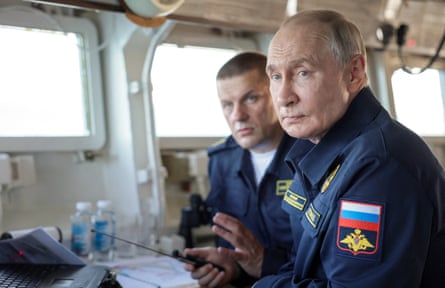
European intelligence officials have raised the possibility of an imminent Russian test of Nato, with one saying a potential attack could come in a matter of “months, not years”.
The warnings come after Poland’s prime minister, Donald Tusk, told parliament that intelligence assessments suggested Russia might launch an attack with drones or missiles on Nato territory in the coming months, as part of efforts to prove that “article 5 is more theoretical than practical”.
The French president, Emmanuel Macron, called Tusk’s warnings “sound and well-documented”, and on Friday summoned party leaders and 2027 presidential candidates for an emergency meeting in Paris, where they discussed – among other topics – intelligence of a growing threat from Russia.
The escalation fears come as the UN general assembly convenes in New York later this week, and amid intensifying airstrikes on both sides of Russia’s war on Ukraine. Kyiv hit Moscow and other Russian regions with hundreds of drones and missiles in the early hours of Sunday, in one of its biggest air attacks of the war.
In separate interviews with the Guardian over the past week, in different locations, three European intelligence leaders discussed their views of the potential threat from Moscow.
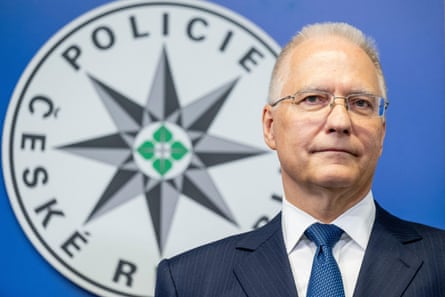
Michal Koudelka, the head of the Czech Republic’s BIS security service, said that as well as increased drone activity, a small-scale invasion of Nato territory that bordered Russia could be part of the Kremlin’s plans. “It’s possible. It could involve a limited incursion, false-flag provocations, a massive influence campaign,” he said, in a rare interview at the agency’s headquarters in Prague. He said this scenario could play out in a matter of “months, not years” but added that “a lot of people are doing everything they can to make sure this doesn’t happen”.
Officials in the three Baltic countries, which border Russian territory, have been more cautious about the prospect of an invasion or other serious escalation, citing Moscow’s stretched resources in Ukraine and warning that playing up the prospect of an attack might play into the Kremlin’s hands.
“We don’t see indications of an imminent attack,” said Normunds Mežviets, the director general of the VDD, Latvia’s state security service, in an interview at the agency’s headquarters in Riga. He conceded there were signs that Moscow was making preparations for more decisive action in Europe, but said it was not clear whether the plans were simply part of a destabilisation strategy.
“It’s still an open question if they have direct and concrete plans or if it’s just within the context of their overall attempts to spread fear and uncertainty in western society,” he said.
Baltic politicians, who for many years criticised western Europe for being soft on Russia, now find themselves in the strange position of telling some western leaders to calm down in their public messaging, fearing that talk of an imminent invasion could prove damaging to their societies and economies.
On Saturday, the secretary general of Estonia’s foreign ministry, Jonatan Vseviov, decried “panic on social media” in recent days about a possible attack. “If there is reason to fear an attack, rest assured: we will make that clear. Until then, keep calm, carry on and support Ukraine,” he wrote on X.
Mežviets said that, overall, it was good that western Europe had woken up to the threat from Russia. “Before 2022, we constantly warned our western European partners about the threat from Russia, but most of the time our voices were not listened to. In 2022, the approach of our partners changed. They said it turns out the Balts and the Poles had been right,” he said.
Neither Mežviets nor Koudelka would discuss what specific intelligence might have been obtained about Russia’s supposed planning for the coming months, nor would they comment on whether a surprise trip by the CIA director, John Ratcliffe, to Moscow last month – during which he stopped off in Riga – was partly to warn the Kremlin about the dangers of launching an attack on Nato.
After that visit, the Kremlin spokesperson, Dmitry Peskov, dismissed rumours of a Russian attack on Nato. “It has nothing to do with reality and nothing to do with the intentions of the Russian Federation,” he said.

However, many in Europe will have the build up to the full-scale invasion of Ukraine in 2022 in the back of their minds, when US officials repeatedly warned Russia was preparing to invade and the Kremlin repeatedly denied it.
As the full-scale war that ensued approaches its fifth winter, US-led efforts to bring about peace in Ukraine show no signs of success, with Russia and Ukraine intensifying their drone and missile strikes on each other. Ukraine has destroyed much of Russia’s oil infrastructure, targeting refineries and other facilities over recent months.
after newsletter promotion
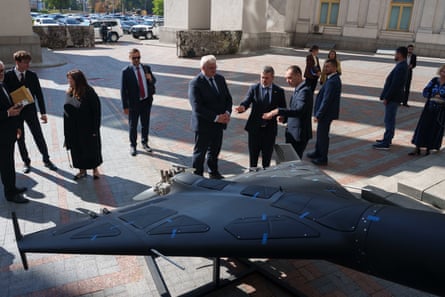
Moscow has frequently said the provision to Ukraine of weaponry, intelligence and military advisers makes western countries participants in the war and legitimate targets, but has so far avoided action that might provoke a coordinated response from Nato. Instead, it has launched what western agencies describe as a campaign of sabotage against targets in countries that are the loudest backers of Ukraine, and one-off incidents apparently meant to test boundaries, such as when more than a dozen drones, flying without ammunition, veered into Polish airspace a year ago.
Koudelka said the current Russian tactic was “escalate to de-escalate”, with the Kremlin keen to push at weak points in western societies to tamp down their support for Ukraine’s war effort. “They believe if they escalate enough, then European countries will decide not to support Ukraine,” he said.
In recent weeks the Trump administration has made another attempt to kickstart peace negotiations in Ukraine. As well as the Ratcliffe visit to Moscow, the US envoys Steve Witkoff and Jared Kushner made another trip to Moscow, as well as a first-time trip to Kyiv. While Donald Trump has frequently claimed the Russian president, Vladimir Putin, is interested in a deal, there is scepticism in Europe that the Kremlin has any interest in good-faith negotiations.
“I haven’t seen any signs that there is a serious consideration in Moscow about real negotiations,” said Thomas Nilsson, the head of Sweden’s military intelligence and security service, in an interview on the sidelines of a conference in Riga. “My assessment is that they are still thinking that they could achieve their strategic objectives, so they are just playing negotiation theatre,” he added.
All three intelligence bosses said that whatever else happened, Russia’s campaign of sabotage in Europe is likely to intensify in the coming months. Nilsson described as a “gamechanger” the recent armed drone incident at Leipzig airport, which German authorities have attributed to Russian intelligence.
“To have an armed UAV drone sent in to a busy airport in the middle of Europe … If you have attacks that could result in losses of life or losses of very critical infrastructure that have a huge implication for society, I think that is a gamechanger,” he said.
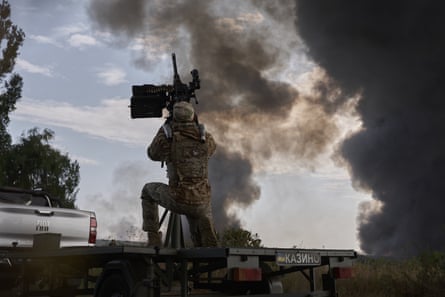
Mežviets said Russia was moving from randomised targeting of sabotage and arson attacks intended to sow panic to specific targets linked to western backing for Ukraine. “We see them looking to attack railway infrastructure, Ukraine support infrastructure. Right now we see a move towards defence industry targets,” he said. “If you do this then the psy-op effect is reached anyway, so you get both things in one,” he added.
Nilsson said there were several goals behind the recent intensification of Russian sabotage activity: to reduce support for Ukraine, to introduce splits in Nato and to alarm European populations. “I think Moscow would love Nato to have endless discussion about article 4 consultations, but coming up with no actions,” he said.
Koudelka said another effect of the sabotage campaign is the stretch on resources of intelligence services, as doubts often linger even when incidents are caused by other factors. “Now every fire or every malfunction needs to be investigated by intelligence services as a potential terror attack, and that is a good result for them,” he said.