3 months ago
206
3 months ago
206
The director of a box office hit film about Nazi collaboration and its Oscar-winning star have described criticisms they have whitewashed wartime atrocities as dishonest and “a scandal”.
Xavier Giannoli and the actor Jean Dujardin were responding to a bitter row that has divided French historians over the film Les Rayons et les Ombres (Rays and Shadows), which recounts the story of the wartime press baron Jean Luchaire.
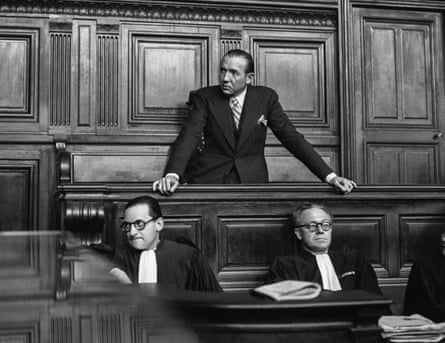
Luchaire, who was a pacifist, became a Nazi collaborator during the Occupation of France when he worked as commissioner for information and propaganda for the puppet Vichy regime. Luchaire was executed for treason in 1946.
Giannoli rejected accusations he had produced what one critic called “a masterclass in historical gaslighting”, insisting he had worked closely with historians to write the screenplay. He said critics attacks were “factually false”.
“My point of view is to tell the story of a collaborator in his world. The disgusting obscenity of people who were [partying] under the chandeliers eating caviar and petit fours during the Occupation,” he told the current affairs and culture programme Quotidien.
Accused of negatively portraying the French resistance, the film-maker responded angrily: “It’s a scandal! It’s disgusting! It’s profoundly dishonest!
“The film has opened a historical debate, but I didn’t expect it to take such political proportions. The debate is polarising around today’s political lines.”
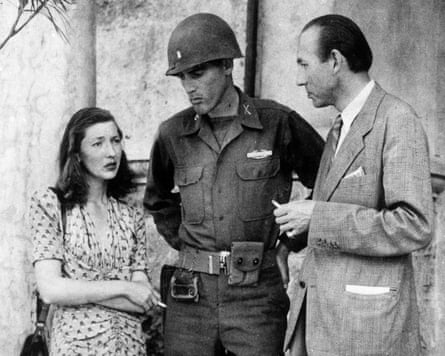
Luchaire was a French journalist and press baron who was appointed minister of information in the puppet government in Vichy led by Philippe Pétain.
In 1944, Les Nouveaux Temps, the newspaper he had founded four years earlier, disseminated Nazi propaganda calling for the “extermination” of the French resistance and carried articles attacking allied forces after D-day. During the Occupation he lived in luxury, dining at gastronomic restaurants and attending glittering parties.
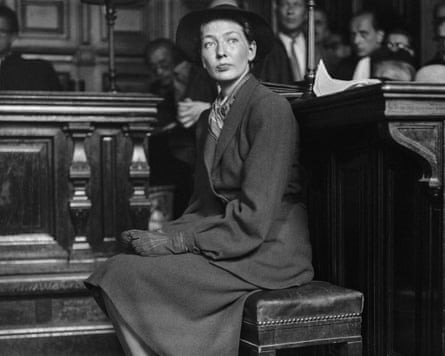
The film is narrated from the perspective of Luchaire’s daughter, Corinne, an actor once hailed as the “new Garbo”, who is played by Nastya Golubeva. Corinne also collaborated and partied during the Occupation, and was jailed for the crime of “national indignity” after the war. She died of tuberculosis in 1950.
Since its release in mid-March, Les Rayons et les Ombres has drawn more than 800,000 French cinemagoers. The movie’s success has proved a surprise, not least because its length – more than three hours – means fewer screenings each day.
However, critics, including historians, have attacked the film, saying it downplays the role of the resistance and the fate of Parisian Jews who were rounded up and sent to Nazi death camps, and that it encourages viewers to empathise with Luchaire and his daughter.
Luc Chessel, a cinema critic at leftwing newspaper Libération, wrote: “We apologise for the slightly Radio London-style Anglicisms, but we are witnessing a masterclass in historical gaslighting.”
He added: “The film’s overarching problem lies in its moral approach to the whole matter.”
In Le Monde, the historian Bénédicte Vergez-Chaignon, whose specialism is the second world war, attacked the film’s “distortion of time and events”.
“The list of ‘licences’ taken with the historical truth – some of which are quite egregious – is endless … The banality of saying that a character is never entirely good or entirely bad does not justify forcing compassion upon the viewer.”
Critics have also condemned the director’s choice of title, which is drawn from Victor Hugo’s 1840 poetry collection Les Rayons et les Ombres, in which the author contended there is good and evil in everyone.
Giannoli described much of the criticism as “factually false”. He said he believed the attacks, mostly from leftwing papers and reviewers, were politically motivated.
“The rise of the National Rally [party] may have hysterically influenced these commentators’ reactions to the film,” he said. “I did a huge amount of work with historians specialising in these people and from that I wrote a screenplay.
“A screenplay is not a historical thesis. It’s not a documentary. To say we are making [Jean and Corinne Luchaire] sympathetic is profoundly dishonest.”
The director said that even today, it was hard to have a conversation about wartime collaboration in France. “Vichy was moral chaos. The extreme right was at the heart of it, but some leftwing people collaborated and some pacifists. These people want to say the left didn’t collaborate … but history is complex, as the film shows. There is no attempt to absolve these people.”
Dujardin, who won France’s first Oscar for best actor for his role in the 2011 film The Artist, said he understood Giannoli’s anger.
“Dictators are not always monsters or fire-breathers. Great dictators were human and sympathetic in the beginning,” he said, adding that Luchaire was “a paradox”.
“He was a leftwing humanist in the 1930s, but his pacifism became extreme; for him it was anything except war.”