3 hours ago
11
3 hours ago
11
Joshua Wong, one of Hong Kong’s most prominent pro-democracy activists, pleaded guilty on Wednesday to conspiring to seek foreign sanctions against Hong Kong and China, a national security charge that carries a maximum life sentence.
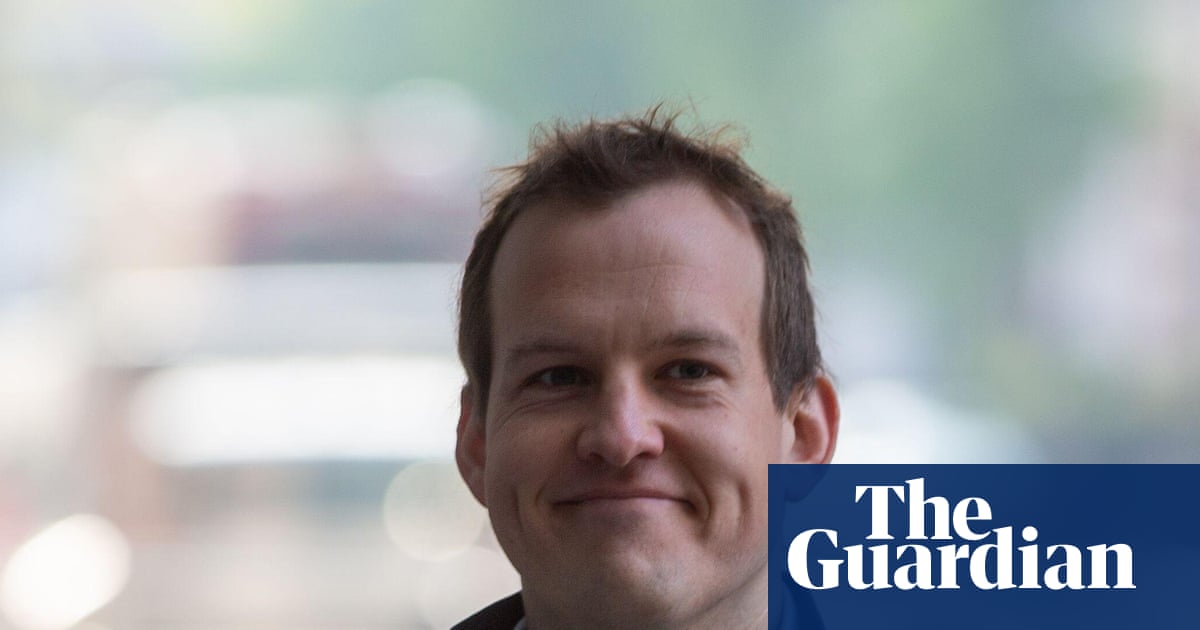
Prosecutors have accused Wong, 29, of working with the exiled Hong Kong activist Nathan Law to urge foreign powers to impose sanctions, blockades or other hostile measures against China.
The court heard that Wong had visited foreign countries and met foreign politicians to lobby for sanctions against Hong Kong and China.
The prosecution said he had continued to call for sanctions on Hong Kong and China after the implementation of the national security law and that he had posted meetings on his social media accounts.
Wong has been continuously imprisoned since November 2020. He has spent nearly six years in detention and had been due to be released in January 2027.
In 2022 he pleaded guilty to conspiracy to commit subversion for his role in an unofficial primary election. In November 2024 he was sentenced to four years and eight months in prison.
Wong waved at supporters as he entered the dock. He wore a blue shirt and black-rimmed glasses. He stood with his arms behind his back as he pleaded guilty to the charges.
Wong is expected to be sentenced later. The offence is punishable by a prison term of three to 10 years, or up to life imprisonment if the offence is deemed to be “of a grave nature”. Pleading guilty could typically result in a reduced sentence.
Outside Hong Kong’s high court, people queued overnight to secure a seat at Wednesday’s hearing.
One supporter who attended the court criticised the proceedings.
“Under a compromised judicial system with zero space for a fair trial, Wong’s plea is a forced reality,” they said, asking not to be named. “This is not justice, but Beijing’s absolute eradication of Hong Kong’s dissident voices.”
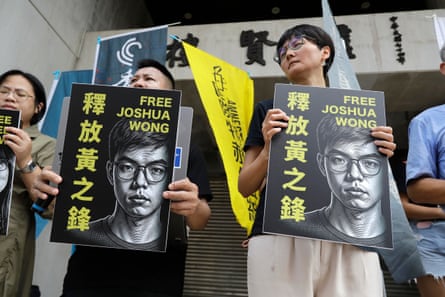
In 2014, the then teenage Wong became the international face of the Umbrella Movement, when thousands of protesters occupied major roads across Hong Kong for 79 days demanding greater democracy. In October 2014 he appeared on the cover of a Time magazine under the headline: “The Face of Protest”.
When protests erupted in 2019 over a proposed extradition bill, Wong was serving a prison sentence for his role in the 2014 demonstrations. He was released at the height of the movement and immediately joined calls for the bill to be withdrawn.
In 2020 Beijing imposed a wide-ranging national security law on Hong Kong after a year of anti-government protests. The authorities said the law was needed to restore stability to the international financial hub. Critics say six years on the law is continuing to expand in scope.
Wong is the only activist in Hong Kong prosecuted twice under the law. Supporters say the prosecution heavily relied on his advocacy before the national security law was enacted and argue his case has been applied retroactively.
“It’s obvious that the government wants to keep him behind bars for as long as they can, so as to isolate him and not to let him become a visible symbol of resistance.” said Frances Hui from the Committee for Freedom in Hong Kong Foundation.
Wong’s case has attracted widespread condemnation from global rights organisations.
“By stacking one charge after another against Joshua Wong, the authorities are ensuring that the democracy icon stays behind bars, silencing him and the Hong Kong pro-democracy movement he helped lead and inspire,” said Elaine Pearson, Asia director at Human Rights Watch.
“Conflating promoting democracy and free speech with undermining national security is a favourite dodge for authoritarians. Beijing also likes blaming ‘hostile’, but unspecified foreign forces,” said Sophie Richardson, a longtime China rights advocate.
On Tuesday the former Conservative leader Iain Duncan Smith urged the UK government to raise Wong’s case with Beijing, saying: “Enough is enough. It’s time to stop chasing peaceful protesters.”
With Associated Press