2 months ago
117
2 months ago
117
When Silke Peters bought a crank radio and a camping stove just after the start of Russia’s full invasion of Ukraine, her husband thought she was “a little crazy”. “He put me down, only half-jokingly, as a prepper,” she said, referring to the kind of person who stockpiles in case of catastrophe.
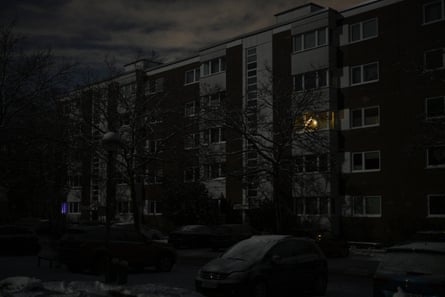
For almost four years, the items gathered dust in the cellar of the Peters’ two-room flat in Zehlendorf, a well-to-do district of Berlin. But in recent days the windup radio – with its inbuilt torch and charge point – has come into its own during Germany’s longest power cut since the second world war.
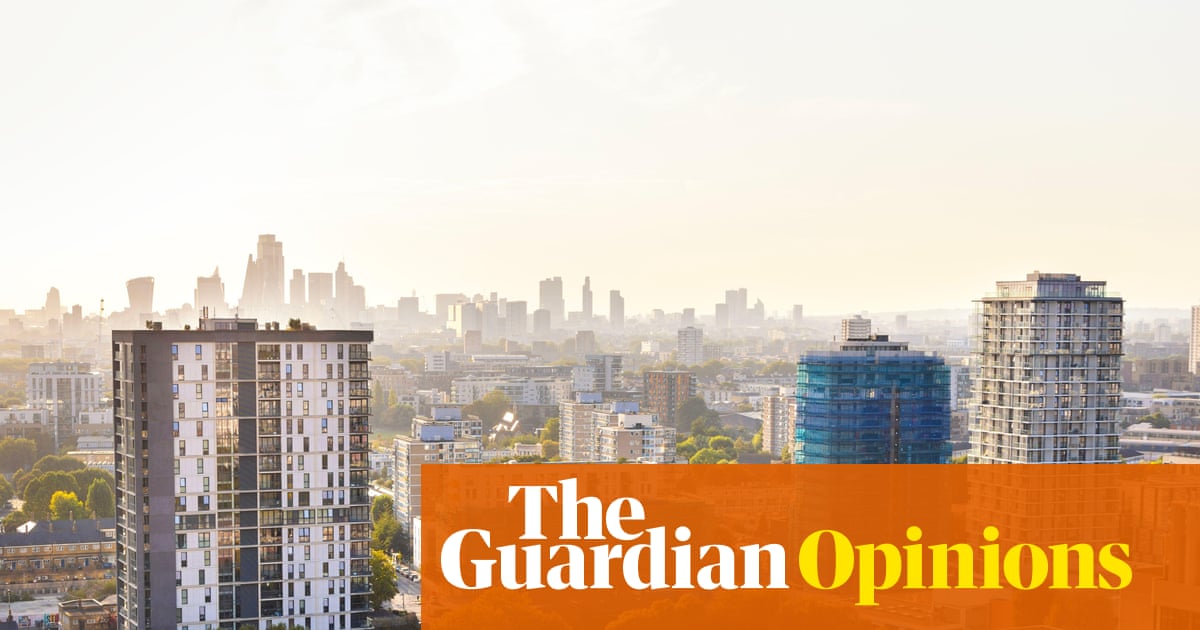
Leftwing anarchist militants have claimed responsibility for an arson attack on Saturday that cut the electricity to about 45,000 households, almost 2,000 businesses, four hospitals, 74 care homes, 20 schools and a considerable chunk of the public transport network in south-west Berlin.
Federal state prosecutors have taken over the criminal investigation into the saboteurs, Vulkangruppe (Volcano Group), who said their aim was to “turn off the juice of those in power” and to highlight Germany’s overdependence on fossil fuels. Aside from some footprints left in the snow, investigators admit they have little to go on so far.
On Wednesday morning the remaining 20,000 households and 850 businesses still without heating or hot water were finally reconnected. But many Germans still feel they are without answers to three vital questions: who was responsible, how could the infrastructure of Europe’s largest economy prove so vulnerable, and how can authorities prevent such an attack from happening again?
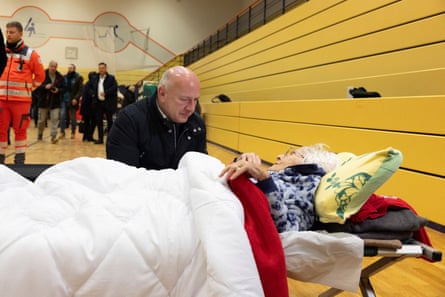
“What is wrong with this city?” an anguished middle-aged man was heard asking on camera as Berlin’s mayor, Kai Wegner, dropped in on a sports hall housing residents on army camp beds. The man’s mother, who had been moved out of her nursing home, was lying on one of the beds.
“How is it possible that the power grid is so insecure?” asked Anar, a cleaner in her 60s who was stuck on a train on the outskirts of Berlin on Saturday night, fearing she would be unable to get to her workplace – or be paid. “This has made a lot of people very angry.”
The Red Cross, which came to the aid of thousands this week, has led urgent calls for more investment to be made in domestic civil protection and disaster relief.
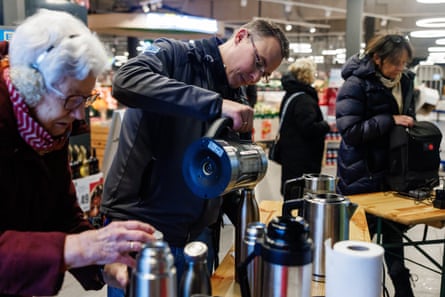
This week its members were among those handing out thermal flasks and muesli bars to residents. The army was brought in to distribute diesel to clinics running emergency generators and to help with repairs.
When Berlin’s energy and economy senator, Franziska Giffey, turned up on Monday to see the fallout for herself, she could hardly hide her embarrassment. She said the attack was a “serious blow to critical infrastructure”, describing how the perpetrators had set fire to a bridge carrying high-voltage cables and had probably used public maps to select their location.
“You can find a lot of information on the internet,” Giffey admitted in an interview with the broadcaster DLF, saying policymakers needed to prioritise security over transparency in future.
Manuel Atug, a founder of AG Kritis, an independent working group of experts on critical infrastructure, said his organisation had repeatedly warned of shortfalls in the system, of a lack of planning to ensure that networks – be they electricity, water or cyber – were backed up so that they could not fail due to one event such as an arson attack. Glaring also is the failure of lawmakers to put pressure on utility companies and network operators.
“Resilience costs money,” Atug said. “Companies only do what they’re legally required to do.” Politicians were keener to do things that were visibly striking, such as “building drone defence centres”, rather than implementing more mundane measures such as protecting energy networks or fixing dilapidated bridges or school buildings, he told Der Spiegel.
The far-right populist Alternative für Deutschland has been keen to exploit the situation, accusing the country’s leadership of failing to keep its citizens warm and safe, and turning out this week to give away blankets. In a statement, the party’s deputy federal spokesperson, Kay Gottschalk, said the government had failed to develop “any sort of consistent political and security-related response” to sabotage or arson attacks. “It’s no longer an abstract warning we face, but a bitter reality,” he said.
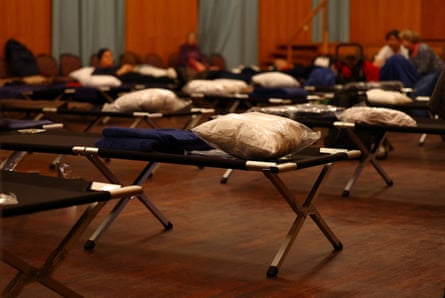
Across Berlin there has been an outpouring of goodwill towards those who lost power. Hotels and private individuals, as well as libraries, swimming pools, cinemas and museums, have opened their doors.
Zehlendorf is known as a well-heeled part of Berlin, home to ambassadors, pop stars and business leaders, as well as ordinary Germans. Vulkangruppe apologised to people such as the Peters – a retired nurse and caretaker in their 70s – who have had to stay with friends for days. But Silke gave this short shrift, saying: “Tell that to the elderly who were stuck in their lifts when the black out happened, or our neighbour whose cat ran away and has yet to return.”
The Peters hope to be able to return to their flat on Wednesday. When they do, Silke will be in on a secret her husband had kept.
“It turns out he’d been doing his own prepping,” she said, referring to supplies of tinned fish and a large canister of drinking water he had put in the cellar, unbeknown to her. “Everyone in Germany is doing it these days. And why wouldn’t you? The difference to just a short while ago is that most readily admit it now without fear of ridicule.”