3 hours ago
10
3 hours ago
10
The accelerating climate crisis and this year’s record-breaking El Niño mean that, although the summer’s heatwaves are still fresh in the memory, households in the UK are already being told to prepare for a potentially destructive winter of storms and heavy rain – leaving millions of homes at risk of flooding.
Government action is needed to improve flood defences and build reliance on a national and regional level. But with the UK’s flood season just weeks away, the Guardian spoke to experts to find out what action communities and individuals can take to make their neighbourhoods and homes more resilient, from self-closing airbricks to deflated children’s footballs.
The first step is to check whether your home or neighbourhood is listed at risk of flooding on the government’s website. If it is, find out if the local council has a flood alert scheme and make sure you and your neighbours are signed up to that and the Environment Agency’s flood alerts system.
Join any local community flood group – or consider setting one up with neighbours – and approach the council to see what flood plans it has in place, and get involved in making them better. This could include lobbying for more permeable surfaces, rain gardens and tree planting.
Identify any vulnerable residents who might need extra support and draw up a street or neighbourhood flood plan to make sure everyone knows what to do in the event of a flood.
Tracey Garrett, the chief executive of the National Flood Forum, said flooding can be “incredibly frightening and disruptive” but insists that together, communities, households and councils can make difference to an area’s resilience.
“We are seeing increasingly intense rainfall and a growing risk from surface water flooding, and climate change means we cannot assume that the flooding patterns of the past will necessarily be the patterns of the future,” she said. “This makes preparation more important than ever.”
Gardens and outdoor spaces
According to Mary Long-Dhonau, who runs the Flood Mary campaign, protecting your home starts outside. She says now is an ideal time to check brickwork and mortar on outside walls for cracks or weaknesses. These should either be repaired or replaced and external walls can be treated with a breathable waterproof sealant.
“Having cracks or crumbling mortar can be like having 20 taps in your wall that will let the flood water straight in,” said Long-Dhonau, who provides a directory of builders who specialise in flood-related work.
Experts also suggest making sure gutters are clear and in good working order. Long-Dhonau adds that residents should consider installing water butts, which catch and store the rain before it reaches the ground. “They are easy and relatively cheap and it means if you get a warning about a possible flood risk you can empty the water butts before the rain arrives, meaning they have full capacity to hold the maximum amount once the rain starts, keeping it out of the drains,” said Long-Dhonau.
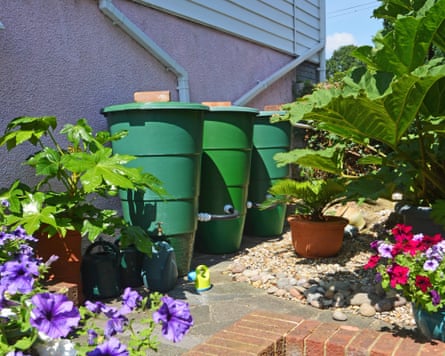
The way gardens, driveways and other outdoor spaces are designed also has a big impact on how quickly rainwater runs into already stretched drainage systems – and how likely your home is to flood.
Surfaces such as concrete, paving and artificial grass prevent water soaking effectively into the ground. Instead, you should include planted areas, rain gardens or permeable paving to allow water to drain away.
“Even if you have a paved area, just taking up one or two paving stones and planting some water-thirsty plants can make a big difference,” said Long-Dhonau.
Improving soil health and increasing plant cover also allow gardens to better absorb and hold water, reducing the risk of flooding.
“The trick is to work with nature wherever possible,” said Long-Dhonau.
Homes
Flooding can happen quickly and be stressful, so experts advise having a “flood to-do list” spelling out what needs to be done should the worst happen, including how to turn off the gas and electricity supplies and which treasured belongings need moving out of harm’s way.
With this in mind, experts advise having a “flood box” to keep a few flood essentials in, from a head torch to flood tape, plastic sheeting to absorbent flood cushions.
“No one can say exactly what this winter will bring, but you don’t need to wait for a flood warning before taking action,” said Long-Dhonau. “After all, you don’t want to be hunting around for your insurance details or wondering which belongings to move first when the water is already rising.”
after newsletter promotion
In emergencies
In terms of stopping the water getting in, the house experts warn that a standard airbrick can let thousands of litres of water in to your home every hour, so it is crucial to identify where they are and have a plan in place for what to do if a flood hits.
Long-Dhonau says that ideally they should be replaced with Kitemarked self-closing airbricks, which seal when the flood water comes. Alternatively, temporary covers are available that have to be manually installed before the flood hits.
Flood water can also come through doors or windows. Flood doors can be fitted, which, although expensive, are effective at keeping water out. Alternatively, floor barriers can be installed outside the door, which need to be put in place before the flood water arrives.
In an emergency, Long-Dhonau suggests having flood tape or aluminium tape in the house, which can be used to seal up airbricks, doors and windows.
“People always think of sandbags when floods happen, but having some good-quality flood tape on hand is not only a more effective way to better protect your home but also much, much cheaper.”
One of the most distressing and destructive impacts of flooding can be waste water and sewage being forced back up into the house through the toilet system.
Ideally, flood-risk properties should have a non-return valve fitted to the drainage system, which will stop this happening. Alternatively, toilet bungs and stoppers are available, which also work but need to be fitted manually.
In an emergency, Long-Dhonau suggests a child’s football can be deflated, pushed down the toilet and pumped up again. The toilet seat can then be taped down using flood or aluminium tape.
“Obviously, it is about being as prepared as you can be but also using whatever is to hand to limit the damage,” she said.
Other tips for flood-prone homes
Long-Dhonau suggests raising furniture off the floor by propping it up on upturned buckets or decorators’ trestles. She also says curtains can be tied up with scarves or tights and table legs put in buckets, or even wellies, to protect them from rising flood water. Precious objects should be put in plastic clip boxes and moved somewhere safe.
“You want to go into your room and look around at everything below waist height and think, what is really precious to me?”
In properties that regularly flood, experts recommend moving plug sockets higher up the walls and installing flood-resilient flooring and materials, which can make a property easier and quicker to clean and save thousands of pounds.
Kelly Ostler-Coyle, from the government-backed Flood Re reinsurance scheme said: “No one can predict exactly where or when flooding will happen, but there are practical steps that people can take to make their homes more resilient … A little preparation can make a real difference – helping to protect the things people care about and making it easier to get back into their homes and back to normal if flooding does happen.”