2 months ago
179
2 months ago
179
When Fatima arrived at a district court in northern Afghanistan in late 2025 with her parents, she hoped a judge would finally allow her to leave her calamitous marriage.
She had never met her husband before their arranged wedding in the summer of 2024. Each time her family asked to see him, they were told he was shy. It was only on the wedding day, relatives say, that Fatima understood what had been hidden from her: her husband had severe intellectual and physical disabilities and could not eat, wash or dress himself without help.
In the months that followed, Fatima cooked, cleaned, cared for her husband and tended the family’s livestock. She was rarely allowed to leave the house. Whenever she visited her parents, she wept and begged them not to send her back.
Finally, her parents agreed to go to court and help Fatima ask for a divorce.
“In front of everyone, the judge asked my son-in-law only one question: ‘Who is this woman?’” recalls Shirin*, Fatima’s mother. “He answered: ‘She is my wife.’ Then the judge turned to the groom’s family and said: ‘Take your bride.’”
Two Taliban soldiers pointed their weapons at Fatima’s parents as her in-laws seized her and dragged her toward their car.
“My daughter was screaming and crying that she did not want to go with them,” Shirin says. “But nobody listened.”
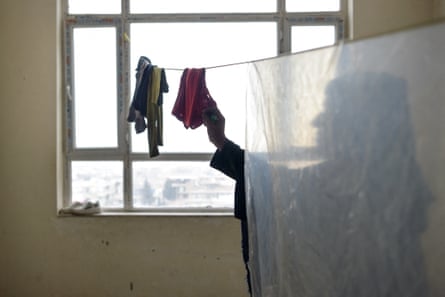
What happened to Fatima was not simply the decision of one judge. It reflects a legal system in which Afghan women have almost no independent right to end their marriages. Before the Taliban, women seeking to divorce men who were violent, abusive or absent had always faced a difficult road through the courts – but a few narrow gateways remained open. Now, even those are being shut. For the families of women in abusive marriages who want them dissolved, getting their daughters out is an increasingly impossible task.
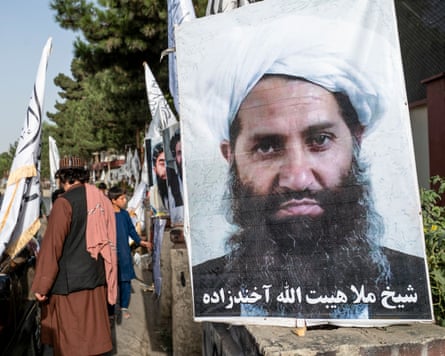
In April 2026, the Taliban leader, Hibatullah Akhundzada, issued a new decree on the judicial separation of spouses, setting out 12 grounds on which a marriage can be dissolved. On paper, some appear to give women a path to court. In practice, each path is blocked by the authority of men: the consent of a husband, the discretion of a judge, the testimony of witnesses, or the power of male relatives. Even in cases of abuse or neglect, the decree states that judges and arbiters cannot grant a divorce without the husband’s consent.
The decree also legalises child marriage. It allows male relatives to marry off children and says that once those children reach puberty, they may ask a court to nullify the marriage in limited circumstances.
Ruqya* was 16 when her mother and grandmother accepted a proposal from a 31-year-old relative living in Turkey. Ruqya protested from the beginning. She called the man herself and told him directly that she did not want to marry him.
“He told me that once my family had agreed, I would agree too,” she says.
During the engagement, she says, he insulted her parents in voice messages, ignored her calls and continued communicating with another woman he wanted to marry. When the recordings reached Ruqya’s family, an argument erupted between the two families.
Ruqya’s family eventually sought to end the engagement through khul – a form of divorce in which a woman pays her husband to consent to end the marriage.
The Taliban decree approves this, allowing women or their families a narrow route to buy her freedom – but sets no limit on the amount that must be paid.
The family of Ruqya’s fiance demanded 800,000 Afghanis (£9,300). Her family did not have the money. They sold their home and arranged a marriage for her younger sister in the hope of raising money for the settlement. Still, they couldn’t raise the full amount.
“When I look at my mother and father, I feel like I destroyed them,” Ruqya says. “My mother says: ‘If you had accepted [your marriage], at least we would still have our house.’”
Ruqya must now remain married to the man she has spent years trying to escape.
Even before the Taliban’s latest decree, Afghan women did not have an equal right to divorce. They could, however, petition to end the marriage in exceptional circumstances, including when a husband failed to provide basic necessities, had disappeared for at least three years, or was suffering from a terminal illness. Even then, women had to prove their case in court.
The Taliban’s new code follows much of this older framework but makes several stark changes. It explicitly allows children to be given in marriage at any age. It also forces women whose husbands are missing to wait until they are presumed dead before they can be separated. Part of the code that addresses abusive or neglectful husbands allows a wife to petition the court if her husband is unjust or withholds financial support. But the same article states that judges and arbiters “cannot, solely on the woman’s request and without the husband’s consent, grant divorce”.
Habiba*, 27, has spent four years trying to escape from her abusive husband.
Her marriage was part of an exchange arrangement that enabled her brother to marry a woman from the same family. When she later told her brother she wanted a divorce, he warned that it could destroy his marriage too.
After the Taliban takeover, Habiba says, her husband lost his job and became increasingly violent, beating her constantly. She first went to the police in Kabul, then to court. Her husband repeatedly refused to appear.
When Taliban officials visited the house to assess Habiba’s allegations of abuse, her husband’s family slaughtered a sheep for the visitors and apologised. The inspectors left satisfied. Habiba was ordered to return to the house or pay 1.6m Afghanis to her husband.
“He said it was enough money for my husband to marry another woman,” Habiba says – but her father had no money and nothing left to sell.
“I am still here,” she says. “I am waiting for this government to fall, or for money to appear. One of those two.”
Mina*, 22, from Herat, managed to escape an unwanted marriage only after working for two years to pay for her own freedom.
She was 18 when her family accepted a proposal from a relative while her father was working in Iran. During the engagement, she learned the man had become addicted to drugs. When Mina tried to end the engagement, the man’s family accused her of lying and claimed she wanted another man.
One evening, her fiance stood outside her house and slit his wrists in front of her and her younger sister.
“He survived,” she says. “But I still see it in my dreams as a nightmare.”
Her engagement was finally cancelled on condition that her family must pay for expenses named by her fiance: clothes, jewellery and engagement costs, inflated far beyond what had actually been spent.
Mina worked double shifts in an embroidery workshop in Iran for two years to pay the full amount herself.
“I bought my own freedom,” she says.
Leila*, 24, from northeastern Afghanistan, says when she sought khul from her husband, her family had to pay 250,000 Afghanis.
“My father had to sell his car and two milking cows,” she says.
Sima*, 26, from Kabul, says she ended a one-year engagement to her maternal cousin only after her family agreed to pay 400,000 Afghanis.
For Fatima, the abuse has become much worse. When family members visit, her in-laws remain in the room, monitoring every conversation. One relative who managed to speak to Fatima privately in the courtyard says her face was badly bruised.
“They beat her regularly,” the relative says. “She said they warned her that if her parents tried [for divorce] again, they would ask the Taliban to arrest them.”
The last time her father saw her was months after the judge forced her back to her husband’s home. “She was not well at all, mentally or physically,” he says. “She held me tightly and begged me to take her with me.”
He pauses.
“My hands are tied,” he says. “I don’t know how to save my daughter from that situation. She has become very weak, and I am afraid something worse may happen to her.”
* Names have been changed
-
Pershing, Hajar, Aryan and Yalda Amini for Zan Times contributed to this report