1 hour ago
7
1 hour ago
7
Key events
Nasdaq futures drop amid concerns over AI buildout costs, Fed rate hikes
Stock futures are pointing to a 2.7% fall on the tech-heavy Nasdaq when Wall Street opens later, amid concerns over imminent US interest rate hikes and debt-backed spending on AI.
Valuations of AI stocks have ballooned but investors now worry that higher borrowing costs could make the buildout of AI infrastructure more costly.
Nvidia and Google owner Alphabet, along with chipmakers Intel, Marvell Technology and Advanced Micro Devices are all expected to drop at the Wall Street open.
Elon Musk’s SpaceX shares, which tumbled 16.4% on Monday, are expected to drop further, by 3%, after it become the latest big company to tap the bond market following its recent blockbuster IPO, after reporting losses last year.
Ipek Ozkardeskaya, senior analyst at Swissquote, said:
The Nasdaq was pulled lower by Big Tech stocks [on Monday] after news that SpaceX (which is not yet part of the index) was looking to borrow up to $20bn through a bond sale – investment-grade bond (uh-hum) – quite unusual for a company that is burning cash. Seemingly, the recent IPO did not suffice to assuage the company’s funding needs — a reminder of how much money may still be burned on the way to Mars. SpaceX shares fell more than 16% yesterday, reducing the post-IPO rally to less than 15% — still substantial given that the company’s valuation remains massive by traditional metrics.
Again, SpaceX is not yet part of the Nasdaq indices, but the fact that it is jumping on the bond train to fund excessive AI and infrastructure spending revives earlier concerns that Big Tech may be spending too much on AI infrastructure and increasingly financing that spending through debt. Morgan Stanley expects global AI-related borrowing to surpass half a trillion dollars this year, meaning that corporate bond indices are increasingly becoming dominated by the AI theme as well.
UK business leaders call for bold decisions; Pocket Living chair: 'We need people with a vision'
UK business leaders have called for bold decisions from a new government to kickstart the economy, after Keir Starmer resigned as prime minister on Monday, paving the way for Andy Burnham to become the next leader.
I spoke to Marc Vlessing, the Dutch-born chair of the property developer Pocket Living, who said:
We need people with a vision, that’s what this is all about. Starmer is not a visionary, he’s not a bold leader. [Chancellor] Rachel Reeves is a rule pusher, she’s not a bold leader.
He said Starmer would be seen as an “important transition figure” over time, but warned:
Inward investment in the UK is lower today than it has been at any point in the last 20 years from abroad, so we need to fix that.

Financial markets have largely shrugged off Starmer’s resignation, as this had long been expected. On Tuesday, yields on UK government bonds, known as gilts, fell by around 3 basis points, while sterling dipped slightly, by 0.2% against the dollar.
One FTSE 100 boss was exasperated, though.
It’s frustrating to have yet more disruption. We will spend, it seems, the next three months in the run up to a critical 2026 budget, seemingly in the dark about who will actually deliver it. Who will advise them? Who should businesses reach out to in the meantime that might still have a job in September?
If Burnham, the former Greater Manchester mayor, becomes the new prime minister, Vlessing expects him to step cautiously in forging closer relations with the EU within the 36 months before the next general election, but expects at least one bold move, namely greater devolution to empower the metro mayors.
Business leaders expect to see a focus on health, defence, energy and housing, and stressed the need for fundamental changes to tackle the housing crisis and revive construction. The business lobby group CBI, has stressed that “businesses need to know that there is not going to be further drift or delay”.
Vlessing argued:
The big change that the country needs to see is the unshackling of the power of the Treasury, whether that is through greater subsidiarity at the devolved regional government level, or… [in] housing, where Homes England is still essentially stymied from using the powers that it has, both in terms of regulation and finance, to put out significant chunks of money into the markets to create public-private partnerships.”
To avoid a sell-off in sterling and government bonds, Burnham needs to “send very bold signals” by removing the state pension triple lock and and putting capital gains and income tax reform on the agenda, Vlessing said.
He backed Wes Streeting as the next chancellor, saying someone is needed at the Treasury “who is not a round head,” and John Healey, who resigned as defence secretary last week and served as shadow housing minister in the past, as housing secretary “to embolden Homes England”.
The property group Savills on Monday predicted that new home completions in England will average 167,500 annually over the five years to 2029/30 – far short of the government’s target of 300,000 homes a year.
England is likely to deliver 837,500 new homes in total over the five years to 2029/30, Savills said, broadly in line with the 20-year average for delivery, but way below the government’s 1.5m target. The next two years will be particularly tough, it said, as low levels of planning consents and housing starts constrain the development pipeline and people struggle to afford a new home.
The latest figures show new homes completions fell by 4.1% to 190,602 in the year to March 2025, meaning completions have dropped by 10.2% in the two years since the help to buy scheme ended.
UK services sector shrinks at faster rate, underlining tough road ahead for Burnham
The UK’s services sector is shrinking at the fastest rate in nearly three and a half years, underlining the tough economic position Andy Burnham will face if he becomes prime minister by 16 July as expected.
A closely-watched survey, S&P Global’s monthly services purchasing managers’ index (PMI) fell in June to 48.7 from 49.3, according to a flash estimate. It was the joint sharpest contraction since the beginning of 2021 (alongside January 2023). Any reading below 50 indicates contraction; any reading above points to growth.
The weakness in Britain’s dominant services sector overshadowed a boost to manufacturing output (linked to strategic stockpiling ahead of price increases), resulting in overall UK private sector activity contracting for the second month in a row in June. Overall new business volumes declined at the fastest rate in 14 months.
Chris Williamson, chief business economist at S&P Global Market Intelligence, said:
A disappointing June ‘flash’ PMI indicates that the economy contracted for a second successive month, albeit at only a 0.1% rate and merely flat-lining over the second quarter as a whole.
Price pressures remain elevated as companies point to the energy shock and supply squeeze from the war in the Middle East as exacerbating existing cost pressures from government policies.
These higher costs, combined with subdued business growth expectations for the year ahead, have caused employment to continue to fall at a worryingly high rate.
While current weakness is focused on consumer-facing services, an offsetting expansion of the manufacturing sector could soon falter, as demand here is being temporarily buoyed by the building of safety stocks amid ongoing warrelated supply worries.
Some of the war-related price pressures have started to moderate, however, largely thanks to lower energy prices, and the subdued growth and labour market pictures suggest that demand and wage-bargaining power are sufficiently slack to prevent inflation becoming entrenched.
For the growth and inflation outlooks, much depends on progress towards an end to the conflict in the Middle East, but closer to home we are seeing signs of the unstable political environment unsettling business confidence and delaying spending, which will also need to calm in order to lay better foundations for economic growth to revive.
European shares tumble after US tech sell-off
Europe’s main stock markets are a sea of red today, following Monday’s US technology sell-off, which also sent Asian stocks into a downward spin.
The UK’s FTSE 100 index has lost 0.9% to 10,343, while Germany’s Dax is down 1.5%, France’s CAC has fallen 1.06%, Italy’s MiB tumbled 1.7% and Spain’s Ibex slid 0.%.
Russ Mould, investment director at AJ Bell, said:
The FTSE 100 was lower on Tuesday after yesterday’s tech sell-off in the US.
The selling in SpaceX, as its trajectory starts to reverse following a blockbuster market debut, has had a knock-on effect on some of the UK vehicles with stakes in the business. The mining sector in London was also lower amid concern about the global economy.
The market reaction to the latest political news in the UK is relatively measured after Keir Starmer’s decision to step down as prime minister.
Gilt yields held firm despite uncertainty around whether there will be a smooth succession for Starmer’s replacement or a leadership contest.
Andy Burnham has already made attempts to address concerns he might rapidly increase borrowing and/or abandon fiscal rules should he become PM.
Europe’s Stoxx 600 fell 1.2%, on track for its biggest daily drop in more than a week, although it remains close to the record high hit earlier this month.
Nearly 80% of the index are in the red as the tech sell-off sapped risk appetite, with the exception of “drinks and drugs”.
Heineken shares rose 3% after the Dutch beer maker picked an outsider, Rafael Oliveira, as its new chair and chief executive. He has been running the Dutch coffee and tea maker JDE Peet (Jacobs Douwe Egberts) since 2024, and will join Heineken, the world’s second-biggest brewer, on 1 October.
Shares in pharmaceutical companies Roche and Novo Nordisk, as well as food giant Nestlé, also rose.
British grocery inflation slows, says Worldpanel
Grocery inflation in Britain slowed to 3% over the past month, easing concerns over the hit from the Iran war, while the heatwave boosted sales of suncare and syrups for water.
Grocery inflation slowed from 3.1% and 3.8% in the previous two months, according to Worldpanel by Numerator, allaying fears about the impact of the Middle East war on supermarket shopping.
Take-home sales at grocers climbed by 2.4% in the four weeks to 14 June, which included a 10-day heatwave making it the UK’s hottest May on record.
Shoppers splurged on summer stapes, with suncare sales more than doubling (+128%). Fresh beef burgers were up 40%, as people wheeled out their barbecues. Fresh prepared salads and chilled dips each grew by 13%.
Sugar-free syrups to mix into water were also popular, with sales up 31% year on year, fuelled by online viral trends such as #WaterTok.
No- and low-alcohol drinks also performed strongly, up 23% and outpaced the wider beer and cider category, which saw growth of 6%.
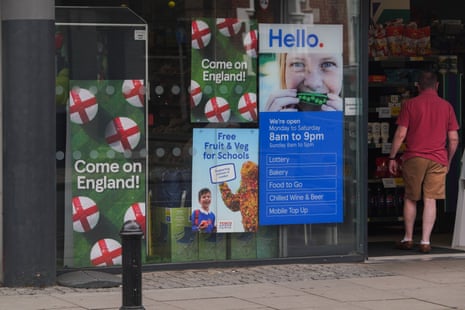
Fraser McKevitt, head of retail and consumer insight at Worldpanel by Numerator, said:
There’s something very British about the way a heatwave changes the weekly shop, and shoppers didn’t need much encouragement to fire up the grill and turn to al fresco dining this time around.
Barbecue staples performing well and shoppers turning to healthier options are a common summer trend, and we can expect to see this continue over the rest of June and into July, with the warm weather forecast to continue.
Worldpanel data shows that spending per person on food nearly doubles when households are barbecuing. Spending per head is close to £5for barbecue meals, compared to just over £2.50 for meals prepared inside.
Retailers have ramped up promotions as the men’s World Cup kicked off, for beer and cider, snacks and crisps and chilled pizza, resulting in the highest promotional activity in June for five years.
The overall share of grocery spending on promotions rose for the 39th month, with 30.4% of all sales now on some form of deal. Online grocery sales rose 9.1%.
McKevitt added:
Nearly a third of all grocery spending is now on promotion, and that upward streak shows no sign of breaking. Combined with strong online growth, it points to shoppers who know what they want and are increasingly confident about where and how to find the best deal. In short, retailers are having to compete hard for that summer shop.
Ocado was once again the fastest growing grocer, with sales up by 13.5% over the 12 weeks to 14 June.
Lidl attracted more than half a million additional shoppers through the tills, increasing its market share to 8.7%, up by 0.5 percentage points, which was the greatest increase for any retailer this month.
Convenience retailer Co-op also returned to market share growth, increasing its share to 5.3%.
Sales at Sainsbury’s, Britain’s second-largest supermarket chain, rose 2% and it now has 15.3% of the market.
Tesco, the UK’s largest grocer, now holds 28% market share, with sales growing by 1.2%. Morrisons share remained flat year on year at 8.4%, with sales up by 1.4%. Asda holds 11.5% of the market while Aldi has a 10.7% share.
Sales at Waitrose grew by 1.7% and 2.2% at Iceland. Both retailers maintained the same market share, at 4.5% and 2.2%, respectively.
South Korean stocks tumble almost 10% amid tech sell-off
South Korean stocks tumbled nearly 10% because of a big sell-off of technology stocks.
Foreign investors dumped major semiconductor and other shares to take profits, following a sell-off in US technology stocks. The South Korean won weakened against the dollar.
The benchmark Korea Composite Stock Price Index (Kospi) plunged 910.71points, or 9.99%, to close at 8,203.84. Trading was halted temporarily at 2.33pm local time after the index plummeted more than 8%.
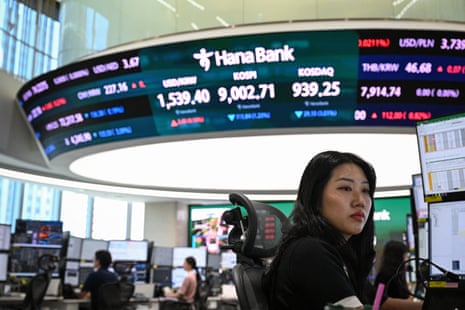
It marked the fourth time this year, and the 10th time on record, that the stock exchange halted trading of all stocks for 20 minutes.
In the US, the tech-heavy Nasdaq Composite closed 1.3% lower on Monday amid fresh concerns about big technology companies.
Shares of SpaceX tumbled 16.4% after reports that the company is selling bonds as part of a major fundraising effort to support its artificial intelligence initiatives.
Chris Beauchamp, chief market analyst at the investing and trading platform IG, said:
As surely as night follows day, SpaceX’s reversal has arrived, bringing the shares back down to Earth and causing euphoric sentiment to sputter. And just as inevitably, the losses are of such a size that they cannot be ignored by the broader market.
A chill wind is blowing through stock markets around the globe as investors watch the selling. It is a necessary corrective in sentiment, and should in theory make the shares even more attractive, but emotions don’t work like that. Instead of hopes that the shares will keep rocketing, we have the fear that they will go down even more, which will cast a deep gloom over today’s market action.
Nissan has stopped work on electric Qashqai in Sunderland, in talks with government
On the 10th anniversary of the Brexit vote, it has emerged that Nissan has stopped work on a fully electric version of its top-selling model Qashqai in Sunderland as part of a cost-cutting drive.
The move, reported by Reuters, comes as traditional rivals and new Chinese entrants flood Europe with affordable alternatives.
In 2016, Nissan committed to building an EV version of its Qashqai sports utility vehicle in Sunderland at Sunderland, Britain’s largest car factory, following government assurances that Brexit would not affect competitiveness.
In 2020, Nissan said it was pressing ahead with the £400m plan, despite repeatedly warning that post-Brexit tariffs would make European manufacturing unsustainable.
The carmaker has since embarked on a major global restructuring, however, and is in talks with the UK government about securing financial support for an updated roadmap for the factory, expected in coming months, Reuters reported last week.
Nissan makes the electric compact Leaf at the plant and in April unveiled an electric crossover SUV Juke to be built there.
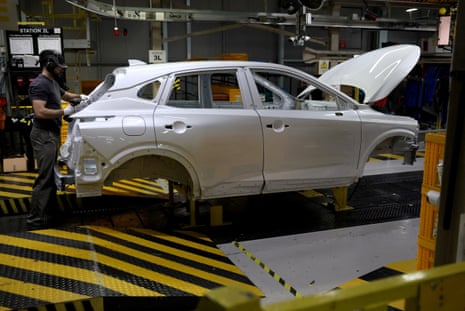
Development of the electric Qashqai was halted quietly early last year. Even if Nissan resumes work on it, it would not come to market until the early 2030s.
In a statement, Nissan did not address its plans for a fully electric Qashqai, but said it remained committed to expanding its “electrified” line-up, which includes hybrid models.
The company added that the European market had experienced “significant volatility” in EV demand and that it was pursuing a “balanced” electrification strategy.
Nissan said earlier this year it would halt plans to build two electric SUVs at its Canton, Mississippi, plant and instead focus on hybrid models. Globally, the firm has said it will cut the number of its models to 45 from 56.
The company sells the Qashqai as a petrol and hybrid vehicle, and the model accounted for about 45% of its total sales of 330,000 cars in Europe in 2025.
Any new government funding for Nissan is expected to be tied to a commitment to produce new models or variants and protect jobs at Sunderland, which employs about 6,000 workers in England’s industrial northeast.
Nissan said this month it had signed a pact with Chery to examine manufacturing the Chinese carmaker’s vehicles using one of the two lines at Sunderland.
Britain is also consulting carmakers over plans to water down rules that require them to hit EV sales targets or face punitive fines.
Ticket reseller StubHub UK ordered to refund 50,000 customers over hidden fees

Mark Sweney
Ticket reseller StubHub UK has been fined almost £900,000 and ordered to make payments to more than 50,000 fans for not showing the full price of tickets at the time of booking, an illegal practice known as “drip pricing”.
The UK competition watchdog, which launched an investigation into the sales practices of eight firms including rival reseller Viagogo UK last year, said that StubHub must issue refunds exceeding £590,000 to customers.
The Competition and Markets Authority (CMA) said that the average refund for the 51,350 customers it identified who had a “hidden fee” added at the end of the online ticket buying process is about £10.33 for each transaction.

The CMA also fined StubHub £889,200 for infringing consumer protection law. Emma Cochrane, executive director of consumer protection, said
Hitting customers with hidden fees is illegal. It’s not fair to draw people in with what looks like a good deal, only for them to find the real price is higher when they get to the checkout due to extra charges that can’t be avoided.
The CMA investigated the experience of fans buying tickets for gigs and sports events on StubHub and found that between 6 April and 7 December last year some were required to be mandatory costs such as delivery and service fees.
These fees were added at the final stage of the checkout process, and not included in the total price from the start, which broke consumer law.
The competition watchdog said that the almost £900,000 penalty includes a 40% reduction because StubHub admitted breaking the law and chose to settle the case. Cochrane said:
Our message to businesses is simple: be transparent on costs or risk CMA action. Going to a live gig or sports game is an event many people save for – and our action today means thousands of fans will get back money taken unfairly through hidden fees.
Britain's grid operator plays down blackout risks this winter
Mark Sweney
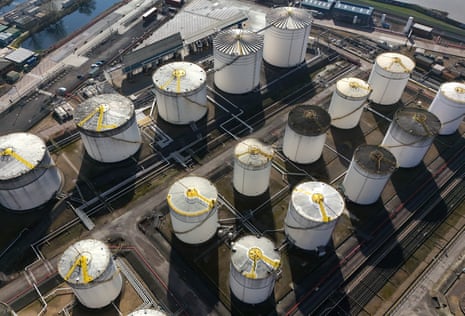
Great Britain’s grid operator has played down the risks of blackouts this winter, despite European gas storage levels dropping below the level seen during the 2022 energy crisis, my colleagues Mark Sweney and Jillian Ambrose report.
The National Energy System Operator (Neso) expects Britain’s electricity supply over winter to outstrip demand by almost 8.8%, with supplies expected to reach an almost five-year high.
Neso said that surplus supply levels dropped to as low as almost 6% the winter following Russia’s invasion of Ukraine four years ago, while this year is expected to almost match 2025’s 9% level, which marked a five year high.
However, Neso’s report noted that across the European Union gas storage levels are at a four-year low, 7% below the level recorded at the same time in 2022.
Gas plants are regularly used to bolster power supplies in the colder months when freezing temperatures drive demand for energy higher, or when wind and solar power is in short supply.
European gas storage reached 41% of capacity on 3 June, thirteen percentage points lower than the 10-year average, eight percentage points lower than last year, and seven percentage points below 2022 levels. Neso said in its report:
This means injection rates for the remainder of the summer must be high to meet regulatory targets by the start of winter.
The company, which was acquired by the government from National Grid two years ago, instructs which of the available power plants, batteries and renewable projects such as wind and solar power will generate on a daily basis to maintain a balance between supply and demand.
Deborah Petterson, director of whole energy system resilience at Neso, said:
This has been a year of turbulence in energy markets and geopolitical uncertainty. However, Great Britain’s electricity system has a strong track record of reliability. Sufficient electricity margins [are] expected throughout winter. Households and businesses can be confident that electricity supplies remain secure.
The expected buffer also means that power supply levels will be maintained even if the conflict in the Middle East were to result in gas supply shortages to power plants in Great Britain.
Gas plants are typically called on to generate electricity when wind and solar power are in short supply.
Last year, about 14% of the UK gas supply came from imports – the UK relied on gas imports sourced from countries including the US and Qatar – but this is expected to rise sharply to a quarter by 2030, and almost half by 2035.
Great Britain’s gas use fell by 4% on average last winter, compared to the winter before, according to National Gas, which owns and operates the country’s gas pipeline network.
But the operator warned that while even as the country’s gas use declines “rapid swings in demand are coming more common due to the role gas power plants play in ramping up generation when renewable energy output drops, “placing greater stress on the system at times of highest need”.
Glenn Bryn-Jacobsen, a director at National Gas, said:
Operating conditions are becoming increasingly dynamic, with the system no longer characterised by steady demand patterns but by sharp swings driven by weather and renewable output.”
Its annual winter review showed that on the coldest day of last winter, 5 January, gas plants ramped up over ten-fold from around 2.3 gigawatts the previous day to 26.1GW, due to a slump in wind power.
This represented the largest swing in gasfired generation ever recorded over a 36hour period, according to National Gas figures. The daily peak for winter gas demand was also the second highest recorded in five years, it said. Bryn-Jacobsen said:
While this demonstrates the strength of the current system, it also underscores the increasing complexity of operating and balancing the network.
Introduction: Crude oil falls after US waiver on Iran sanctions and peace talks progress
Good morning, and welcome to our rolling coverage of business, the financial markets and the world economy.
Crude oil has fallen, after the United States waived sanctions on Iran for 60 days from Monday after the first talks to negotiate a permanent peace deal.
US vice president JD Vance said talks with Iranian officials in Switzerland had laid a “good foundation for a successful final deal” to end the war.
Brent crude fell 1.4%, more than $1, to $76.83 a barrel in early London trading, taking it closer to the $72 a barrel level seen before the US and Israel launched missile attacks on Tehran on 28 February.
The US and Iran agreed a roadmap towards a permanent agreement, building on the interim deal signed last week, within 60 days in the Qatari-owned mountain resort of Bürgenstock, according to mediators Pakistan and Qatar.
They also agreed on a mechanism to end fighting in Lebanon between US ally Israel and Iran-aligned Hezbollah, and opened a communications line to help ensure safe passage for commercial ships through the strait of Hormuz.
The US Treasury announced a waiver until 21 August on sanctions, allowing Tehran to sell oil and related products.
Asian shares fell sharply, however, and European and US stock futures are pointing to a lower open later, as amid mounting expectations that the Federal Reserve may take a more aggressive approach to tackle inflation later this year. Japan’s Nikkei tumbled 3.3% while South Korea’s Kospi plunged 9.3% and Hong Hong’s Hang Seng dropped 1.9%.
A full decade has passed since the Brexit referendum. Today marks the 10-year anniversary of the UK’s fateful vote to leave the European Union.
The Agenda
-
8.15am BST-9am BST: France, Germany, eurozone S&P Global PMI surveys (flash ) for June
-
9.30am BST: UK S&P Global PMIs flash for June
-
11am BST: CBI Industrial trends survey
-
1.15pm BST: US ADP jobs change weekly report
-
2.45pm BST: US S&P Global PMIs flash for June
-
6.30pm BST: Bank of England policymaker Swati Dhingra panel discussion at King’s College London: Brexit ten years on