2 months ago
86
2 months ago
86
Moses Itauma might represent the glittering future of heavyweight boxing but right now he is locked in the present. In the back seat of a car, while being driven from one swanky hotel to another in Manchester, the 21-year-old turns to me and says: “Let’s get going.”
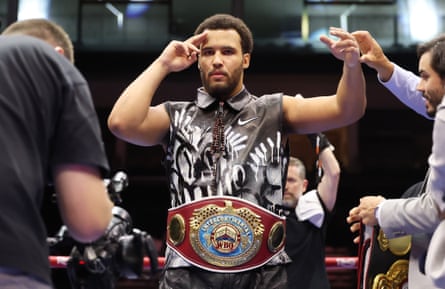
I know how much Itauma dislikes interviews and so the only sensible option is to resist this blunt invitation to rush through our 45 minutes together. On Saturday night, in Manchester, Itauma fights Jermaine Franklin, the tough American who should provide his first notable test after he has won all 13 professional fights so far, with 11 ending in brutal stoppages. So he nods, just a little grudgingly, when I suggest we wait until we are sitting face to face.
Itauma fires up an iPad and finds footage of the final press conference he and Franklin have just held. He hits the fast-forward button to reach the point where he can hear himself talking. This might seem vain but I think it’s something different. Itauma looks to be searching for improvement.
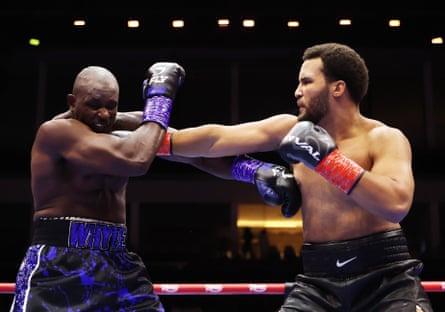
He is already a revelation in the ring. Last August, in his most recent contest, he needed less than two minutes to crush Dillian Whyte, a former world title challenger, as he showed the speed, movement, precision and power that make him an electrifying fighter. Of course we won’t know if he will become a great world champion until he has been hit hard and dragged into a draining battle. But he looks a serious proposition – and a slow-burning work in progress on the safe side of the ropes.
When we finally reach his hotel, and having just witnessed Itauma talk sensibly alongside Franklin, I ask if he might eventually enjoy some of these previously reviled media engagements. “It’s not enjoyment but I’ve come to terms with the fact I have to do it so I need to be more enthusiastic. I once thought: ‘Oh, if I’m bad at interviews, people will stop asking.’ But they’re going to keep giving them to me and it makes me look bad.”
Is this why he critiques his own press conference? “I wanted to look at myself and think: ‘If I was in the crowd, listening to him, would I pay attention? If not, then what can I change?’ Does he think he did well today? Itauma shrugs and briefly sounds his age: “I’m not bothered.”
This is my cue because, apart from the immense Oleksandr Usyk, I’m far more interested in Itauma than any other current heavyweight on the planet. His story is layered and complex and I sense Itauma understands its significance. So we sweep aside the reluctance and talk properly.
Enriko Moses Itauma is the youngest of three boys born in Kezmarok, Slovakia. His Slovakian mother named him after her favourite singer, the Spanish crooner Enrique Iglesias, but she and her Nigerian husband suffered terrible racism. When they saw how even their sons were persecuted they took their oldest boys, Karol and Samuel, to Chatham in Kent while Enriko was looked after by his Slovakian grandmother. He was reunited with his family in England when it was time for him to attend school.
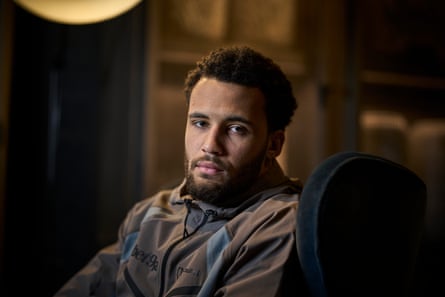
Itauma makes it clear that his mixed identity, blending the cultures of three different countries “was a key to my character. Now I’m starting to develop more. I don’t want to speak for all mixed-race people, but I feel we’re never fully in one bracket. I guess this is part of me being 21 as I’m trying to figure out what I am. I now feel I am more of a citizen of the world rather than one entity.”
He reiterates that, for mixed-race people, there is a challenge in not being fully accepted by either black or white communities. But Itauma shakes his head when I ask if he feels a responsibility to help change attitudes. “No. I heard a good quote which says it’s hard to break your own habit so breaking somebody else’s habit is impossible. So I continue being myself and they can think whatever they want.”
There are some bleak moments in his Slovakian past and Itauma tells me how his brother Samuel “was born with very bad asthma. When he was four he had to go to a hospital school. He stayed there for a week and they locked him in a cupboard because he was different [in colour] to the others.”
His father didn’t live in Slovakia permanently but whenever he visited the family he was subjected to graphic racism. Itauma’s mother was also abused for having a black husband, but the boxer says: “I still go to Slovakia twice a year. I’m still fluent because Slovak was my first language. The Slovakian culture is very family-orientated, but also very negative.”
Itauma talks warmly about the more positive influence of his Slovakian cousins and uncles. He tells an amusing story of running in the mountains with a chubby cousin who not only kept up with him “but he was pushing the pace and saying: ‘Why are you not keeping up? What’s the matter?’ He was so tough mentally.
“And there was this time with my uncle when I was about 16 and in Slovakia with Samuel just before Christmas. We were waiting to go to church for midnight mass. It was about 11pm and my uncle was ‘right, we’re going to the lake now’. It was freezing, like one degree, and me and Samuel looked at each other and said: ‘Why not?’ So he drove us down to the lake and we jumped in and then ran back.”
Itauma pulls out his phone and shows me a video of their shrieks of pain and elation in the freezing water. But he becomes almost radiant when he turns his attention to the two visits he has made to Nigeria. We talk about the numerous heavyweights in this country – from Anthony Joshua and Daniel Dubois to Joe Joyce and Lawrence Okolie – who have Nigerian roots. A suddenly relaxed Itauma calls to his father. “Dad, come here, please. What is it in the Nigerian waters that produces these athletes?”
His polite and intelligent father, who introduces himself by his full name, Itauma Charles Itauma, talks incisively about Nigerian culture and values before adding a few more thoughts on diet and genetics. We also discuss racism in Slovakia but Itauma Sr suggests that “things have changed a lot since we were first there. They know we are people so I don’t mind being used as a historical corrective.”
I’ve heard that Itauma Sr wanted his youngest son to become a doctor. The older man hesitates and the fighter chips in cheerfully. “Don’t lie, Dad. You did.” His dad laughs. “When he came to me about wanting to go into boxing, I said: ‘No. I will never want this. Don’t do it.’ But after some time I could see he was serious. I said: ‘If he wants to do it, let’s support him.’ But I found it very difficult.”
Itauma pats his dad on the arm. “He didn’t feel comfortable watching me spar, so I banned him from the gym.” I ask Itauma Sr if he will be nervous watching the fight against Franklin. “Naturally. But I see that this is his volition and the career he has chosen. I believe in him and he prepares very well. This gives us some peace.”
The boxer smiles when I ask if his mother suffers from nerves. “She’s Slovak so they love fighting. Slovakian women are very feisty. I told her to stop but she will be shouting on Saturday night.”
Itauma and I are alone again and we reach a more distressing part of his story. “When my mum and dad separated it was hard. My mum had to say: ‘I can’t afford to take care of you. You’ve got to live with your dad.’ So Samuel and I lived in the house on Luton Road in Chatham that my dad owned while he wasn’t really there. We had £7 a week to buy food.”
How did they survive? “We tried our best. Mayonnaise and rice was the choice of food.” Such dire poverty lasted for “about a year. I was 15 and lost a lot of weight. I was 110kg and dropped down to 97 kg. My coach Dan Woledge said: ‘Why are you losing weight?’ I was like: ‘I can’t afford to eat.’ He then started sponsoring me.”
Itauma’s prodigious talent was obvious. He would turn up at a professional gym, change out of his school uniform and spar a world-ranked heavyweight in Joyce who was 19 years older than him. But the sparring session which changed his life was against Okolie, who was close to becoming world cruiserweight champion. Okolie could not believe he had been given “the hardest spar” of his life by a 15-year-old boy.
Surely Itauma was intimidated fighting against grown men who were world class boxers? “No. I just thought sparring was sparring. But when I saw all the fancy cars parked outside Okolie’s gym and saw they all had nice watches, I got goosebumps. I thought: ‘Yes, this is what I am going to do.’”
He stands on the verge of earning astonishing amounts of money – which underlines the seriousness with which he considers Franklin. “Correct. I see a lot more in Franklin’s eyes than in my other opponents. He thinks he can win.”
His eldest brother Karol is a professional light-heavyweight who built an impressive 13-1 record before he decided to concentrate on helping Moses run the business side of his boxing career. But Karol lost his 10th fight when he was knocked out at Wembley in January 2023. “I made my pro debut that night and I was in the fight after Karol lost,” Itauma remembers. “I had to walk out when the ambulance arrived. I wasn’t watching Karol fight and I was like: ‘What’s going on?’ No one would tell me but I guessed what happened.”
It must have been so hard walking to the ring in such circumstances? “Absolutely. But I won by knockout [stopping his opponent Marcel Bode in 23 seconds].”
Karol had persuaded his younger brother to call himself Moses in the ring. Enrique, he said, did not sound like a fighter’s name. The heavyweight prodigy smiles again when I ask why he avoids the usual boxing strategy of giving himself a terrible nickname. “I’m not a superhero. I’m just a boxer. When you’re talking about great footballers, you don’t give them nicknames. You just say Messi or Ronaldo. Why is it different in boxing? Just call me by my name.”
Moses Itauma’s name is sure to resound in the years ahead. But where does he see himself a decade from now? “Hopefully I’m still alive, doing my thing.”
He nods when I say those words reveal a gloomy, if pragmatic, awareness that the end can come at any time. “Of course it can. I’m not invincible. Everybody’s fragile. I’ve had a lot of touches with reality so it’s not hard for me to grasp. But inside the ring I want to be a world champion. Outside the ring I want to secure a future for myself and people around me. I want to create doorways for people like me to open and come through.”