2 months ago
118
2 months ago
118
Britain is “a few weeks away” from medicine shortages ranging from painkillers to cancer treatment if the Iran war continues, according to experts, while drug prices could also rise.
The conflict has disrupted the supply of a myriad of crucial raw materials, including oil, gas, crop fertiliser and helium – and health essentials could be next.
David Weeks, the Texas-based director of supply chain risk management at the analytics group Moody’s, said: “It’s the perfect storm. We have the conflict in the Gulf that caused the strait of Hormuz to shut down, and India is known as the pharmacy of the world. They produce a lot of the generic [off-patent] drugs and APIs [active pharmaceutical ingredients]. With the geopolitical situation, it’s harder and harder to get those out.”
With airports in Dubai, Doha and Abu Dhabi initially closed and now operating a limited schedule, pharmaceutical companies have had to reroute their shipments via air, and some are now relying on sea transport, lengthening journey times.
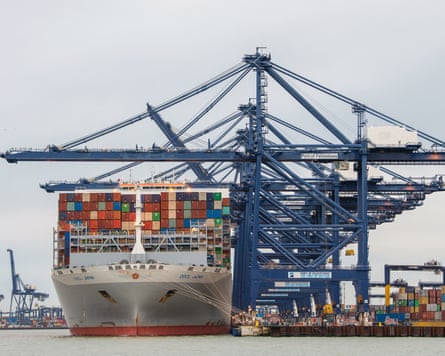
Shipping – the main route for most medicines – is also under strain because of the near total closure of the strait of Hormuz.
“We’re not in a crisis currently but it’s still a serious situation,” said Mark Samuels, the chief executive of Medicines UK, which represents manufacturers of the cheap, off-patent drugs known as generics that make up 85% of medications used by the NHS.
He said that if the conflict dragged on then drug shortages could emerge in only a few weeks’ time. Medical distributors typically stock six to eight weeks of stocks to avoid shortfalls; while suppliers to hospitals in England have to hold eight weeks’ worth.
During the Covid pandemic, paracetamol and other painkillers were in short supply in Britain and elsewhere, as drugmakers in India – which produces 60% of generic medicines used globally and half of US requirements – scrambled to keep up with demand.
The UK makes about half of its medicines domestically, while a third comes from India and another chunk from the EU.
The US-Israel war on Iran has doubled air freight costs. “One in five NHS medicines comes in by air, and currently manufacturers are trying to absorb those costs,” Samuels said. “But they’ve got historically low margins, and the risk is that it makes some medicines lossmaking to supply to the NHS.”
While suppliers have long-term pricing agreements with NHS hospitals, they have leeway over drugs supplied to GP practices and pharmacies, where they could increase prices.

Wouter Dewulf, a professor at the Antwerp Management School and an expert in pharma logistics, said for the time being, medicine supplies were “not disrupted, but disturbed”. He expects drugmakers to pass higher costs on through single-digit price increases if the situation worsens. “Everything depends on how long the war lasts,” he added.
Frank Van Gelder, a healthcare and pharma supply chain strategist and the secretary general of the non-profit group Pharma.Aero, said disruption to the Middle East airspace corridor had hit the drugs sector hard because of its reliance on frequent flights. Before the war about 3,700 passenger flights – which also carry cargo – were transiting the region’s airports every day.
Air cargo levels dropped 80% earlier this month and were still down sharply, he said.
Certain medicines need to be transported by air for speed, including: expensive treatments for cancer and infectious diseases; hi-tech cell and gene therapies; biologics with living materials that require cold storage; and drugs used in clinical trials.
Dewulf noted that healthcare cargo would always be prioritised over goods from e-commerce. Transport by sea is an alternative for stable, generic drugs but because ships have to sail around the Cape of Good Hope, it adds 14 days to the journey and another $1m (£750,000) in fuel costs.
Apart from higher transport costs, the rise in crude oil and natural gas prices affects the cost of petrochemical products such as methanol and ethylene, which are needed to manufacture APIs, the key ingredients of medicines, as well as syringes, vials, tubing, gowns and goggles.
“So the overall ripple effect on industry and in this case the life science and pharma industry is significant,” Van Gelder said, asking: “Who is going to pay for that?” He said it would ultimately be the patient who picks up the tab, either directly or via public health systems such as the NHS, which are ultimately funded by the taxpayer. “So in the end we all pay more, right?”