1 month ago
118
1 month ago
118
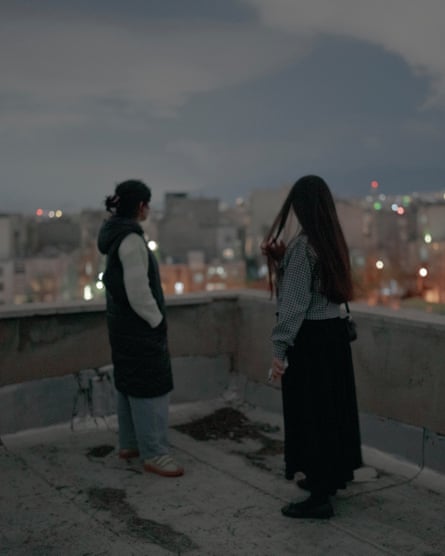
Behzad, 31, military conscript
Behzad has a master’s degree in the humanities and lives with his partner in a rented flat in central Tehran. He says he didn’t take part in January’s anti-government protests, but only because the call had come from Pahlavi [the exiled son of Iran’s former monarch] and he didn’t want their protest appropriated in his name. He says he knew people shot and killed by the regime.
He is now, against his will, a conscript. In Iran, compulsory military service strips men of basic rights until it is completed: they cannot work formally and nor can they leave the country. He had hoped to serve in an administrative post, but since the start of the war, he says he has been pushed into guard duty, patrols and sentry work at military sites, where he has faced bombardment.
What haunts him most is not only fear of dying, he says, but the absurdity of the position he has been forced into. “I feel no attachment whatsoever to this system. Not only do I have no interest in it – I actually hate it. You just have to stand in some corner and wait for something to come out of the sky at any moment and hit you, and you drop dead as if you had never existed. It’s such an absurd death. You die in a way that makes it feel as though you were never here in the first place.
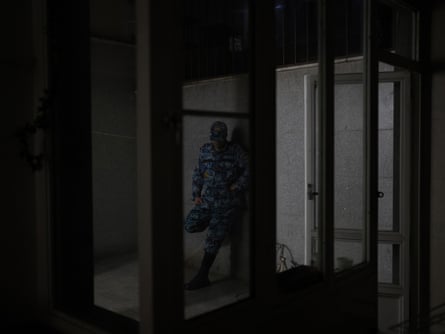
“I don’t think at all that now, through war, the system is suddenly going to change and then America is going to come and establish democracy for us. You’d have to be an idiot to think that. The propaganda of Iran International and the rest fed off people’s desperation and created exactly that image. In the end, part of the regime will make some kind of deal with Trump. What we will end up with is a military dictatorship.”
Fahimeh, 55, state employee
Fahimeh works in a government office in Tehran and says what matters most to her is Iran, its dignity, its safety and the way it will be remembered. “History will write that Iran either won or lost. What must be recorded is that Iran won.”
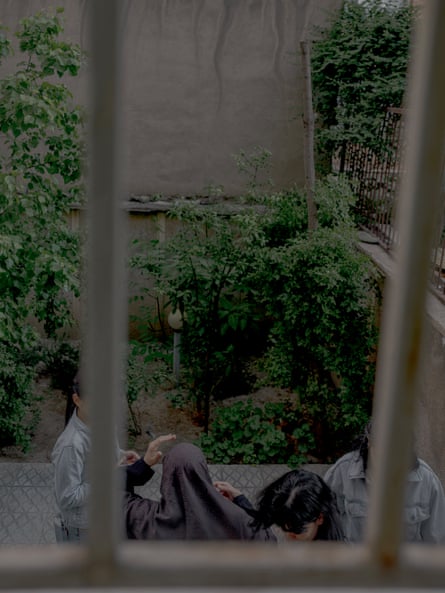
She says she takes pride in Iran’s ancient past and believes foreign powers have long sought to diminish it. That is why, in her view, Iran must hold on to the means of deterrence: control of the strait of Hormuz, enriched uranium, guarantees against future attack. “It creates deterrence. Iran must become stronger.”
Asked about supreme leader Ayatollah Ali Khamenei’s death, she says she felt no satisfaction. She remembers his poetry gatherings, and speaks of him as cultivated and well read, a man with what she calls “a delicate spirit”. “I separate a person’s human character from their political character. I do not feel happy about anyone’s death.”
For all her loyalty to the country, she says she is not blind to public anger. She says even her colleagues, all government employees, mourned those killed in January’s protests. “It was a national tragedy. They were all our children.”
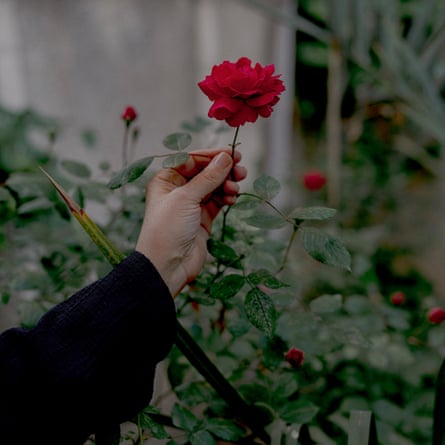
She expects the regime to survive and adapt after the war is finished. “They know the mood of society. They will yield, somewhat, before the people.” She also opposes regime change from outside the country. “It is not a matter of someone on the other side of the world saying, ‘Pour into the streets’, and that being the end of it. It is sheer foolishness.”
Nika, 23, student and English teacher
Nika is a psychology student who also teaches English. She lives with her mother, but since the war began they have been forced into uneasy cohabitation at her estranged father’s country place outside Tehran. She says she has lost what used to steady her: her room, her privacy, the small solitude of ordinary life. Sometimes, exhausted by the constant stream of news her father listens to from morning to night, she goes to sleep in the car.
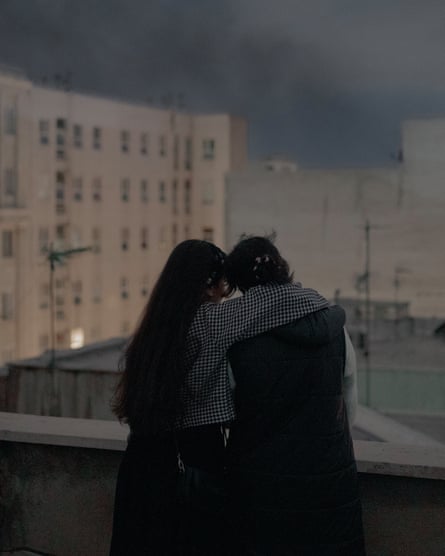
The killings in the January protests marked her deeply. Like many young people, she watched funeral videos, cried for the dead, and passed through a period of fury and despair. In those months, she says, there were moments when she thought war might be the thing that finally brought the government down. “Everyone was waiting for something to happen.”
But when the war came, she says the feeling changed. She woke to the sound of an explosion. Outside, children at the school across from her house were screaming as parents rushed to collect them. Her mother was at work, unreachable because the phone lines had gone down. “I was terrified. War is completely different when it actually arrives.”
That night, when the news broke that Khamenei had been killed, people in neighbouring buildings shouted, whistled and celebrated from their windows. “I wasn’t happy and I wasn’t sad. I was mostly in shock.”
After the strike on Minab, and the deaths of children there, she says she found herself recoiling from what she had once half-wished for. “You ask yourself: why had you wanted war in your heart before it came? I felt guilty. Even in my heart, I should not have wanted war. I don’t want anyone to be killed. I want all of us to live together well and happily.”
She says she stopped wearing the hijab after the protests and refuses to put it back on, even at family gatherings with religious relatives. On that point, she says her mother stands firmly behind her, insisting that younger people should not be forced to yield in those circumstances, and that older, more conservative family members need to come to terms with the fact that this generation is different.
Parisa, 20, medical student
Parisa is a medical student in Tehran and the only child of a religious, pro-government family. Since 2022, she says she has fought at home over almost everything: belief, dress and the right to think for herself. She removed her hijab in front of her parents, endured the rows that followed and forced a difficult kind of coexistence.
When the war began, she says she woke to children screaming in the two schools below their building, then to shouting from nearby windows – slogans, curses, confusion. A huge blast shook the house. “That was when I understood the war had begun.”
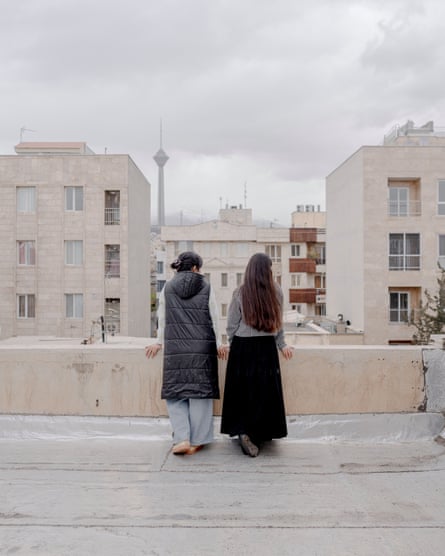
Unable to reach her mother at first because the lines were down, she says she panicked. When her mother finally got home, she says she threw herself into her arms crying: “In the end we’re going to die, aren’t we?” Her mother answered: “No, we’ll become martyrs.” Parisa’s reply was blunt: “That is death. What difference does it make?”
Khamenei’s death opened an even deeper rift at home. “My father was hysterical and my mother’s voice was shaking. I was calm.” As the state kept denying the news, she says she sat smiling faintly on the sofa, talking to friends, before cheering, whistling and applause rose from windows across the neighbourhood. “It was so strong that I felt I was standing at a turning point in history.”
She does not know what the future will bring, but says she fears vengeance, polarisation and another cycle of killing more than she believes in regime change. “I’m against the Islamic republic and I’m against Pahlavi and warmongering.”
What she wants most of all, she says, is an ordinary life of work, friends, laughter and mornings untouched by politics. But she doubts that kind of life is possible in Iran and that she may have to leave. “Every day that passes I feel more strongly that I should emigrate as soon as possible.”
Parnian, 20, cafe worker
Parnian works in a cafe in central Tehran. During the mass street protests, she was shot in the hand. She is still under treatment; only days ago, doctors removed the metal plate from her hand. She says she was shot while helping to carry wounded protesters to safety.
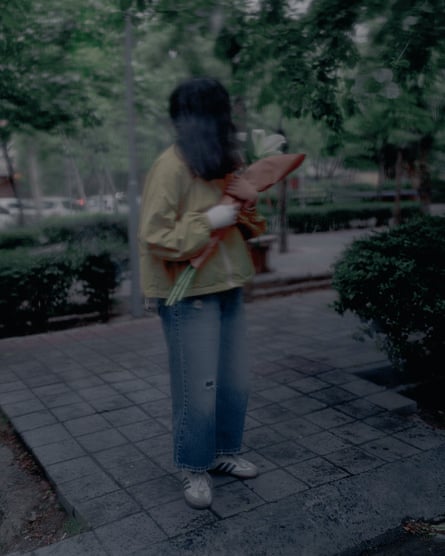
“They shot at me from above. The bullet tore through the collar of my padded jacket and hit my right hand. So they had been aiming for my head and neck.”
Her parents had gone from one hospital to another looking for anyone willing to treat a protest casualty. She says her father, himself a war veteran living with long-term injuries, told staff: “During the Iran-Iraq war, if we found a wounded Iraqi, we treated him. And now you have shot my daughter and you refuse to even treat her?”
Parnian says the regime had turned her father against it. “Last night, my dad was telling me: ‘I’d be willing to go 20 days without water or electricity if it meant they would go.’ It’s so strange to me that even my dad says things like this. I think: what exactly have they done to you that it has come to this?
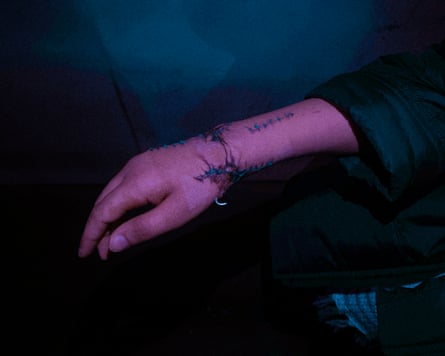
“I honestly feel like this: if the Islamic republic isn’t going to be overthrown, then let the war not end. Even though war is full of misery and everything is getting worse for us, there is no way left to live with them. This is our last bullet.”
Amir, 40, taxi driver
Amir has two children and with no other stable work options, works as a driver for the Iranian taxi app Snapp. He says he joined the mass street protests in January, but does not believe foreign powers or exiled opposition figures care for ordinary Iranians.
“Pahlavi sits over there talking nonstop, sending other people’s young men in front of bullets. If you can do something yourself, then do it. If not, then what right do you have telling other people’s children to go into the streets?
“Everyone went out because of their own economic conditions. Not because they wanted Pahlavi or anyone else.
“Before the war, I kept hoping they would go and make a deal so none of this would happen. In the end they’ll make some kind of arrangement somewhere. For Trump, it makes no difference whether it’s the Islamic republic or X or Y – he’s pursuing his own interests. He isn’t thinking about us.”
For now, he says finds it absurd that he must continually stop at checkpoints during the day and night as he drives across the city where he lives. “America is bombing from the sky, and you’re standing here and searching my car? This is how security is established? What security?”