3 hours ago
7
3 hours ago
7
Nicolas Winding Refn has his phone out, showing me one of the goriest scenes he’s ever been involved in. Given that the Danish director’s movies have involved hands getting sliced off, eyeballs being gouged out and a son reaching deep inside his mother’s womb, that’s certainly saying something. In this video, the camera is fixed upon a beating heart when suddenly – slash! – it gets sliced open with a knife. We travel into the open chamber, as needles arrive to pierce through the muscle. Unsettling and compelling, could this be a future Palme d’Or winner?
Unlikely. You see, Refn isn’t the director of this footage; he’s actually the guy lying conked out in the operating room while a surgeon attends to him. Requesting that someone films your own heart surgery is a very Nicolas Winding Refn thing to do. “At first they said no,” says the film-maker known for Drive, Bronson and The Neon Demon. “But then they said, ‘As it’s you, we’ll record it.’”
Sitting in a swanky London hotel bar, drinking espressos and wearing a smart blue polo shirt under a skinny suit, Refn is here to talk about his latest movie, Her Private Hell, a ludicrously camp dream-collage of sci-fi, horror, spoof and revenge set in neon-lit Tokyo. But for the first 40 minutes of our chat, he recounts – with precious little interruption from me – the story of the 2023 operation that saved his life. Without it, he says, Her Private Hell would never have been made – not so much on health grounds, but because, before he was given this second chance at life, he had lost the passion for making movies.
“When you’re young, your creative flame is bright red,” he says. “But my own flame had vanished, like tears in the rain. I had fallen into a form of abyss. I was 50 years old and had no idea what to do with my remaining years.”

The story begins in summer 2023, when Refn was working on a Prada campaign in Italy. He was feeling increasingly tired, and his daughter mentioned how pale he appeared, but he put it down to overwork. It was only after he returned to his home in Copenhagen that a doctor examined him and discovered that a valve in his heart was broken, and filling his lungs with blood. “I was essentially dying,” says Refn. They told him to come back in two weeks for open heart surgery, and gave him a choice of replacement valve: metal or pig.
Her Private Hell stars Sophie Thatcher as Elle, an actor hoping to rebuild her relationship with her film mogul father by making her own Barberella-style sci-fi film: throughout the movie, you’re never quite sure if what you’re watching is the actual plot, or scenes from the fictional movie, or one of the characters’ fever dreams. That’s pretty much how I feel listening to Refn’s tale of heart surgery, which he has transformed into some kind of epic cinematic quest.
He mentions the quality of the light, the long silences (both features of his movies), and describes himself pleading to a higher power like George Bailey in It’s A Wonderful Life (his favourite film of all time): “Like, please God, just give me five more minutes, man!”
Refn was told to write a will and says he “made peace” with his wife: “I said, it’s been 30 years, we had a good run at it, but like tears in the rain, everything has an end.” (He really does love that Blade Runner quote.) He says he went through all the typical emotions: fear, anger, sadness, desperation. Not that anyone would have known.
“I didn’t make a fuss about it,” he says, “because I’m like a superhero.”
The lowest point came when he met a man who was fresh from similar open heart surgery. “He looked like he’d been in a boxing match with Mike Tyson,” says the director, who wasn’t keen on ageing a decade overnight.

But just as all heroes suffer setbacks, they eventually rise to conquer them. Just before the operation, Refn received a phone call from his surgeon that would change everything. “He was the Tom Cruise of surgeons,” says Refn, somewhat lustily. “He rode a motorbike, he had rings, he was very sexy. All the nurses said, ‘Oh my God, you’re getting him. You’re so lucky!’”
Sexy Tom Cruise told Refn that he could fix him in a way no other doctor in Copenhagen could – through telescopic surgery, which meant not needing to open up his ribcage. Refn believes it was divine intervention. “I think God was trying to tell me something. He’s saying, ‘You’re not ready to go yet, kid. But you’re going to go through a challenging process to reignite whatever that is inside of you.’”
By the time his operation came around, Refn says he was already a different person: “I was a champ, a winner. The nurses prepare you for how your life will probably change afterwards. But I remember telling them that, actually, this was the best thing ever in my life. And that they were not to worry because my sex drive was going to be times a thousand when I was back.” Er, was that an issue before? He pauses and smiles. “No. It actually ended the conversation. But it was a way to show how [the operation] was about rebirth, regeneration.”
When Refn was washed and shaved for the operation, he saw it in quasi-religious terms: he was rinsing his past away. In the eerily empty hospital, he remembers feeling full of cinematic emotion when someone from LA, who had no idea what Refn was going through, called to ask “a random question”. They ruined a key scene in your movie! “Yeah, it was kind of like somebody getting up to buy more popcorn in the final farewell scene,” he says.
Refn may have avoided fighting Tyson but his operation was no walk in the park: he remembers “incredible physical pain”, and it took three months to rebuild himself. He says he was like an infant, learning to do things for the first time again. But when it came to film-making, that proved to be an advantage.
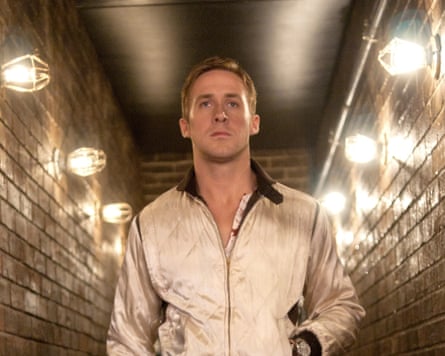
In Her Private Hell – which is chiefly about the protective relationship between father and daughter – we meet Private K, played by Charles Melton, an American GI in postwar Japan searching for his lost daughter. Private K believes she was taken by a mythical figure known as the Leatherman, who is said to roam Tokyo ripping open girls’ chests with his diamond-studded gloved hands (no prizes for guessing what inspired that particular method of execution).
The character of Private K came from Refn realising that, while his eldest daughter, Lola, had recently left home, his youngest, Lizzielou, was only 12 and still needed him around. “Private K’s story was a cinematic narrative I could cling on to, my fantasy version of what happened to me.”
Refn’s films often contain echoes from his previous movies, and Her Private Hell is no different, in particular sharing a line from Only God Forgives, in which a father is told: “You should have protected her.” This clearly taps into a fear of Refn’s: that he won’t be able to. “I call it ‘dadsploitation’,” he says, with a hint of a smile. “It’s a form of fetish that appeals to men, that you are basically allowed to indulge in extreme biblical violence to protect innocence, especially when it comes to your daughter. Every father’s worst nightmare is something happening to their daughter of a sexual nature, and it gives a kind of permission: it gives me the authority to tear you to pieces in a biblical way, and I will enjoy every minute of it. Lots of films do it.”
I did wonder if this message taps into current rightwing tropes: from Trump’s fetishisation of muscle-bound “real men” to the anti-immigrant activists who claim they want to “save our girls”. But Refn says he’s not a politician selling a message. “All I know is that all humans want a hero. And I believe that for fathers, whether you’re left or right, we all have the same primal instinct inside us.”
He doesn’t seem like a macho guy, though. “I’m a very unmacho guy,” he says. “I love femininity. I love flamboyance. I love camp. I love colour. Her Private Hell is my version of playing with dolls. Everyone’s dressed up in uniforms, I get to move these girls around in fabulous clothes, and I get to take Charles Melton’s shirt off and show his ripped body like an action figure.”
It’s certainly outrageously camp at times. Elle’s movie mogul father is a ridiculous figure named Johnny Thunders (yes, he’s a Heartbreakers fan) who wears leather trousers and lights matches on his neck stubble. Throughout the film we hear leather garments stretch and bodily joints crack. “I love fetish,” says Refn. “Those sounds are incredibly erotic.”
Back in the 90s, when Refn was an enfant terrible making the gritty Danish drug drama Pusher, he considered himself “a Sex Pistol of cinema, there to fight for teenagers against the system, making things that would piss off their parents. But you grow out of that because everyone my age starts doing their gardening.” He smiles, then adds. “Except me, because I don’t garden.”
Now, he says, the “system” has been replaced with new enemies: social media, AI, tech overlords. Her Private Hell, Refn says with confidence, is “a movie that AI could never do. It’s the enemy of the algorithm. Because it’s not one movie, it’s five movies in one.”
“Most entertainment today is like this,” he adds, holding a white napkin up to his face. “A white sheet with codes on it. You don’t even need to pay attention, you can do a lot of other things at the same time. I don’t think that’s particularly healthy for the mind or the soul.”
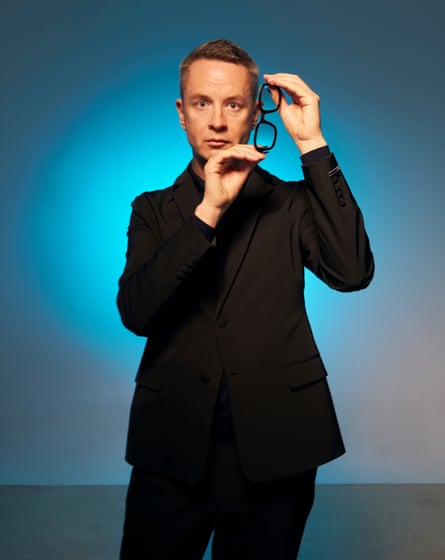
His films, he says, are more like fairytales: simplistic enough to read to a child, yet bottomless in interpretation. “That’s why people still examine Hans Christian Andersen. But we’ve forgotten this because our entertainment is based on just giving and receiving information.”
Not everyone agrees with his assessment: reviews for Her Private Hell have been wildly mixed. In fact, it’s hard to think of a film-maker who splits opinion so consistently. Depending on who you listen to, Refn movies are either gorgeously shot, hypnotic meditations on the human psyche, or tedious borefests full of style and zero substance.
Refn claims not to care. In fact, he says he would hate it if everyone loved his movies. “It would be devastating. I would be very depressed,” he says. “If we like something and we all agree on it in this room, it’s as if we don’t like it. But if one likes it and one doesn’t and we end up arguing about it, that’s passion. That means that we have been penetrated.”
He points to Raging Bull: “Commercially bad. Very divisive at the time. Now you would say, ‘How can you make anything better?’ Opinions disappear, like tears in the rain, but passion will still exist.”
He sighs, reflecting on the reaction to his film’s Cannes premiere. “A lot of people had a meltdown again. It’s like, here we go again, ‘There’s no storyline!’ And I’m like, ‘You’re so wrong! There’s so much going on, you’re just looking in the wrong places.’”
The kids are far smarter than critics, he says. “They feel things. Because they’ve been sold artificial whatever on social media and screens. So they will love it or they will hate it. But they do it with such a passion.”
Critics notwithstanding, Refn seems in a content place right now. Is he actually glad his heart packed in? “I’m so happy, I can’t tell you,” he says. “Every day I thank God for killing me and bringing me back. Because why make me go through all this if I don’t have a purpose? Now I have a mission.”
If he gets another 25 years, he says, he will use them to make art, to forge new films from the furnace of his roaring creative fire. After all, he says, there’s nothing else out there. “There is no afterlife. I can say that. I didn’t see the light. So whatever time you have left, live it now, man.”
What about all the people who’ve had near-death experiences and claim to have seen the heavenly gates? Refn sniffs and, with no visible irony, says: “They’ve seen too many movies.”