3 months ago
136
3 months ago
136
Europeans are on what might be called “a journey” when it comes to the US-Israel war against Iran, now apparently in a ceasefire after Donald Trump’s 11th-hour U-turn, calling off, for the time being, his threat to annihilate Iranian civilisation. The crisis in the Middle East marks the latest painful step, after the shock of the US’s betrayal of Ukraine and Trump’s threat to seize Greenland, in Europe’s emancipation from Washington. The journey is not linear, and it is dreaded by most European leaders. But the direction of travel is undeniable.
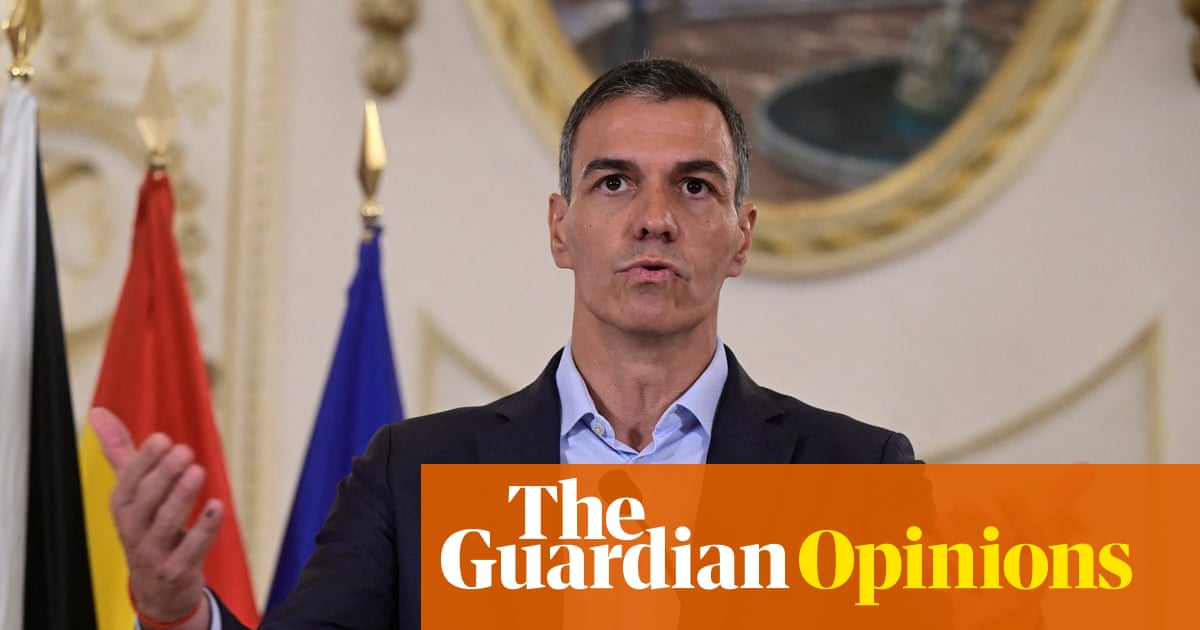
Initially, most European politicians in power all but endorsed the illegal US and Israeli attack against Iran. If the sycophantic Nato secretary general, Mark Rutte, stood at one end of the spectrum of European opinion and Pedro Sánchez at the other, most European governments were tacitly closer to Rutte’s embrace of Trump than to the Spanish prime minister’s principled opposition.
Such was their desire for a transatlantic detente after the Greenland crisis and their antipathy towards the Iranian regime – for its alliance with Putin’s Russia and brutality towards its own people – that they foolishly fell for Trump’s illusion. They went along with the idea that the Venezuela trick, in which the US painlessly decapitated Nicolás Maduro’s regime, could somehow be repeated in Tehran.
But as the war in the Middle East escalated, Europe’s stance shifted. For most European leaders, whether explicitly or silently, Trump has gone from daddy (Rutte’s characterisation) to baddie (Sánchez’s view of the US president). This cooling on the war launched by Trump and the Israeli prime minister, Benjamin Netanyahu, has taken various forms. Italy has denied US warplanes permission to use an airbase in Sicily. Poland has refused to send Patriot air defence systems to the Middle East, citing the ongoing threat from Russia. France has rejected overflight rights, and opposed a US-sponsored resolution at the UN security council that condemned Iran’s closure of the strait of Hormuz and called for its reopening by military means. France, like other European countries, believes the strategic waterway can only be reopened through diplomatic means, requiring coordination with Tehran. Spain, which imposed an early ban on the use of jointly operated Spanish-US bases for operations linked to the war, no longer looks like an outlier. Sánchez’s reaction on X, welcoming the conditional ceasefire but insisting on a lasting and just peace, does not diverge from those of other European leaders.
A number of factors explain this trajectory. Some governments in Europe had shortsightedly backed the war, despite its illegality, because they believed that a swift resolution would deliver strategic gains. They now understand the scale of their miscalculation in terms of advantages for Russia – through higher oil prices and a depletion of air defence interceptors available to Ukraine.
Washington has also temporarily unsanctioned Russian oil and considered diverting US weapons ordered by European allies for Ukraine to the Gulf. So far, the war in the Middle East has been a windfall for Moscow and devastating for Kyiv, while threatening another economic crisis in Europe, the third in only five years, after Covid-19 and the war in Ukraine. European leaders have been reminded the hard way that the erosion of international law – with this latest manifestation in the Middle East – is bad news for the world, Europe included.
Europeans, like everyone else, heard Trump’s increasingly unhinged declarations: his gleeful threats to commit war crimes in Iran, his insults directed at European leaders, his calls for the US to abandon Nato. But his cry-wolf warnings have grown so repetitive that they are simply losing their effect. Europeans are becoming numb to Trump, and bored by him.
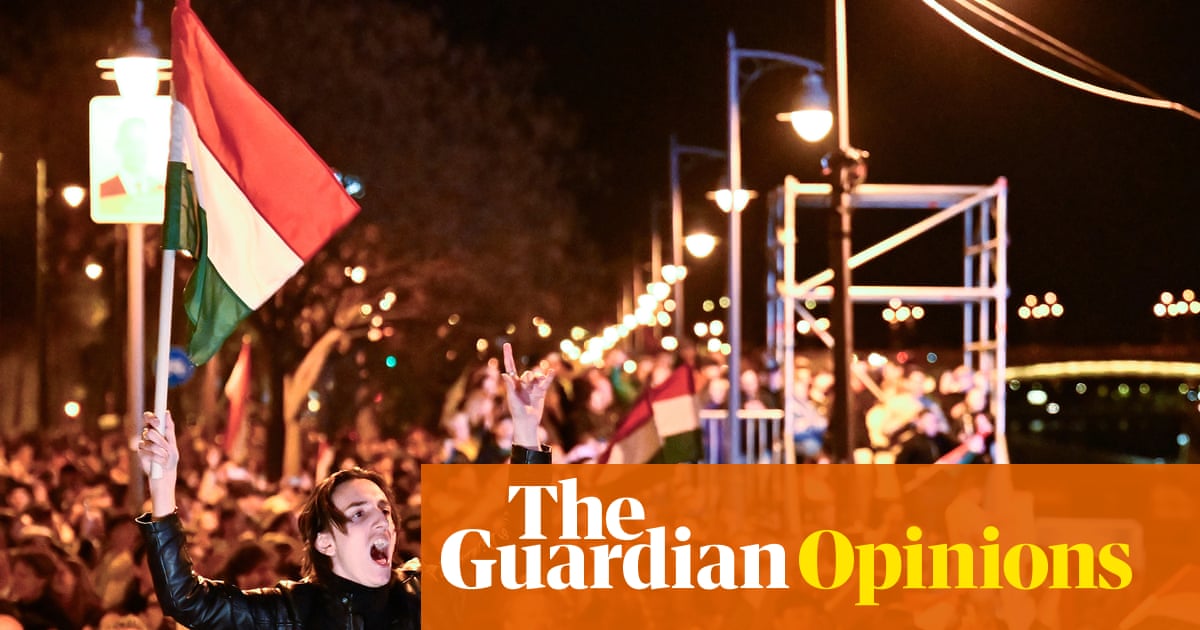
Even far-right leaders are distancing themselves – not necessarily because they no longer share his administration’s predatory worldview, but because proximity to Trump is becoming toxic in terms of public support. This is certainly true in Italy, where the prime minister, Giorgia Meloni, after a defeat in a crucial constitutional referendum, has quietly distanced herself from Trump’s war. It is also visible in Germany and France, where the AfD and the Rassemblement National respectively have voiced dissent. Only Hungary’s Viktor Orbán remains wedded to Trump, as highlighted by JD Vance’s visit to Budapest this week, and Sunday’s election will reveal whether US support has become a liability for Orbán too.
As Europe finds its footing in distancing itself from Trump, it may also find its voice. Europe’s diplomatic role in the Iranian nuclear file in the early 2000s grew out of its opposition to the Iraq war. Today the same dynamic could unfold. Europe’s opposition to the war and promotion of a permanent end of hostilities could open the way to a multilateral initiative in the region.
The proposal by a group of European, Gulf and Asian countries to contribute to ensuring safe passage through the strait of Hormuz was originally aimed at placating Trump. Europeans then backed a UN-led fertiliser corridor to prevent a food crisis in the global south. The UK is also leading a coalition of more than 40 countries seeking to reopen the strait once the US and Israel definitively end their offensive. This initiative would involve coordination with Iran. To be realistic, it might need to encompass Iran’s export of oil and a shared regional toll system to finance reconstruction.This may even be established during the temporary ceasefire as negotiations mediated by Pakistan proceed.
If a sustainable reopening of Hormuz succeeds, it could eventually extend to a new nuclear agreement, a non-aggression pact between the US and Iran, and a similar one between Israel and Iran – including Lebanon. It could involve the release of Iranian funds frozen abroad to rebuild infrastructure destroyed by US and Israeli attacks, and the selective lifting of EU and US sanctions.
In the meantime, Europeans have been reminded that their commitment to multilateralism and international law was never merely the product of lofty ideals but of hard-nosed interests too. As they arrive at this realisation, they should be prepared to act on it, along with Gulf and Asian partners, to ensure that this illegal and unilateral war – which is not their war – comes to a definitive close.
-
Nathalie Tocci is a Guardian Europe columnist