6 hours ago
18
6 hours ago
18
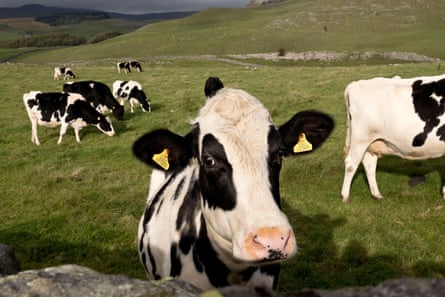
In many ways, the world’s oldest cheddar-maker hews to tradition. Since 1833, Barber’s Farmhouse Cheesemakers has operated from the rolling green pastures of south-west England, milking grass-fed cows and fermenting the milk with microbial starters passed down for generations. That heritage has led to award-winning cheese, now popular across continents.
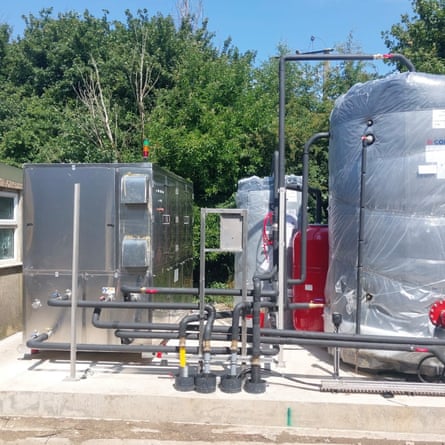
But when it comes to reducing its planet-warming emissions, Barber’s is on the cutting edge. In 2024, the company began to use new ultra-efficient heat pumps from the UK startup Arkaya Energy. The devices quickly cool milk to keep it fresh, and simultaneously heat water used in milking operations, replacing conventional chillers and electric-resistance heaters.
By cutting electricity use in half, the heat pumps are saving Barber’s about £70,000 a year – a “huge reduction,” said Alfie Barber, a seventh-generation cheesemaker and farm manager. At the same time, they are cutting carbon pollution by nearly 66 tons a year. The family has had these heat pumps installed at three of its seven milking parlours.
“It is just a wonderful feeling … when we can save energy, save on the bottom line, and reduce our carbon footprint,” said Chris Barber, Alfie’s father and the farm director.
All-electric industrial heat pumps, which move heat rather than generating it from fossil fuels or running an electric current through a filament, are an ideal fit for decarbonising food production, as most processes need only low or medium temperatures, which the tech can readily provide. But food manufacturers have not exactly flocked to heat pumps. The appliances are an unfamiliar technology with a price premium, and rising electricity costs make companies wary about using them to replace fossil fuel options.
Barber’s experience shows that early adopters can reap big payoffs – thanks largely to new advances in heat-pump technology.
Almost all heat pumps fall into three categories: air source, ground source and water source. Arkaya’s innovation is to draw heat not from the air or ground or a body of water, but from fresh milk, which comes out of the cow warm. It is “a predictable energy source whenever milking takes place”, said Arkaya’s founder, Kumo Sharma. The company calls its product a “milk-source heat pump”.
Arkaya’s machines do the double duty of chilling milk to as low as 1.6C (35F) and diverting the waste heat to bring water to 92C (198F), close to a boil. Farmers need this hot water to wash udders, milk tanks, suction cups and other equipment to keep operations clean.
For Barber’s, the payback on its heat pumps is less than two years – a welcome departure from the norm. “There’s not many investments that have [even] five-year paybacks,” Alfie said. “Every penny counts in our game.”
The heat-recovery system Barber’s replaced had for years been considered the gold standard in the UK, Sharma said: an ice bank for cooling with a heat-recovery system that pre-warms water for washing up. However, it doesn’t get the job done on its own; it requires a boost from an electric-resistance or fossil-fuel-fired boiler to reach the necessary high temperatures.
The milk-source heat pump “does that all combined in one system”, Sharma said. He declined to divulge some of the tech’s details, including what refrigerant it uses to move heat from milk to water.
Arkaya, which began selling its heat pumps in 2024, has installed 27 to date and expects to deploy 34 more by the end of this year. The four-employee startup is, for now, focused on the UK market, home to nearly 7,000 dairy farms, and aims to increase its manufacturing capacity and grow its network of partner installers.
Chris thinks Arkaya’s heat pump, which won the Royal Association of British Dairy Farmers’ 2026 innovation award, could become a major player in the industry.
after newsletter promotion
Sharma said Arkaya planned to gradually expand into other countries, starting with Ireland and then the broader European market. The US would be a logical future target, too, he said, given the size of its dairy industry – nearly 25,000 dairy herds in 2024.
Milking was one of the best applications for heat pumps, because dairy farmers had heating and cooling needs on site, said Ruth Checknoff, senior director at the Renewable Thermal Collaborative, a nonprofit working to decarbonise industrial heat. “This is like a slam-dunk opportunity.”
Arkaya could find the field stateside wide open. While there are a number of firms offering other industrial heat-pump products for the dairy industry, including GEA, Frick and Tetra Pak, their tech appears to be geared toward processing dairy products at the factory rather than serving the needs of a humble milking parlour, according to Checknoff.
“I haven’t run into anyone in the US that has a heat pump that will do all the final water heatings,” said Steve Koski, lead research engineer for industrial heat pumps at Cascade Energy. Europe was likely ahead on heat-pump adoption because “they don’t have as cheap natural gas”, he said.
Koski said that most new milking parlours in the US were being outfitted with money-saving heat-recovery systems, but these setups still needed additional heaters that used electric resistance, propane or, less commonly, fossil gas.
Back in England, the Barbers are going all in on Arkaya’s heat pumps. They plan to convert their remaining milking parlours by 2028.
“We’ve come across a technology that will be, possibly, the future of our dairy industry,” Chris said. “It bloody works.”
-
A version of this article was originally published in Canary Media and has been republished in the Guardian as part of our ClimateDesk partnership.