2 months ago
88
2 months ago
88
The physical fact of my abortion caught me off guard. I had been so accustomed to defending abortion as an abstract right – as a right to privacy, to healthcare, to autonomy – that when it came to having one, I was surprised by the brutality of it. Fasting for hours before. Clammy and light-headed, my hands freezing and damp, in the clinic waiting room. Waves of contracting pain afterwards, the blood and the vomit from the anaesthesia, the days of cramping and bleeding. Soaking through pads. Cold sweat. I thought having an abortion would feel like the exercise of the hard-won autonomy of generations of feminists before me. But mostly it just hurt.
What do you do with the brute fact of pain? Of what Annie Ernaux describes, writing about her own abortion before legalisation in France, as an experience that sweeps through the body? I could not translate it easily into a feminist politics, into a slogan, into something I could shout or wanted to shout. It did not feel like the exercise of bodily autonomy; it did not feel like a choice, though of course, in some formal and factual way, I did choose to have an abortion. It’s just that the choice seemed to be the least important and least interesting part of the whole experience, totally unmemorable when it came up against the violence and urgency of the body, reeling and revolting against the sudden transformation from pregnancy to unpregnancy. Nor did the sensations of aborting feel like the making of an abortion story, like the raw material for an anecdote that could be compressed and publicised on social media, piled up with the others to make some kind of aggrieved claim. There was no real plot – but feeling.
The pain was particular. It had nothing to do with abstract ideas about life, or conception, the conflicting rights of foetus and woman, or feminism, or the US supreme court. I remember lowering the backrest of the car seat all the way down because I felt too dizzy to sit up straight, and because it was the middle of the afternoon and I didn’t want to see the crowds of children streaming out of school. I remember pressing my cramping body against a hot radiator. I remember telling my partner that I didn’t want to forget that I had been pregnant. That I wanted to count this one, among what I hoped would be future, wanted pregnancies. I was not thinking about life in the abstract, but about this life, and its immediate and necessary death.
History is good at the particular. It is a tonic, then, when the particularity of history meets the disembodying abstraction of abortion talk. The language of life, choice, rights deals only in absence, in a kind of virtualisation of the body. As Adrienne Rich writes, this abstraction isolates women; the abstraction of abortion “debate” severs women from history, context, circumstance. There is no abortion that takes place in the imagined world of either pro- or anti-abortion language. No abortion that is a pure murder, no abortion that is pure healthcare. There is only abortion in all the particularity of history. When Ernaux wrote about her clandestine abortion, which took place in 1963, she argued that just because abortion was legalised in France does not mean we should forget about what it was like before. What happened before is not all over. The sensations and memories of the body do not end, simply because what was illegal has been made legal; or because what was legal has again become illegal.

Ernaux’s words take on new meaning after the repeal of Roe v Wade in the United States in 2022, and the erosion of reproductive rights in Poland, Hungary, Turkey; and the attempts to roll back abortion rights in France and Italy. It is not over: not only because the experience of clandestine abortion is itself unforgettable, but because women are still having clandestine abortions all over the world. There is a new urgency to understanding the persistence of the past because the past does not appear to have ended, as we once thought; it was the 50 years of Roe that was the aberration, not the rest of abortion’s millennia-long history. Abortion teaches that history is not a steady and progressive march towards freedom. History, and abortion, are more painful – and more particular – than that.
What does it feel like to be pregnant and to wish not to be? I have known that twice. Once, when I was younger and unready; and once, when I had already had a child but felt again unready. Unready for the demands of two. Unready to physically transform again. Unready to feel my body again undone by another. The second time was less painful. I knew my body better, determined that I was pregnant earlier, let the pills dissolve under my tongue. But what it felt like to be pregnant and not want to be: so much more difficult, the second time around. I thought I could feel my body wanting to be pregnant; I knew what the morning sickness meant this time, the slowness that crept through my muscles, the fatigue.
I am a historian of early modern Europe. European early modernity – that is, between roughly 1500 and 1800 – is neither modern nor ancient; it occupies an uneasy place between the strangeness of the medieval past and the familiarity of the late modern. In early modernity, the difference between being possessed by a demon and possessed by an unwanted foetus was a matter of degree, not kind. In Italy, an aborted pregnancy was a disgravidanza, an unpregnancy, or might be described as a parto acerbo, an unripe birth. Judges described abortion in the language of corruption, waste, disorder and ruin. Women’s language was more ordinary. Giving evidence to tribunals, they called an aborted foetus a creatura; an earlier-stage abortion a pezzo di carne, a piece of meat. Abortion was shared work, because men needed abortions to happen just as much as women did. Men procured herbal concoctions from physicians and apothecaries, arranged for blood-letting (from the “vein of the mother”, located on the foot), or – in truly desperate cases – beat their partners’ backs and abdomens.
There is so much that we don’t know about abortion in the past. It’s likely that the majority of abortions were sought by married couples who did not want any more children, but these were private and so have gone unrecorded. Trials that came to court inevitably centred on the most scandalous cases. In the Holy Roman empire, new legal codes in 1532 instituted extremely harsh penalties for women who committed infanticide and abortion. Both were now capital crimes; if a woman procured an abortion after the quickening – the moment when the woman felt the movement of the foetus within – she would be executed by impalement or by drowning. An early-term abortion would be punished by exile.
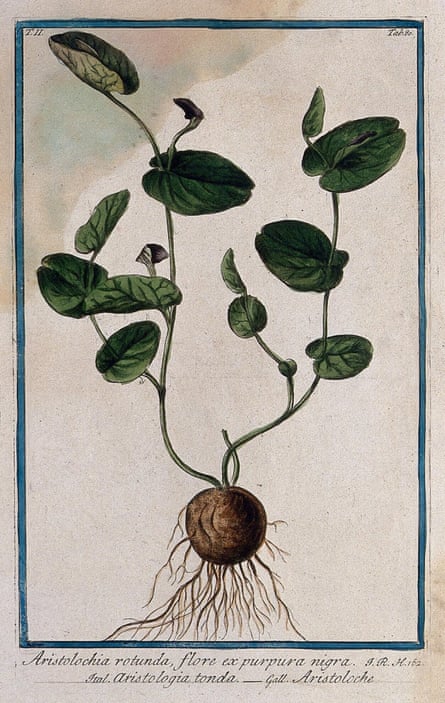
Thousands of women – and some men – were executed and exiled in the 16th and 17th centuries across the Holy Roman empire for infanticide. But abortion was harder to prove and conviction rates were much lower; across early modern Germany, very few women were prosecuted for abortion, and then leniently: Anna Weilbächin, a domestic servant, was banished from Augsburg for three months for procuring an abortion in 1608 by ingesting laurel berries. In Italy, too, abortion was rarely prosecuted as a crime, even when local laws contained statutes for harsh sentencing of women (and men) who procured abortions.
In the background even of uncommon tales of open scandal, there is a more ordinary history: the quiet purchase of a bitter drink from an apothecary, the flux and the pain, boiling the stained linens. This is one reason why prosecution and conviction rates remained so low in Protestant and Catholic Europe: abortion was ordinary, relying on herbs found in kitchen gardens and roadsides, instructions whispered between women working together in the fields. And it is the ordinary moments I remember too. Turning the shower scalding hot after I learned I was pregnant and, in the same instant, deciding what I would do. Afterwards, nauseous from fasting and anaesthesia, trying and failing to eat lunch.
Today, the Catholic church claims to have held abortion to be a mortal sin since the first century. This is untrue. For most of the church’s history, Catholic theologians believed that the moral and physical gravity of abortion developed with gestation. An early pregnancy was easily lost and had not yet been endowed by God with a soul; animation was thought to take place at 40 days for a male foetus and 80 days for a female. (These were the points at which foetuses were thought to achieve human shape; the female sex was colder and moister, so took longer to congeal into human form in the womb.) Before the moment of animation, the unformed foetus might be aborted and the pregnant woman only incur mild sin; only at the later stage was it considered human, and its destruction was equivalent to homicide.
Most men and women, not just learned theologians and physicians, subscribed to this more nuanced understanding of abortion: one midwife in Rome reported coolly in 1634 that her usual professional practice was to “throw aborted foetuses that do not have a soul in the latrine, and I do not baptise them because they are not alive”.
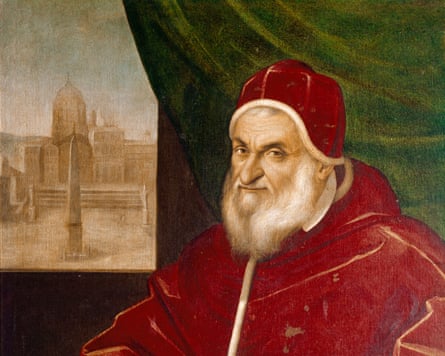
Such thinking was radically condemned by Pope Sixtus V in his 1588 bull on abortion, the first the Catholic church had ever issued. This was part of Sixtus’s reformist campaign against sexual forms of moral deviance; he had issued harsh laws against adultery and incest in 1586 and 1587. In his abortion bull, he abolished the distinction between the pre- and post-animate foetus and declared that life began at conception. All abortions were murder. Women who had abortions, and men who helped women procure them, would be subject to automatic excommunication from the church and capital punishment. No longer could women privately confess their abortions to their parish priest and receive penance; now, only the pope himself could absolve them.
The result was that, after Sixtus V’s bull on abortion, many women decided to live excommunicated, meaning that they could no longer receive the sacraments, including communion. Parish priests and bishops found the bull so impossible to implement and so out of step with the social need for abortion and for privacy that it was reversed three years later by a new pope. The church’s understanding of abortion once again cleaved closely to gestational development.
In Protestant Europe, attitudes towards abortion similarly hardened across the early modern period. Luther had emphasised the importance of the family as the centre of devotional life. For reformers, marriage was sanctified – even clergy could now marry. But all forms of sexuality that took place outside marriage were harshly penalised; abortion and infanticide were the ultimate symbols of illicit, wayward female sexuality, crimes that became closely linked in the imagination with single women.
Because the significance of abortion – and the severity of the consequences – developed along with the pregnancy, women had to be trusted to discern the gestational age of the foetus, to distinguish indigestion from early foetal movement, dropsy from the heaviness of pregnancy. Maria da Brescia, a single servant woman in Bologna accused of abortion in 1577, thought she had eaten some bad onions, and took to bed with wind pains; when she got up to use the toilet, she explained to the judge: “I expelled that creatura on the floor, dead, it did not cry … I had never been pregnant and I did not know what I had in my body. I thought I had a bubble in my body.”
When Agatha Rüefflin was accused of killing her newborn infant in Augsburg in 1610, she – and her physician – told the court that she had been so swollen and feverish from dropsy that she had not even realised she’d given birth. Women might not be trusted to know their own bodies, or their own minds. The same often applies today. When I sought an abortion for the second time, I was living in North Carolina, which was a relative safe haven for abortion in the south. I was subject to a 72-hour waiting period before I could receive the medication, in case I changed my mind.
In early modernity, it was difficult to determine the difference between an aborted foetus, a stillbirth and infanticide. Secular criminal tribunals required evidence that a woman had intentionally terminated her pregnancy or had killed the infant shortly after birth. Midwives enrolled by tribunals as forensics experts in Italy and Germany to examine the bodies of the mother and the foetus, were assigned the near impossible task of assembling evidence of intent. In 1610, a young woman called Lucia from outside Bologna delivered a stillborn baby at seven months. Two midwives examined her as part of the ensuing tribunal and evaluated the testimonies of witnesses. The foetus was female, fully formed with hair and fingernails, and had still been warm when it was wrapped in Lucia’s shirt. The midwives told the court that Lucia hadn’t tied the umbilical cord in a knot but had torn it. This allowed the infant’s breath fatally to escape its body, puff by puff; she was found guilty of infanticide, of allowing a baby who had been born alive to die. Lucia was defiant. “It was not [born] alive, and I will never be able to say why it was not.”
Lucia’s defiance tells us something about the invasive nature of the tribunal; the way that her flesh, and her stillborn child’s, were made over into forensic evidence, and what kind of fierceness was required to stand up to those forces. I can also hear in Lucia’s words an experience that eludes description. The body of her foetus was uninterpretable. A sign not of any human wrongdoing, but of the unknowable will of God.
When Ernaux writes about her own abortion as “an experience that sweeps through the body”, I think this is partly what she is describing: a feeling so deeply enfleshed that it becomes difficult to make over into words. In the days before my second termination, I agonised over the practicalities of having or not having a second child. The abortion came on like relief. Nothing to interpret. No evidence to weigh up, no decision to make. We are constantly asked to make abortion into argument. But the carnality of it – the blood and tissue, cramping and sweat – is a rebuke to interpretation; demands instead that we pay attention to its wordless sweep through the body.
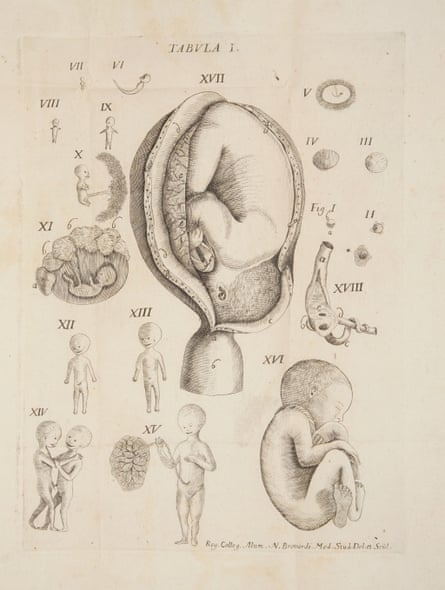
Discoveries about the nature of the embryo transformed ideas about foetal life and abortion in the 18th century. Then, medical writers began to revise the Aristotelian understanding of animation, that a foetus was ensouled at 40 or 80 days. Instead, they argued, the embryo existed in a complete and perfect form from the moment of conception. Giovanni Baptista Bianchi’s treatise on human generation, published in Turin in 1741, was an influential statement of this new science of embryology; the images printed in the book emphasised the argument of the preformationists, that even here – at 10 weeks’ gestation, previously on the cusp of ensoulment – a foetus was a tiny and complete human. Life and soul, previously separated into distinct moments of conception and animation, were now merged.
The development of embryology was both proof and occasion for the Church’s increasingly anxious approach to infant life and death. If a foetus was ensouled from the moment of conception, then its mortal soul could be in danger not only after birth but during pregnancy. If a foetus died – by miscarriage, or abortion – and it had not been baptised, then the infant’s soul would burn in purgatory. This became unacceptable for some church theologians of the 18th century. Mothers who committed abortion were no longer guilty of just one murder but two, “both of the temporal and eternal life of their children,” one 18th-century parish priest warned, “for which these children will cry out for all eternity … for revenge”.
after newsletter promotion
Eighteenth-century midwifery manuals described dozens of potential extreme situations when midwives have to perform a hasty baptism, giving precise instructions for each. François Mauriceau invented a special pump to spray holy water on to a part of the child’s body during labour. Theologians at the Sorbonne in 1733 debated the practice, and decided, uneasily, that baptism by water-jet during birth was sound.
Ordinary men and women seem to have been equally concerned with the supernatural fate of their foetuses. When a child was stillborn, it was common practice in northern Italy and parts of France to take the corpse to a special religious shrine, called a sanctuary of respite, known for working such miracles. The child might be resurrected, even for a moment, just long enough to be baptised. When a woman named Caterina gave birth to a stillborn son in 1643, the child’s father, Lorenzo, heard a few days later about one such shrine a few miles away; he dug up the child’s coffin and brought it there, where women put the little body before the altar and “touched the wrists, the nose and the head of those little corpses and said that they showed signs of a miracle, and for this reason they could be baptised; and beating their wrists and their heads, they said to each other: feel here, there is a pulse beating”.
Archaeologists who have excavated these shrines have turned up hundreds of infant corpses, some of them miscarried or aborted foetuses as early as four months’ gestation, brought to be momentarily reanimated for baptism. Theologians were sceptical, and tried to stamp out the practice; they argued that the women working at the altars would warm the little bodies by candlelight until they looked flush, that they would use tricks of air and temperature to make it look as through the corpse blew a feather placed on its lips. What did Lorenzo see there, in the dim candlelight of an altar? What did he want to see? Archaeologists discovered that the infants, now part of the community of the faithful, were buried in neat rows under the church porch, their hands carefully folded in prayer.
The souls of unbaptised, aborted and miscarried foetuses hung around and haunted their parents. Because unbaptised foetuses couldn’t be buried in a cemetery, men and women buried them in the fields, under the thresholds of their houses, in the cellar. Midwives stuffed the tiny remains into the cracks of church walls. They could not pass from the community of the living, and were said to join along with executed people and those dead by suicide into an army of the undead roaming the countryside.
In 1745, the Sicilian priest Francesco Emanuele Cangiamila published a treatise that combined these medical and theological ideas about foetal development. The Embriologia Sacra was a hugely influential book, translated into multiple languages and published in many editions. It was also radical on the matter of embryonic life. Abortion could never be admissible, even when it might save the life of the mother: “[This] is very hard, I admit,” Cangiamila wrote, but, claiming to quote the Holy Spirit, he told pregnant women: “Do not consider yourself in your infirmity, but pray to the Lord, and He will heal you.”
If, as Cangiamila argued, life began at conception, then even the interior of the female body should be within the church’s jurisdiction. “The zeal of the church’s ministers,” he wrote at the opening of the book, “should be a zeal without limits.” Baptism should be performed on all foetuses: even those whose mothers had died. Cangiamila argued that postmortem caesarean sections should be performed on all dead pregnant women – even women whose pregnancy was only suspected, not confirmed – so that a baptism might be performed on the foetus. These arguments were turned into law. In 1749, the postmortem caesarean section became mandatory in Sicily; hundreds of them were carried out.
The postmortem caesarean section may seem a relic of a darker time, a barbaric past. But as the fundamentalist view that life begins at conception has become enshrined in law in the United States, that past looms again. When I researched editions of Cangiamila’s Embriologia Sacra, I found a translation on a fundamentalist anti-abortion website that collects historical sources to better make the case for banning all forms of pregnancy termination.
In her book on experiencing breast cancer and its treatment, the poet and writer Anne Boyer reflected: “I am sometimes envious of the horrible circumstances of the past, because they are at least differently horrible and differently degraded than our era’s own.”
There is much that was differently degraded about abortion’s past, but is there anything to covet? What is the use of history when talking about abortion? If, today, abortion is a right, it is a flimsy one: predicated upon the whims of judges, upon a fundamentalist history, upon a property relation to the body that obscures everything that is real and radical about gestation. Maybe there is something we can learn from a time when pregnancy was possession, not of but by another. Abortion in early modernity was not defended as a right but as a fact of life. Abortion in early modernity involved men, so often missing from our own abortion stories, because an unwanted pregnancy was a problem that belonged to everyone: to the mother, the father, the parish priest, the midwife, the community.
The image of the coat hanger has come to stand in for all of abortion’s past: a bloody story, in the backstreet clinic, on a dirty table, a clandestine exchange of abortion in exchange for harm or even death. There is more to abortion’s past than that chapter of its history. Our placards might be painted with a dripping red coat hanger and the words “Never again” but the truth is that, while the coat hanger has gone out of fashion, the past has reasserted itself. The longer history of abortion can tell us something about the rhythms of condemnation and redemption; about the 18th-century roots of the claim that life begins at conception. Those rhythms include movement towards freedom and autonomy too, as in Ireland, where abortion was legalised in 2018.
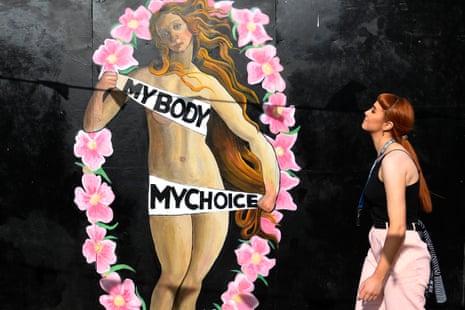
In the US, history was the central terrain on which abortion rights were lost. In 2022, the Dobbs decision of the supreme court overruled Roe v Wade (1973), and held that the constitution does not confer a right to abortion. The majority argued that since the constitution makes no explicit reference to abortion, the right to secure an abortion would need to be protected by the 14th amendment, which guarantees rights not mentioned in the constitution if those rights are “deeply rooted in this nation’s history and tradition”. The past 50 years of Roe are not “settled law”, it turns out; nothing but shallow roots, easily pulled up. The Christian fundamentalists in control of the court have crafted their own deep history of abortion in the United States. In his recitation of the common-law origins of early American law on abortion, Justice Samuel Alito began with a 13th-century English legal treatise: “If one strikes a pregnant woman or gives her poison in order to procure an abortion, if the fetus is already formed or quickened, especially if it is quickened, he commits homicide.” But the treatise also says if you find a whale washed up on the beach, you should send the head to the king and the tail to the queen.
The court argues that, at the time of its drafting, the framers of the 14th amendment would not have viewed abortion as a right but as a crime. The majority opinion cites historical research that has been thoroughly discredited by historians: work that misreads medieval and early modern cases of abortion and shows a total ignorance of its wider context. The majority’s appeal to history is astonishing, partly because the history is astonishingly bad, as all originalist histories must be, conjuring an unreal past of perfectly transparent texts authored in a social vacuum. Context cannot matter to fundamentalist histories of abortion, because context undermines the premise of fundamentalism. But the court’s history of abortion is equally astonishing for the moral authority placed upon it. Can any history bear that weight?
Alito and the rest of the majority do not cite stories like the ones I have assembled here. Of Lucia, who tore the umbilical cord of the child she delivered all by herself. Of Lorenzo, who brought his five-days-buried infant to an altar lit up by candles and watched as the women of the church said: “feel here”. They cannot cite the thousands of women in the past who used herbs and flowers to bring down blood. They cannot cite the whispering voices of those men and women who confessed abortions to their priests in the springtime, or the penance that was whispered back to them.
After my partner and I got home from my abortion, I told him that I did not want to forget. I did not want to forget that I had been pregnant, is what I told him, but I think what I meant was: I do not want to forget this beginning of a life, and its end. That it existed in its own undefinable and immanent way. I didn’t bury my aborted foetus under the threshold of my house, but it haunts me all the same. This is what anti-abortionists will never understand. It is comforting to be haunted. The presence of the dead is preferable to their absence. Or at least, it is better to be haunted than to forget.
Anti-abortionists find the idea of life and death coexisting inside the female body so intolerable that they want to banish the memory of abortion. They want to use history to forget. I don’t want to forget my abortion; I don’t want to forget theirs. The experience of abortion – whatever your personal feelings about it, whatever the content of the decision, the occasion of it – is unforgettable. All the children buried under the threshold, in the fields, in the gutters; all those lined up under the church porch, buried with their hands folded together. As if in prayer.
Adapted from Presence: A Hidden History of the Female Body, published by Jonathan Cape