2 months ago
74
2 months ago
74
The Leeds International Piano Competition is to be relaunched under the artistic direction of Sir Stephen Hough. The pianist is leading significant reforms to the triennial contest that first began in 1963. He will also chair an international jury that includes fellow pianists Piotr Anderszewski, Lucas Debargue, Yeol Eum Son, Kathryn Stott and Master of the King’s Music, composer Errollyn Wallen.
The 2027 competition will have its upper age limit increased to 35, and competitors will have complete free choice over the music they perform, be it Couperin or Copland, Boulez or Busoni.
“I never wanted to be on juries and I don’t like competitions,” said Hough. “They can seem like a bunch of tests where you’re trying to trip up the competitors. That’s not what music’s about. But, I thought, at Leeds, maybe there’s something slightly different we can do here, and find a way to give younger musicians a platform to show us who they are. Everyone isn’t good at everything.
“Too often competitions become like an extension of your final exam at music college. But we want to know what are you going to programme when you are asked to do your Wigmore Hall or Carnegie Hall debut? Give us a programme, show us your best side so that we can see the best of you, not the sort of mediocre sort of half best of everything.”
For the concerto final, the finalists will submit three piano concertos (again, any, rather than chosen from a predetermined list) that they would be happy to perform with the Royal Liverpool Philharmonic Orchestra and its principal conductor Domingo Hindoyan. Hindoyan, Hough and one of his fellow jurors will choose the work they would like to hear the finalist play.
The raising of the age limit – most competitions limit competitors to under 30, is another of the innovations. “It’s not that we’re necessarily expecting to have a ton of people aged 33 and 34 entering – though they’re certainly welcome to do so,” says Hough. “But I wanted to send a message to younger players saying there’s not a rush about this. Don’t feel that, you know, you have to compete suddenly before you get too old. You have time.
“It comes from something that my main piano teacher Gordon Green said to me when I was in my teens, ‘I’m not interested in how you play now. It’s how you’re going to play in 10 years that interests me.’”
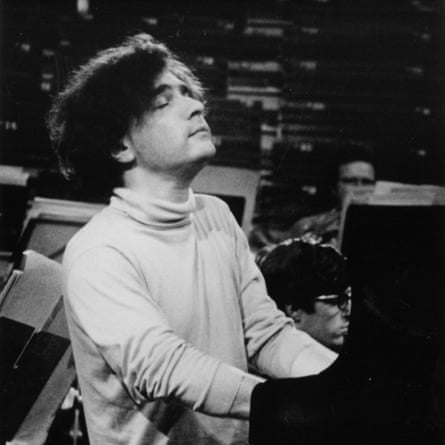
Hough was born on the Wirral and studied at the Royal Northern College of Music. “From my childhood I was in awe of the Leeds. It was both an exciting and an unattainable goal as the whole nation sat glued to the television to witness the finest piano playing,” he said. The competition’s finals used to be live on BBC Two; in recent years, BBC Radio 3 has broadcast the finals and semi-finals, and a partnership with Medici TV sees the final rounds livestreamed and available on catchup. Content will be also available on the Leeds’ YouTube channel and on leedspiano.com.
Previous winners of the revered competition include Radu Lupu and Murray Perahia, finalists include Mitsuko Uchida and Sir András Schiff, Lars Vogt and Federico Colli. Only two women have won the competition – Sofya Gulyak in 2009 and Anna Tsybuleva in 2015, both Russian born. Even in recent years, the finals at the Leeds have been dominated by male players; blind listening for the Leeds’ first round was introduced in 2024 and will continue to be the case in 2027’s competition.
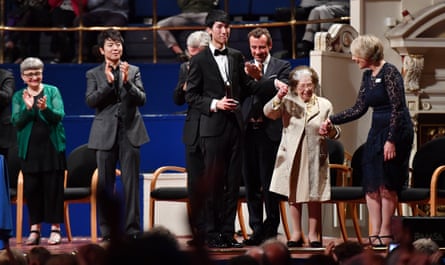
“We need to keep these things in mind and make sure that there’s no unconscious bias, and that we’re not weighting things towards any particular style,” says Hough, adding however that “by the time you get to 20-year-olds on stage in Leeds, in a way, it’s too late to think in terms of balance and representation. It has to start early, with parents and schools.”
Alongside the main prize of £50,000 will be ones for contemporary Music, for the most outstanding encore, a new Leeds Piano Trail prize (for a compelling vision for a community-focused project to be developed and delivered in 2028), and an audience prize. “If the audience disagrees with the jury, that, for me, would be a positive thing,” said Hough. “This is not a test, but a platform. I want to get away from the idea that there is one single winner. Choosing a winner is an imprecise and subjective thing. On a different day a different jury could come up with a different result.
“The Leeds put itself on the map looking for imagination, for poetry, for a deep kind of musicality. That remains,” he said. “Ultimately, we just want to find someone who changes our lives during their performance.”