5 hours ago
8
5 hours ago
8
In February 1960, Harold Macmillan, the UK’s Conservative prime minister, gave his seminal “wind of change” address to the Parliament of South Africa in Cape Town, announcing the end of the age of colonial rule on the African continent. He had given the same speech in Ghana a month earlier but the South Africa speech received significantly more press attention because of its perceived confrontation with the apartheid regime. The speech began a chain reaction: four years later, the British Federation of Rhodesia and Nyasaland was dissolved, establishing a newly independent Zambia.
Amid the hopeful energy of the nation’s birth emerged Edward Mukuka Nkoloso, the father of the Zambia National Academy of Science, Space Research and Philosophy, with an announcement that the young country would officially join the space race.
Many thought this was a bizarre move – the competition for space primacy was originally part of a rivalry between the cold war superpowers. But now Zambia, in its infancy and without a fully functioning government, was not only set to join them; Nkoloso vowed to beat them into space and on to the moon. He was roundly ridiculed from all angles. Western media commentary took a particularly savage tone, calling the group “a bunch of crackpots”.
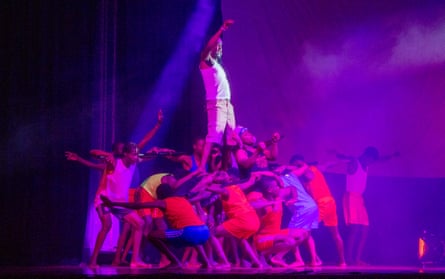
In his 1965 book, The New Unhappy Lords, the far-right British journalist AK Chesterton used the Zambian space programme as “proof of the absurdity in the idea that Africans should be ready for self-rule”.
But Nkoloso was undeterred. He wrote an op-ed titled We’re Going to Mars! With a Spacegirl, Two Cats and a Missionary, asked Unesco for a £7m grant, and continued work on his mission with 12 young men and women handpicked for his training programme. The curriculum was mostly delivered on a remote farm a few miles outside the capital city, Lusaka. It included swinging the “Afronauts”, as they were so named, on ropes that were then cut as they reached their height, dunking them in rivers, and rolling them down hills in barrels.
There were at least some scientific principles behind the exercises: the rolling barrels had an effect similar to being in a centrifuge; the rope cutting was a crash course in freefalling, and the river dunks simulated a splashdown. “Some people think I’m crazy, but I’ll be laughing the day I plant Zambia’s flag on the moon,” Nkoloso told reporters.
The space programme never did take off. Nkoloso’s application for funding from Unesco was unsuccessful and further requests for money from countries including Israel, the Soviet Union, the United States and the (then called) United Arab Republic went unanswered. Without financial resources, the idea was unsustainable. The negative press attention also affected morale – it was reported at the time that some of the trainees went on a drinking spree and never returned; 17-year-old Matha Mwambwa – Nkoloso’s most promising recruit – became pregnant and returned home to raise the baby. The Zambian government formally distanced itself from the mission and the programme was eventually quietly abandoned, with Nkoloso pivoting to a career in politics.
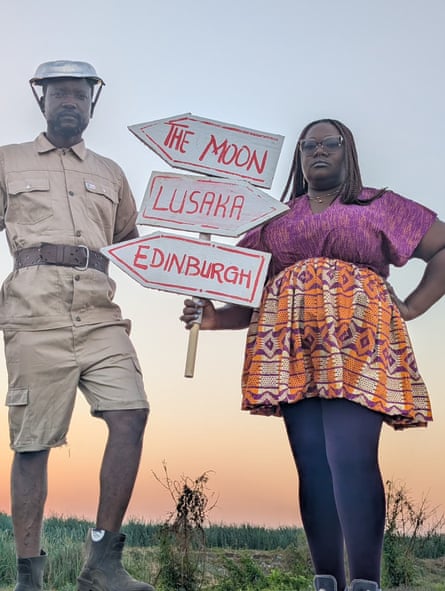
In the years since, there has been some debate about whether or not the Zambian space mission was a genuine endeavour. In an interview with the Zambian-American writer and academic Namwali Serpell, Kenneth Kaunda – the first Zambian president and a close friend of Nkoloso – laughed when he was asked about the space mission. “It wasn’t a real thing! He wasn’t a scientist … it was more for fun than anything else,” he told her. A common theory is that Nkoloso was satirising the absurdity of the United States and Soviet Union spending billions of dollars to go to space when the money could have been better used to solve problems on Earth. He probably knew he couldn’t compete and his aim was actually to get the world talking about Zambia.
Whatever the truth, it is clear that Nkoloso’s endeavours have made a significant impact on Zambia’s space exploration ambitions. Last year, the African Union formed the African Space Agency, with Zambia part of the group representing the south. And in 2024, the country completed a significant milestone in its journey to space by installing its first ground-receiving station. Nkoloso died in 1989, but the country is on its way to achieving his dream.
Despite its downfall, the Zambian space programme continues to influence artists the world over, particularly in the past decade or so. One of the most well-known interpretations of the Afronauts story is the science fiction short film of that name by Ghanaian film-maker Nuotama Frances Bodomo, which premiered at the Sundance film festival in 2014. “I feel very connected to it as a Ghanaian,” says Bodomo. “Edward Nkoloso’s story is a Ghanaian one too. He’s of the generation of soldiers who went abroad to fight in the second world war for the British army, being promised land back, and when he returned he didn’t get those things – that’s also my grandfather’s story. It’s a Pan-African story of that time.”
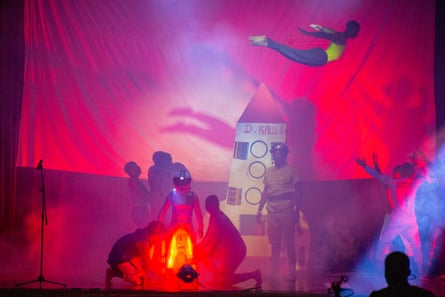
More recently, Company Christoph Winkler, a Germany-based dance theatre ensemble, produced a two-part short film series, respectively titled We’re Going to Mars and We’ll Unite the Galaxies. Filmed in Uganda and the US in 2021, part one celebrates the spirit of optimism that fuelled the space programme, while the follow-up imagines blackness unbound from a single planet, let alone a single continent, through a fever dream of space travel.
The fascination with the mission continues later this year as writer Ryan Calais Cameron teams up with director Monique Touko to deliver a “true-ish” take on the nation’s defiant dream. Their production, The Afronauts, has its UK premiere at west London’s Royal Court in November.
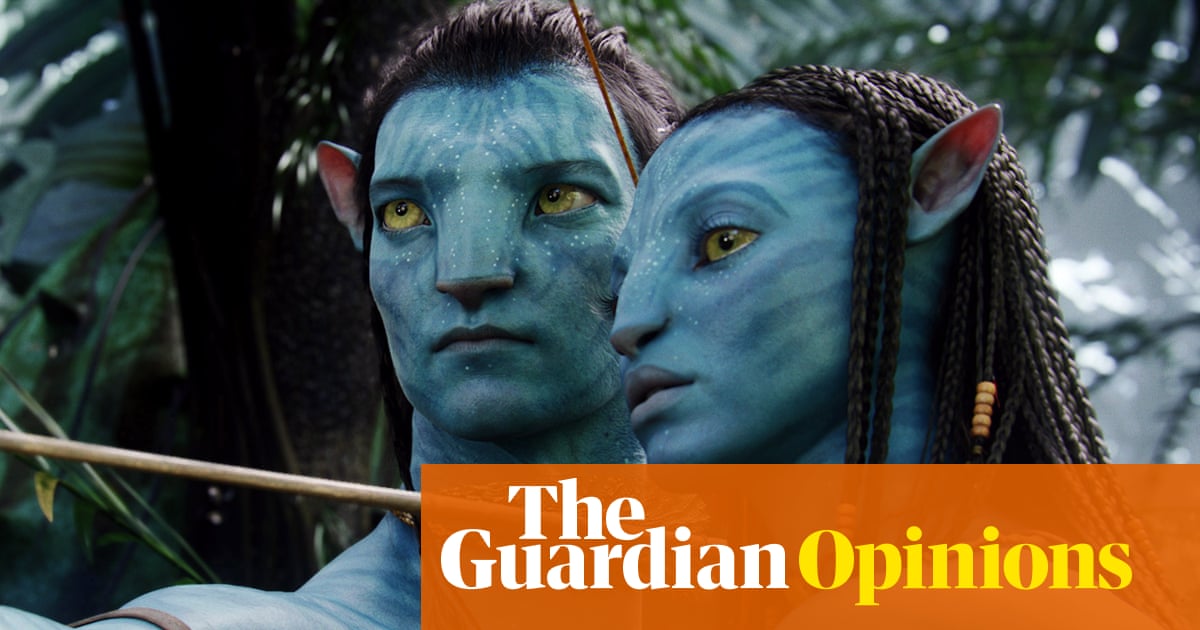
All these works use Nkoloso’s vision of space exploration as a way to imagine beyond traditional western conceptions of what the future could look like, repositioning black Africans as leaders and trailblazers. In many ways, Nkoloso was an early – though perhaps largely forgotten – pioneer of Afrofuturism, a term coined in the 90s by cultural critic Mark Dery.
While there has been considerable attention from outside the country, it’s clear that these historic events mean a great deal to Zambians too. This month, Circus Zambia, a Lusaka-based social enterprise that offers circus- and life-skills training to young people from marginalised backgrounds, brings its show Afronauts to the Underbelly at Edinburgh festival fringe. The production is a collaboration with UK-based theatre company Wake the Beast, co-founded by the Irish theatre-maker Adam McGuigan, and combines aerials, juggling and partner acrobatics to share this epic piece of African history.
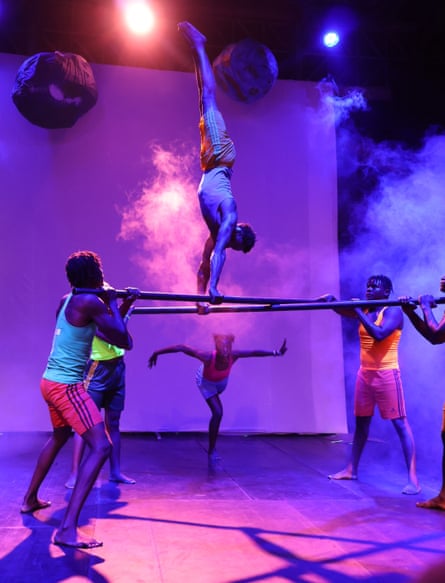
The partnership between the two companies goes back many years. McGuigan – who previously lived in Zambia for a decade and still regularly works within the country’s theatre industry – also co-founded Barefeet Theatre, a cultural movement that seeks to empower vulnerable children living on the streets of Lusaka through theatre workshops. It was through this programme that he met a young Gift Chansa, who would go from service user to facilitator at Barefeet, and eventually go on to co-create Circus Zambia. The two of them co-direct the Underbelly production, which also appeared at the UK’s Wilderness and Latitude festivals in July.
“We started working on the show in 2019 and were planning to bring it to Edinburgh that year, then Covid came,” Chansa tells me over Zoom during a break from rehearsals last month. Before that, most of its shows were adaptations of well-known western works such as West Side Story and The Emperor’s New Clothes. “I was excited I found something that is Zambian,” he says. “It felt just like raw material, nobody had done a theatre production of it at that time. We are Zambians who are pushing the Zambian narrative with something that feels authentically Zambian – made for Zambia, by Zambia. We call that Zambia Ku Chalo.” A saying that literally translates as “Zambia to the world”.
Circus Zambia performs Afronauts at the Underbelly, Edinburgh, to 31 August; touring the UK and Ireland, 4 to 12 September, with the support of the Irish embassy, Lusaka, Zambia; tour starts Liverpool.