5 hours ago
13
5 hours ago
13
Dr Claire-Marie Roberts was working at Coventry City when she received a call from someone asking whether she knew how much oxygen was in the atmosphere. As the performance director, responsible for optimising players’ potential, she was accustomed to being pitched the latest gimmick promising miraculous gains. At times, she could receive up to 50 LinkedIn messages a week offering a device, supplement or technology that claimed to produce magical results.
“It is only 21%,” the caller told her. That’s GCSE chemistry, she thought. Then came the sales pitch: “So what we’ve done is put oxygen in a can and we think you might want to use it.”
“Right … oxygen in a can,” Roberts says, laughing at the memory. Suffice to say, she did not take the caller up on his offer to buy oxygen in a can for Coventry’s players.
Roberts has spent decades working in elite athlete performance and professional football, including nine years at the Premier League and two at Coventry, where she played a key role in their promotion as Championship champions before joining the Formula One team McLaren as director of human performance in the summer. She is shocked by how professional football is being duped by pseudoscience: from coaches and performance staff misled by snake-oil sellers, to players desperate for a shortcut and with money to burn.
“It’s the science-practice gap, which is widening in my experience,” Roberts says. “I think it’s getting much worse. There’s so much sparkly marketing behind all these things. It’s bordering on exploitation.
“They’re taking a population that is very susceptible to: ‘How can I hack my performance advantage? How can I shortcut my preparation and recovery?’ Which I don’t think is a great starting point.”
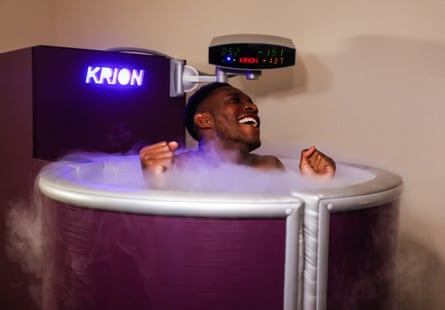
Roberts says some of the practices commonplace in elite football have little evidence behind them. She includes cryotherapy chambers – a common feature at elite training grounds. If unavailable, ice baths are a fallback. Players enjoy them so much that Harry Kane was photographed standing in a wheelie bin full of ice after a Bayern Munich match at last year’s Club World Cup.

“Most clubs have got cryotherapy chambers – most people cannot articulate to you why they use them, because there’s no evidence for them apart from a very slim piece of work that says it might help prevent dementia,” Roberts says. “There’s very sketchy evidence on cryotherapy.”
They could even be detrimental to recovery, Roberts says. “There’s a recent suggestion that cryotherapy might blunt muscular adaptation. When are you using it and why are you using it? If you’re using it for recovery, sleep and nutrition are your best recovery modalities. No amount of putting anybody in a whole-body cryotherapy chamber is going to help them recover more if those two things aren’t taken care of.”
But players are constantly attempting to shortcut nutrition, too. Supplements are a multibillion-pound industry that has its claws in the game. But beyond vitamin D, in which it is “evidence-based” that people in the northern hemisphere are commonly deficient owing to a lack of sunlight, and vitamin C, which is usually short in our diets, supplementation should, Roberts says, be targeted to deficiencies.
“You’ve got people popping pills not really asking what they’re for. It should always be needs-based. If you don’t eat fish and fish oil is important to you, you might supplement it. It should all be based on need.
“Your athletic performance and recovery is based on sleep quality and nutritional quality and amounts. No amount of supplementation will improve a bad diet, but people think it will. We don’t do enough of the basics and think we can shortcut and hack everything.”
Roberts says she used an evidence-based, scientific approach to support Frank Lampard’s squad and that many clubs follow practices from the top of the game when often they are flawed.
after newsletter promotion
“People passively suck these things up,” she says. “Because England or Manchester City or Chelsea who have all the resources under the sun have got this, there’s a misappropriation of confidence and understanding of the scientific basis or evidence. It’s powerful in driving behaviour, but it’s driving the wrong behaviour.”
Roberts, a former swimmer who missed the 1996 Atlanta Olympics owing to injury, says: “Football is more susceptible to it than any other sport I’ve experienced first-hand. I think because the stakes are higher.”
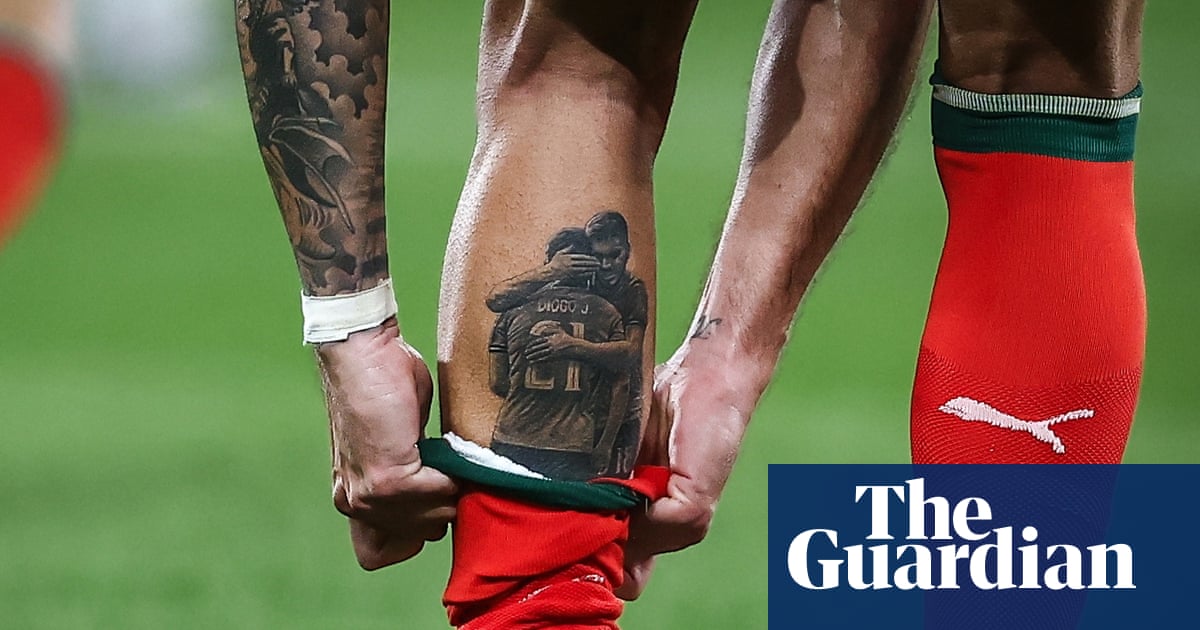
Kinesiology tape – or k-tape, as it is commonly known – is another trend that baffles Roberts. Players from Cristiano Ronaldo to Gareth Bale and David Beckham have been spotted wearing it over the years, often resembling strips of gaffer tape stuck to limbs.
“There’s no evidence kinesiology tape has any impact on injury prevention or performance-related outcomes. It gives you a bit of proprioception – maybe you feel like someone has done something – but in any environment I’ve worked in you’d never see anyone wearing k-tape. It’s a big white elephant.
“If an athlete has dislocated their shoulder, you should strap it – strapping is different. It provides an element of external support that can provide minimal protection to the joint and reminds the person they’ve got a problem. It’s a risk-mitigation strategy. It’s not hugely successful, but you’d do it rather than not do it. K-tape is a placebo.”
Often, managers who have been in the game for decades insist on practices they have adopted for years, or because another coach, with no scientific background, has heard about a revolutionary new product. Roberts believes that until football puts science at the centre of decision-making and employs qualified staff to scrutinise claims, the problem will worsen.
“We think we can accelerate to an outcome without putting the hard yards in – the basic things: diet and sleep and the quality of your training,” she says.
“Football in general is very anti-intellectual and it has been for a long time. There are a few clubs that do it well, but the majority don’t. The game is definitely anti-science. There’s a reason for that. There isn’t a critical mass of people that are applying critical thought to situations.”