2 months ago
126
2 months ago
126
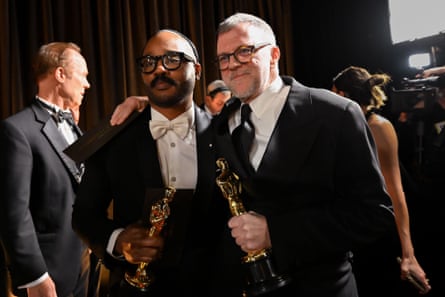
On Sunday, Warner Bros snared 11 Oscars for One Battle After Another, Sinners and Weapons, equalling the record for most wins for a single film studio. Paramount, by contrast, did not earn a single nomination.
Yet in an apparent case of a minnow swallowing a whale, Paramount is poised to gobble up Warner Bros in a deal worth $111bn. If approved by regulators, the two studios would be consolidated into one, redrawing the Hollywood map and sowing uncertainty for actors, directors and writers as well as millions of viewers.
Analysts warn that such a merger could result in thousands of job losses, stifle creative innovation and, given the influence of Paramount’s head, David Ellison – whose father, Larry, is a friend and ally of Donald Trump – make it harder to bring overtly political movies such as One Battle After Another and Sinners to the screen.
“It’s a signpost on the road to the destruction of Hollywood,” says David Dayen, executive editor of the American Prospect magazine. “Bringing down the number of studios and subsequently the output – even though Paramount claims that won’t happen, but there’s almost no way for that to be true – is going to upset the delicate balance that has been already ravaged by the rise of streaming and the collapse of both cable television and the movie-going experience.”
Dayen adds: “If this merger indeed goes through, theatre owners are going to have a tough time surviving. The deal makes a giant bet on the dying medium of cable television that is destined to be a failure. The fallout is not going to be good for creatives in Hollywood, continuing what has been a fairly long decline.”
Warner Bros sits on a 110-acre lot in Burbank, California, with 31 soundstages, 11 exterior sets and a century-old water tower that stands like a monument to Hollywood’s golden age. The studio has produced films including Casablanca, Rebel Without a Cause, A Clockwork Orange, The Matrix, The Dark Knight and the Harry Potter series.
It was set to be bought by the streaming giant Netflix – a prospect that raised concerns of its own – until Paramount swept in with a hostile takeover bid. At a conference in Beverly Hills on Thursday, Makan Delrahim, Paramount’s chief legal officer, said the deal would be “a huge win for the creative community”.
But the film industry, which has already seen MGM absorbed by Amazon and 20th Century Fox bought by the Walt Disney Co, knows that contraction inevitably means fewer jobs. Film production in Los Angeles has cratered in recent years.
The Paramount deal is heavily leveraged, creating an estimated $80bn mountain of debt. Executives have already stated their intention to find $6bn in savings through cutting “duplicative operations”. The combined workforce of Paramount and Warner Bros currently stands at more than 53,000 employees.
Dayen warns that half could be fired by Ellison. “I don’t see any way that they could do what they want to do without a 25,000 job-loss. While they talk about that in terms of synergies – we have two marketing directors and now we’ll have one – the idea that this won’t affect production is laughable.
“If you get rid of half the staffers at Paramount and Warner Bros, you’re not going to be able to produce as many pieces of programming. It’s elemental. That’s going to have a huge impact on independent producers who are trying to bid for jobs, for actors, for writers, all of them if there’s lower output.”
Beyond job losses, there is a potential contraction of opportunity. The Hollywood creative economy relies on competition with studios bidding against each other for the next big idea. As companies devour each other, the doors simply close. The Writers Guild of America has described the loss of competition as a “disaster” for writers, consumers and the entire entertainment industry.
Laura Friedman, who spent 20 years working as a film producer before becoming a Democratic California congresswoman, says: “The more consolidation we have in Hollywood, the harder it is for independent producers to survive, the fewer places there are to go to get films financed.
“If you have one set of studios or owners greenlighting more and more films and less variety in terms of who is saying yes to get films made or distributed then you certainly crowd out the more marginalised voices, the independent film-makers, the up-and-coming artists. It’s certainly worse for people trying to get into the industry. It’s worse for those independent film-makers and worse ultimately for viewers of films who have a lot less choices to watch.”
Screenwriters echo the concerns. Stanley Weiser, whose credits include Wall Street, W and Freedom Song, says: “It’s going to add to the further dumbing down and homogenisation of TV and film content. With the deepening inroads that AI is making, this will only make it that much harder for young emerging writers to get work. It’s one less fishing hole to go to – a big fishing hole.”
Weiser, who frequently works with director Oliver Stone, adds: “My main concern is the lack of films of social relevance being made over the last 10 years and now, with Paramount, it’s going be a continuation of a backslide into films that shirk dealing with the world at large and humanitarian values. I wonder if the new Paramount-Warners would actually have made Sinners and One Battle After Another? Would they have had the gumption to do that?”
David Scarpa, whose recent screenplays include Gladiator II and Napoleon, agrees: “If you have a project, you simply have fewer places to go. It used to be you had a bunch of studios and then you had mini-majors. There were a lot of different places to go and different ways to make a movie and now it feels like things are consolidating to the point where you’re dealing with a smaller and smaller pool of companies. It constrains you quite a bit.”
Scarpa points to the example of 20th Century Fox being acquired by Disney. “It still exists as a label but it’s essentially just an entity within Disney. The consolidation in general in the media landscape is generally not good for creative people.”
Warner Bros is on a hot streak with major blockbusters and critical successes. It went into the Oscars with 30 nominations, beating its previous record of 28 from 1943, when Casablanca took best picture. Paramount films received zero.
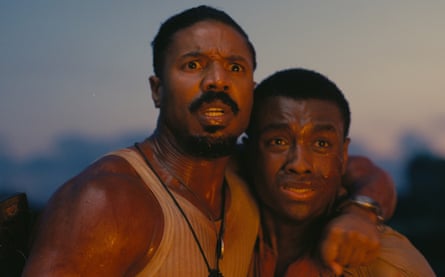
In 2025, Warner Bros movies (including A Minecraft Movie, Superman and Sinners) accounted for 21% of the domestic box office; Paramount’s market share was only 6%, driven largely by Mission: Impossible – The Final Reckoning, which did not even place in the top 10.
Ellison has said he would like to grow their combined slate to more than 30 films a year, keeping Paramount and Warner Bros as stand-alone operations. But Cinema United, the trade organisation representing movie theatres, opposes the consolidation and industry veterans are deeply sceptical.
Mark Harris, a Hollywood historian and author, wrote on Bluesky that “the idea of a Paramount-WB merger producing 30-40 movies a year is an absurd fiction”. He predicted that first Warner Bros will become the “classy” label within Paramount, “then it will become the specialty or streaming label. Then it will die.”
Dayen of American Prospect shares the concern. “We already saw this when Disney merged with Fox,” he says. “I believe the total output of the two studios went down by about 40% and, if that happens again, there won’t be enough studio product for many of these theatres to stay in business.”
David Simon, a TV writer and producer whose works include The Wire and The Deuce, says via email: “With regard to studio mergers, it’s always better for storytelling to have as many and as varied platforms. The fewer buyers, the less that gets sold or made. And, of course, there are fewer platforms willing to risk counter-programming what’s already commonplace on television or in theatres.”
The Warner Bros Discovery parent group owns HBO, HBO Max, CNN, TBS and Food Network, as well as the Warner Bros TV and film studios. Its merger with Paramount represents an unprecedented consolidation of television news, effectively bringing CBS News and CNN under a single corporate roof. Pete Hegseth, the US defense secretary, said of CNN at a Pentagon press briefing on the Iran war on Friday: “The sooner David Ellison takes over that network, the better.”
Drexel Heard, a political strategist who has worked as an actor, producer and writer, says: “The Warner Bros-Paramount deal was not built for entertainment; it was 100% to consolidate the news organisations. Netflix was ready to branch out and build out the more entertainment pieces of it. Everybody who’s looking back at it is like, damn, we should’ve actually pushed Netflix.”
This political agenda, Heard warns, could bleed into the artistic content. “The more troubling piece for everybody – actors, on-air talent, producers or anybody who’s in the creative spaces – is how is the current administration affecting the deal to where they could potentially change how we consume information, whether or not it’s news, TV, how scripts are written? Are they gonna get the money to produce these because they don’t want backlash from an administration?”
Congresswoman Friedman has similar misgivings. “We have seen the Trump administration bemoan that we’re not making what they consider ‘America first’ films. We know that they don’t like voices that are dissenting; we know that they have an issue with DEI and however you interpret that.
“One Battle After Another and Sinners are both of those things. They are films that have a political point of view that are counter to those of Donald Trump and you could say, under their definition, a DEI piece of art, certainly something that reflects the African American experience in the United States.
“Would those films have been made under Paramount? I hope so. It would be an awful loss for our country if we weren’t making those kinds of films any more. What makes America great is that we don’t self-censor and we do respect provocative viewpoints. Artists do good work when they can express themselves, not when they’re trying to fit into a propaganda narrative.”