2 hours ago
12
2 hours ago
12
Hashim Thaçi, the former president of Kosovo, has been sentenced to 25 years in prison by a tribunal in The Hague for war crimes, including dozens of murders, committed during his time as a senior commander of the Kosovo Liberation Army during the country’s war for independence from Serbia in the late 1990s.
The European-backed Kosovo Specialist Chambers, convicted Thaci, 58, and three other former senior commanders of 96 murders, and counts of torture, cruel treatment and arbitrary detention directed at political opponents and civilians.
The convictions come at the end of a years-long process, strongly opposed by many in Kosovo, to bring accountability for crimes committed by KLA commanders during the 1998-99 war in which war crimes were committed by both sides.
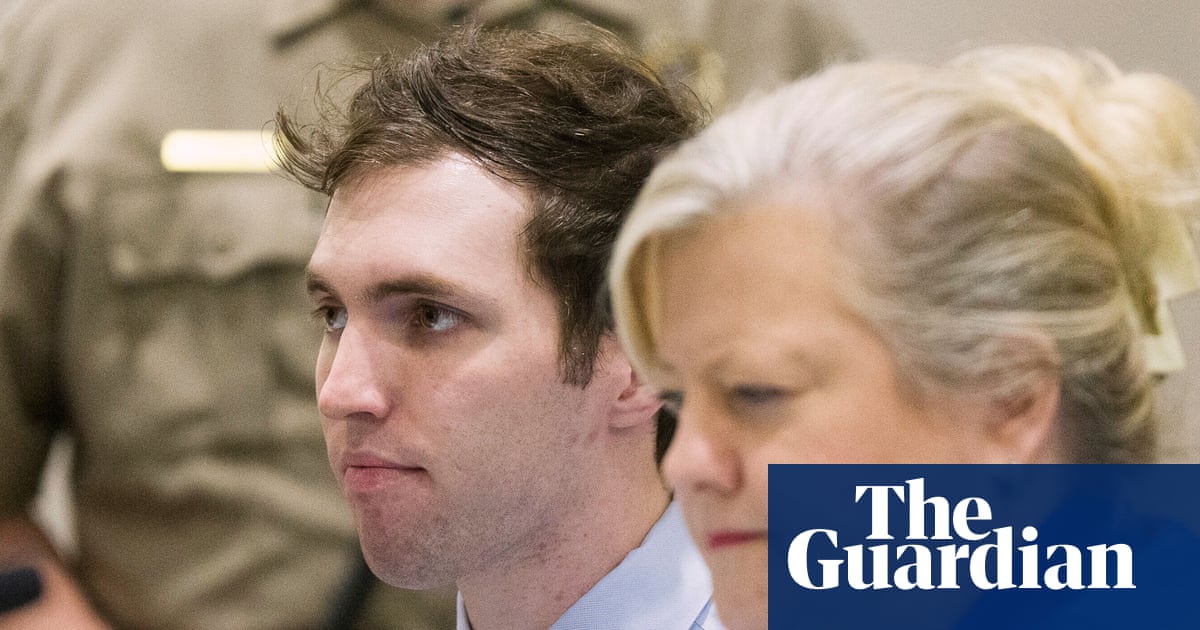
Thaçi, who resigned from office nearly six years ago to face charges, stood in silence in The Hague as the presiding judge Charles Smith read out the sentence.
The former president, who served as the head of political directorate of the KLA’s general staff, faced multiple counts of war crimes and crimes against humanity alongside the three other former leaders of the KLA who are widely regarded as national heroes in their homeland.
In addition to the murders, Thaçi was also convicted for the illegal detention of 385 people, torture of 303 people and cruel treatment of about 50.
Once a hardliner, Thaçi shifted towards a more moderate political identity after being courted by western diplomats who suggested he could be a central figure in Kosovo’s post-war settlement.
At the heart of the prosecution’s case was the degree to which the convicted men had senior operational command over the KLA as a centrally-led armed force and whether the crimes amounted to a pattern of abuse.
The court ruled that Thaçi had “actively participated in and encouraged crimes”. Smith said: “The scale and nature of the crimes committed were very serious”.
He added: “The so-called intelligence on which many of these victims were arrested, detained and killed was little more than unverified rumours. Based on that information, victims were called and described as spies and collaborators and violently treated.”
Smith said Thaçi “used his position, leadership, authority and standing” to encourage crimes but insisted the trial was “not about the legitimacy of the Kosovo Liberation Army” or its ultimate goal of securing independence for Kosovo, which at the time was a province in Serbia. Thaçi could appeal the verdict.
Prosecutors at the Kosovo Specialist Chambers court in The Hague had asked for a maximum 45-year prison sentence for Thaçi and the other defendants, Kadri Veseli, Rexhep Selimi and Jakup Krasniqi who had all denied the charges against them.
Krasniqi received 25 years in prison, Selimi 13 years and Veseli 18 years. Thaçi also faces a separate trial on charges of intimidating witnesses that will begin this month.
The three-judge panel dismissed six charges of crimes against humanity and said prosecutors had failed to show these happened as part of widespread or systematic attacks against the civilian population as a whole.
Known by the nom de guerre of Commander Snake during the war, Thaçi stood out among the KLA leadership as an intelligent and articulate figure who would later charm diplomats – most notably the US secretary of state Madeleine Albright – at the negotiations in Rambouillet that ended the conflict.
But behind the self-assured image he projected as a senior political figure, he was long dogged by allegations of a darker and more ruthless side from his time as a wartime commander.
Thaçi’s defence partly rested on the notion that while serious abuses did occur, the KLA was a not a strictly centralised organisation, claiming that Thaçi’s senior position in the rebel group did not indicate culpability for crimes committed by local units.
“Throughout my life, I stood with the people of Kosovo defending freedom, life and dignity. I was always guided by the western ideals of democracy, equality and justice,” Thaçi told judges in February.
The trial was opposed by many in Kosovo. Outside the court, Kosovo foreign minister, Glauk Konjufca, told the media: “A terrible judgment for Kosovo, for our liberation war. It is a sad, unjust, undeserved decision,.”
Thaçi’s PDK party called the verdict “a great injustice, because it is based on claims and materials that we consider fabricated and nurtured over the years by the state apparatus and Serbian propaganda to criminalise the just war of the Kosovo Liberation Army”.
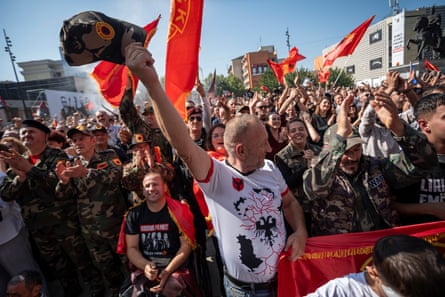
In Kosovo’s capital, Pristina, thousands of people watched the reading of the verdict live on a huge screen and were stunned at the sentence. Some started shouting “UCK,” the Albanian-language acronym for the KLA.
Thaçi, who was born in Kosovo’s rugged Drenica mountains – the KLA heartland – was a philosophy student who rose through the KLA’s ranks, returning from what he described as political exile in Switzerland to join Kosovo’s struggle for independence.
Thaçi served in a series of senior political roles after the war but resigned as president to defend himself before the The Hague. After the war, Thaçi became a central political figure and was instrumental in Kosovo’s 2008 declaration of independence.
Most of the 13,000 people who died in the war in Kosovo were ethnic Albanians. A 78-day campaign of Nato airstrikes against Serbian forces ended the fighting. About 1 million ethnic Albanian Kosovars were driven from their homes.