
1. ‘The devil’s child’: the rise and fall of the only female yakuza
Mako Nishimura in Gifu, Japan, in 2025. Photograph: Shoko Takayasu/The Guardian
If you are a yakuza, if you don’t do these sorts of bad things, you can’t really rise or become better
Sean Williams interviewed Mako Nishimura, who fought her way into the Japanese underworld. They discussed how drug addiction and the slow demise of organised crime gangs almost destroyed her.
2. Behold! Nina Simone’s chewing gum! Inside the show celebrating extreme pop fandom
Nina Simone’s discarded chewing gum. Photograph: Anders Sune Berg/Royal Danish Library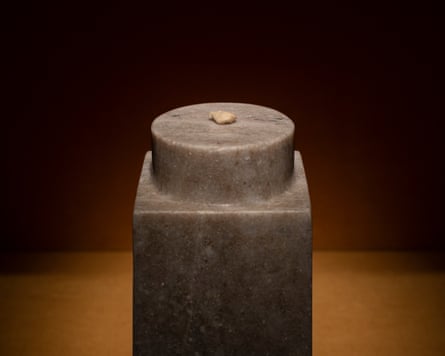
Walking around the exhibition is funny, moving and occasionally disconcerting. It’s also a mood-boost for anyone who has had their obsessive interest in an artist mocked as childish or sad
Alexis Petridis explored Holy Pop, a new exhibition in London celebrating superfandom – featuring leaves from Dolly Parton’s front garden, a Yellow Submarine cookie jar full of ashes, and a branch from the sycamore tree that Marc Bolan’s car hit.
3. What happened to the ‘little refugee girl’?: the 102-year-old Holocaust survivor whose story started outside my doorstep
Sonja Ibermann Cowan at her home in Melbourne. Photograph: Charlie Kinross/The Guardian
For years, the Guardian’s Berlin correspondent Deborah Cole polished two brass memorial plaques outside her apartment dedicated to a Jewish mother and daughter who were murdered by the Nazis. Then a message out of the blue connected her to a surviving child. In this moving article, she wrote about her ensuing friendship with Sonja Ibermann Cowan and recounted the centenarian’s life from Nazi Germany to Melbourne.
4. ‘She compared her dachshund to my newborn baby’: should you be able to take your dog everywhere?
Where do dogs belong? Composite: Guardian Design; Getty Images; handout
I’ve gone to cafes and watched baristas pet dogs and then continue making coffee … I think what has happened is there’s been this overtaking, where there’s no respect for hygiene, no respect for people’s personal boundaries
They’re in restaurants, offices and supermarkets – there’s even a petition to let them on flights to the UK. But, as Emine Saner wrote, not everyone is happy about the growing number of dogs in public places.
5. Fake lawyers, scientists, chefs and punters: meet the ‘white monkeys’ paid to make Chinese businesses look global
Illustration: Michelle Thompson/The Guardian
Elaine Chong looked at the unregulated economy around baihouzi, or “white monkeys” – foreign faces hired to help Chinese businesses appear more desirable. The association with foreigners conveys a sense that a product is universally regarded. White monkey positions are advertised on job boards and can fall into different categories, from acting and modelling for Chinese films and products to pretending to be the foreign CEO of a Chinese company to lend it credibility. They might be seat-warmers or go-go dancers in Chinese nightclubs to draw in customers, or English teachers in language centres to make Chinese parents feel their children are being taught by native English speakers.
6. ‘Should we leave them to die?’ The battle over how to save orangutans from the curse of palm oil
Photograph: Fergus Thomas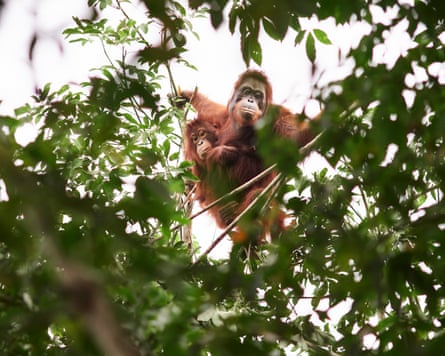
Orangutans have a mental map of the forest built up over many years. They know which trees are fruiting and when. Translocation is an alarming intervention in their social fabric
As new settlers clear their forest habitat, the apes are coming into conflict with humans. But, as Sally Williams explored in this Guardian Long read, simply moving them to another part of the forest may not be the answer.
Meet the only female yakuza, an exhibition of extreme pop fandom – and should you be able to take your dog anywhere?
 3 months ago
152
3 months ago
152
Related




















Nicola Jennings on Nigel Farage’s fundraising – cartoon
10 hours ago
16

|

| |

|

| |

|

| |

|

|
|

|

|
Popular



Prolific UK graffiti artist Helch dies
1 week ago
501
Shaun the Sheep hailed on latest list of storm names
1 week ago
452

Tom and Jerry: Forbidden Compass review – furry foes out of ...
3 months ago
443




Smart ideas for preserving summer fruit | Kitchen aide
1 week ago
387

Our tech overlords are planning for conscious AI to conquer ...
3 months ago
382


Dyson Supersonic Travel hair dryer review: kiss goodbye to s...
3 months ago
373

The story of the Premier League 2025-26 season in 100 photos...
3 months ago
368

The seven best video doorbells in the UK tried and tested – ...
3 months ago
365

Could this humble sea sponge clean up the world’s ports?
1 week ago
357


Saint Levant: the pop star from Gaza caught between passiona...
3 months ago
342

Premier League 2025-26 review: goals of the season
3 months ago
330
|
|
| |
|
|
| |
|
|
| |
|
|
|
|
|
|
|