3 months ago
174
3 months ago
174
By the time Jalaj Jha begins getting ready for work each morning, he already feels drained. Awakening in a cramped room in Delhi, with no ventilation except a rattling fan pushing hot air around, the 24-year-old gig worker has ahead of him a 12-hour shift delivering groceries.
“I barely sleep three or four hours in this heat,” Jha said, wiping dust off his motorbike, which he uses for deliveries. “I wake up exhausted. It feels like my body is pulling me down.”
It is only 7am, but the temperature is already 30C (86F) – the lowest temperature of the day. During the day it can soar to more than 45C (113F). This week, Delhi registered the hottest May day in the last two years, and the warmest May night in 14 years.
Rising temperatures are turning cities across south and south-east Asia into places where workers can no longer recover from the heat. A new report by US-based People’s Courage International (PCI), using research in Delhi, Dhaka, Kathmandu, Jakarta and Quezon City, has found hotter nights, combined with the urban heat island effect – the trapping of heat inside dense cities – are leaving millions of informal workers exhausted before a new workday even begins.
For delivery riders, construction workers and street vendors living in cramped settlements with little ventilation or unreliable electricity, sleep itself is becoming difficult. The inability to rest and cool down is worsening heat-related illnesses, reducing productivity and pushing already vulnerable workers into deeper economic stress.
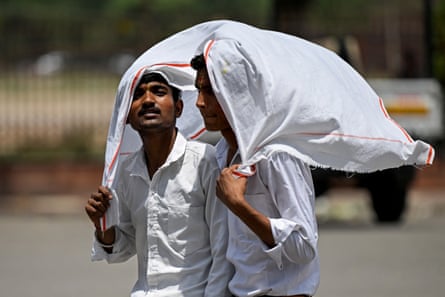
The crisis is worsening in south Asia as climate change is predicted to triple the chance of pre-monsoon heatwaves, such as a 15-day one that turned deadly last month. Scientists say night-time temperatures are rising faster than daytime temperatures across much of the region, reducing the hours people once relied on to recover from extreme heat.
Across Asia, the International Labour Organization estimates that more than 70% of the workforce are exposed to excessive heat at some point during their jobs, with informal workers among the most vulnerable. This has a big impact in countries like India, where nearly 90% of workers are employed in the informal economy.
Lost wages, dizziness and fatigue
Experts warn that cities across the region remain poorly prepared for worsening heatwaves. Some governments, including Delhi’s, have introduced heat action plans and advisories, water kiosks, early warning alerts and directions to reschedule outdoor work during peak afternoon heat. But researchers say most responses remain reactive and fail to directly address the needs of workers living and working in extreme heat.
The PCI report, based on interviews with more than 2,200 internal migrant workers across the five cities, found nearly eight in 10 said extreme heat was disrupting their livelihoods or households. Workers reported losing wages because they could not work full shifts, spending more money on water, medicines and transport, and struggling with headaches, dizziness and fatigue during long workdays outdoors.
“Heat impacts are silent and generally creep up on workers,” said PCI researcher Ameena Kidwai. Workers reported impacts across their lives – including at home and work, on their commute, as well as on their mental health and sense of community, Kidwai said.
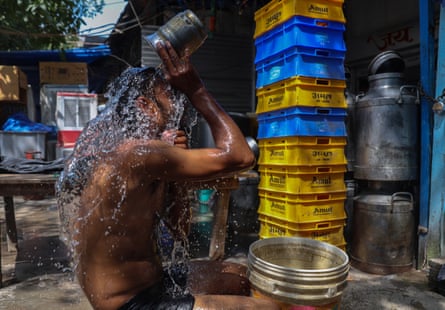
Ajay Kumar, 32, a roadside vegetable vendor in Gurugram on the outskirts of Delhi, spends hours every day pulling a three-wheeler rickshaw loaded with vegetables through dense traffic after buying produce from a wholesale market 7km away.
“Every day my head spins with the heat. But I have no option but to work for my family,” said Kumar, who has four children.
Researchers describe this growing exhaustion as a “recovery deficit” where workers begin each day already physically depleted. Sleep deprivation, they say, is contributing not only to lower productivity and worsening health, but also to anxiety and emotional exhaustion.
Kumar, who moved from a village in Bihar in search of work four years ago, lives with his wife and children in a cramped room with no ventilation except for a rusty fan. He said he wanted to buy a cooler this summer but could not afford one.
“I barely make Rp300-400 ($3-4) a day. Most of that goes in feeding my family,” he said. “I keep some water with me and damp my gamcha [scarf]. That helps my head.”
At night, Kumar’s family often sleep on the open terrace of their building because the room becomes unbearably hot.
“But even then, it takes me hours to fall asleep.”