3 hours ago
13
3 hours ago
13
The secret to late-summer/early autumn cooking is to keep things relatively low-effort, not least to assuage those back-to-work/school blues. And that rule applies across the board, whether you’re making a midweek meal, entertaining or serving up a long, slow Sunday lunch. The sauce for this pasta dish, for example, comes together while the pasta is cooking, while the semifreddo pudding makes the most of ripe figs when they are at their absolute best.
Squid ink spaghetti with anchovies, cherry tomatoes and pangrattato
The contrast between the black pasta, the red tomatoes and the golden crumbs is really something else, as are the flavours.
Prep 15 min
Cook 30 min
Serves 4
For the pangrattato
150g day-old sourdough or country bread
3 tbsp extra-virgin olive oil
2 garlic cloves, peeled and finely sliced
3 sprigs thyme, leaves picked
Fine sea salt and black pepper
For the pasta
Sea salt
400g squid ink spaghetti
4 tbsp extra-virgin olive oil, plus extra to finish
3 garlic cloves, peeled and thinly sliced
300g ripe cherry tomatoes
6 anchovy fillets in oil
75ml dry white wine
Finely grated zest and juice of ½ unwaxed lemon
1 small handful picked flat-leaf parsley, finely chopped
Black pepper
First make the pangrattato. Tear the stale bread into rough pieces, then pulse in a food processor to make coarse, uneven breadcrumbs. Put the oil in a large frying pan on a medium heat, add the sliced garlic and cook gently, stirring, for a minute or two, until fragrant but not coloured. Add the thyme leaves, cook for a further 30 seconds, then stir in the breadcrumbs and cook, stirring regularly, for eight to 10 minutes, until evenly golden and crisp all over. Season with a pinch of sea salt and a little black pepper, then transfer to a plate to cool completely.
Bring a large pan of well-salted water to a boil, then cook the squid ink spaghetti according to the packet instructions, until al dente.
While the pasta is cooking, put the oil in a large frying pan on a medium heat, then add the sliced garlic and cook gently, stirring, for two minutes, until fragrant and just beginning to colour. Add the whole cherry tomatoes and cook, stirring, for three to four minutes, until they begin to soften and burst, then stir in the anchovy fillets and press them into the pan with the back of a spoon so they dissolve into the oil. Pour in the white wine, turn up the heat and leave to bubble and reduce by about half.
Use tongs or a spider sieve to lift the cooked pasta directly into the tomato pan (alternatively, drain the pasta, saving some of its water), then add a splash of the cooking water, and toss and stir until the sauce lightly coats the pasta. Finish with the lemon zest, a squeeze of lemon juice and the chopped parsley, then taste and adjust the seasoning, adding black pepper and more lemon as needed.
Divide the pasta between bowls and finish each serving generously with about 50g of the pangrattato (store any excess in an air-tight container and save for another use: it’s especially good on salads and in other pasta dishes) and a final drizzle of extra-virgin olive oil.
Honey, thyme and fig semifreddo
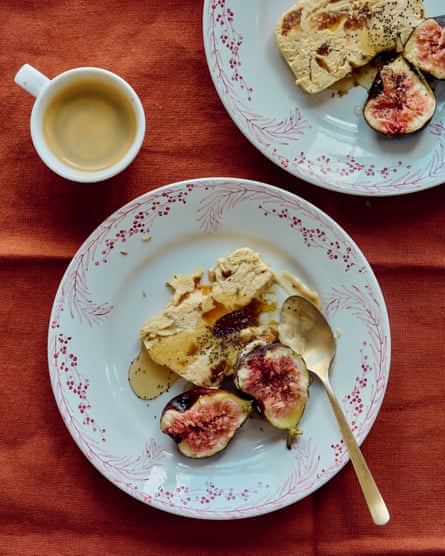
Take this out of the freezer about 10 minutes before slicing and serving. Serve with warm honey, fresh figs and toasted seeds for a simple but very special finish.
Prep 20 min
Cook 45 min, plus cooling
Freeze 8 hr+
Serves 6
For the thyme cream
300ml double cream
3 sprigs fresh thyme
Finely grated zest of ½ unwaxed lemon
For the honey sabayon
3 large egg yolks
75g chestnut honey, or good-quality floral honey
1 pinch fine sea salt
20g brown butter – that is, melted and browned, then left to cool (optional, but recommended)
For the fig ripple
200g fig jam
1 tbsp aged balsamic vinegar
To finish
4 fresh figs, quartered
2 tbsp warm honey
1 pinch toasted poppy seeds
1 pinch fennel seeds, toasted and lightly crushed
A few picked thyme leaves
1 pinch flaky sea salt
First, infuse the cream. Put the cream and thyme in a small pan and heat until just below boiling. Take off the heat, stir in the lemon zest and leave to infuse and cool for 20-30 minutes. Once cool, strain, then chill thoroughly before whipping to soft peaks.
For the honey sabayon, put the egg yolks, honey and salt in a heatproof bowl set over a pan of barely simmering water, making sure the base of the bowl doesn’t touch the water. Whisk for six to eight minutes, until the mixture is pale, thick and has tripled in volume. Take off the heat, keep whisking for two to three minutes more, until the mix is just warm, then fold in the cooled brown butter, if using.
Now for the fig ripple. Warm the fig jam, balsamic vinegar and a tablespoon of water until the mix is smooth enough to ripple through the semifreddo, then take off the heat and leave to cool completely.
Fold a third of the thyme-infused whipped cream into the sabayon to loosen it, then, taking care not to knock out the air, gently fold in the remaining cream until well incorporated.
Now to assemble the semifreddo. Line a small loaf tin with baking paper, leaving plenty of overhang on all sides. Spoon in a third of the semifreddo mixture, drizzle over some of the fig ripple, then use a knife gently to swirl into the mix and make a marbled effect. Repeat twice more with the remaining semifreddo mix and fig ripple, finish with a final swirl of the knife, then cover with the overhanging paper and freeze for at least eight hours, and ideally overnight.
Take the semifreddo tin out of the freezer 10-15 minutes before you want to serve it. Once it’s softened a little, lift it out of the tin, using the paper overhang to help you, then place on a board and cut into six slices. Arrange the fresh fig halves around it, top with the warm honey, and finish with a sprinkling of toasted poppy seeds, toasted crushed fennel seeds, a few thyme leaves and a small pinch of flaky sea salt.
-
Chris Leach is chef and co-founder of Manteca, London EC2