1 month ago
75
1 month ago
75
Iran has no plans for second round of talks with the US, foreign ministry spokesperson says
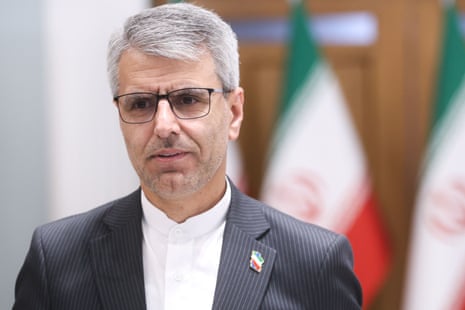
Esmail Baghaei, Iran’s foreign ministry spokesperson, has been quoted by Al Jazeera as having said that Iran has no plans for a new round of talks with the US, saying Washington has violated the agreement from its implementation.
The spokesperson also said Tehran can’t forget US attacks on Iran during previous diplomatic talks as he insisted that Iran will continue defending its national interests.
As a reminder, the US-Israeli war on Iran, which began on 28 February, and the 12-day war last year both were launched when Iran and the US were in talks over Iran’s nuclear programme.
Baghaei also said the US proposals have been “unserious” and its demands “unrealistic” and said Tehran does not believe in ultimatums.
Donald Trump has threatened to destroy civilian infrastructure in Iran if Tehran doesn’t accept the terms of the deal the US is laying out.
He told Fox News on Sunday that the deal the US is offering, which entails reopening the strait of Hormuz and ensuring Iran does not have enriched uranium, was a “very fair and reasonable deal” and unless Iran accepts, he vowed to knock out “every single Power Plant” and “every single Bridge”. Iran has refused to give into what it describes as “maximalist” demands from the US.
Key events Show key events only Please turn on JavaScript to use this feature
Here is an extract from some useful analysis by the Guardian’s diplomatic editor, Patrick Wintour, in which he identifies key sticking points in the negotiations with Iran so far:
Iran’s three demands before entering another round of talks were a ceasefire in Lebanon, an end to the US blockade on Iranian ports and progress on Iranian asset releases.
Iran and the mediators in Pakistan saw this as a traditional diplomatic step-by-step reciprocal process whereby one confidence-building measure from one side would lead to another on the other side.
As a result, the imposition on Israel of the two-week ceasefire in Lebanon by Trump was regarded as significant by Iran, and was due to lead to a reciprocal partial lifting of the Iranian chokehold on the strait of Hormuz – a step announced somewhat clumsily by the Iranian foreign minister, Abbas Araghchi, in a tweet on Friday morning. In return it was expected that Trump would lift the US blockade of Iranian ports, and the momentum surrounding the virtuous circle would build.
But in a series of tweets on Friday Trump kept the blockade in place, claimed Iran had completely lifted the restrictions on tanker traffic in the strait, and for good measure said Iran had agreed to hand over Iran’s stockpile of highly enriched uranium to the US for safe keeping.
In short, he gave the impression that Iran had surrendered. The backlash that followed in Tehran on Friday was inevitable.
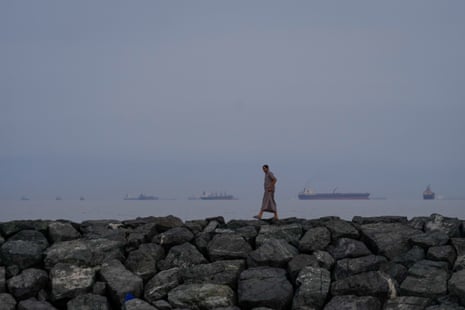
We can bring you some more comment from the Iranian foreign ministry spokesperson, Esmaeil Baghaei, who has been speaking at a weekly press briefing. “While claiming diplomacy and readiness for negotiations, the US is carrying out behaviours that do not in any way indicate seriousness in pursuing a diplomatic process,” he said.
Baghaei said a US attack on an Iranian cargo ship this morning, the US naval blockade on Iranian ports and delays in implementing a ceasefire in Lebanon were all “clear violations of the ceasefire”.
The US is expected to send a delegation to Pakistan led by vice-president JD Vance for talks planned for Monday evening – but these now look unlikely to happen, at least in the form they were scheduled.
Iran would make “an appropriate decision regarding the continuation of the negotiation process”, Baghaei added. Iranian officials appear suspicious that Donald Trump’s talking up of a possible deal could be cover for a surprise attack.
Iran has no plans for second round of talks with the US, foreign ministry spokesperson says
Esmail Baghaei, Iran’s foreign ministry spokesperson, has been quoted by Al Jazeera as having said that Iran has no plans for a new round of talks with the US, saying Washington has violated the agreement from its implementation.
The spokesperson also said Tehran can’t forget US attacks on Iran during previous diplomatic talks as he insisted that Iran will continue defending its national interests.
As a reminder, the US-Israeli war on Iran, which began on 28 February, and the 12-day war last year both were launched when Iran and the US were in talks over Iran’s nuclear programme.
Baghaei also said the US proposals have been “unserious” and its demands “unrealistic” and said Tehran does not believe in ultimatums.
Donald Trump has threatened to destroy civilian infrastructure in Iran if Tehran doesn’t accept the terms of the deal the US is laying out.
He told Fox News on Sunday that the deal the US is offering, which entails reopening the strait of Hormuz and ensuring Iran does not have enriched uranium, was a “very fair and reasonable deal” and unless Iran accepts, he vowed to knock out “every single Power Plant” and “every single Bridge”. Iran has refused to give into what it describes as “maximalist” demands from the US.
Thousands of Lebanese people returned to their villages in southern Lebanon on Friday in the hours after the shaky 10-day ceasefire between Israel and Lebanon took effect.
In this powerful piece, my colleagues report on the bittersweet emotions they felt as many returnees found their homes destroyed or damaged beyond habitation by Israeli attacks which persisted despite the truce:
Pezeshkian says that 'every rational and diplomatic path should be used to reduce tensions'
Iran’s president Masoud Pezeshkian attempted to temper down tensions after escalations over the weekend between the US and Iran.
“War is not in anyone’s interest, and while resisting threats, every rational and diplomatic path should be used to reduce tensions”, the state-affiliated IRNA reported him saying.
Still, Iran has not committed to joining US negotiators for another round of talks in Pakistan, and the president said “distrust of the enemy and vigilance in interactions are an undeniable necessity.”
The US and Iran were in the middle of negotiations when Israel and US launched a military attack on Iran in February.
On Sunday, the US president, Donald Trump,. accused Iran of firing on ships passing through the strait of Hormuz in what he claimed was in violation of the ceasefire agreement. A spokesperson for Iran’s foreign ministry, however, said it was Washington’s blockade of the waterway that was a violation of the agreement.
Iranian negotiators have reportedly said that no further talks will take place unless the US ended its blockade of Iranian ports.
IDF demolishing homes in Lebanon, paying bulldozers based on how many building are destroyed, reports say
The IDF has continued to demolish homes and other buildings including educational institutions in villages in southern Lebanon, even after the ceasefire agreed between the countries last week.
The army has hired civilian contractors to destroy homes, with some operators paid a daily rate while others are paid based on the number of buildings they destroy, according to Haaretz. As many as 20 excavators are running operations in a single village, the Israeli newspaper reported based on conversations with army commanders.
Academics have described the operations as domicide, a strategy that is used to systematically destroy and damage civilian housing to render entire areas uninhabitable.
Buildings in villages, including educational institutions, homes and others are destroyed after receiving permission, in a policy the IDF refers to as the “money plow”, according to the newspaper.
Israel Katz, the country’s defence minister, previously said that “all houses in villages near the border in Lebanon will be demolished in accordance with the Rafah and Beit Hanoun models in Gaza” and said that 600,000 residents of southern Lebanon will not be allowed to return to their homes until Israelis living on the northern border are safe. Academics have questioned whether many will ever be able to return – or whether their homes will still exist.
The IDF did not give any comment to Haaretz. On Sunday, the force said it had verified a viral image that showed a IDF soldier destroying a statue of Jesus with a hammer in the Christian town of Debel. An official account distanced itself from the solider and said that “the IDF is operating to dismantle the terrorist infrastructure established by Hezbollah in southern Lebanon”.
Interim summary
In case you’re just joining us, here’s today’s main developments. It is 9.30am in Tehran, 9am in Jerusalem, 11am in Islamabad and 2am in Washington DC.
-
Iranian state media reported that Tehran was not planning to take part in peace talks with the US, hours after Trump said he was dispatching negotiators to Islamabad for the scheduled Monday meeting. “There are currently no plans to participate in the next round of Iran-US talks,” state broadcaster IRIB said, citing Iranian sources.
-
Donald Trump said US negotiators will be in Pakistan on Monday, and he again threatened to destroy its power plants and bridges if no deal is reached. Trump did not say who would lead the delegation, but a White House official said it was vice-president JD Vance.
-
Ratcheting up the tension, the US said it had seized an Iranian cargo ship, the M/V Touska, that tried to run its blockade. Iran has vowed to retaliate. Hours after the announcement, the US military released footage of incident, including video of US Marines rappelling onto the vessel.
-
Despite all the uncertainty, host Pakistan appeared to be preparing for the US-Iran talks to proceed. Two giant US C-17 cargo planes landed at an airbase on Sunday afternoon, carrying security equipment and vehicles in preparation for the US delegation’s arrival, two Pakistani security sources said. Barbed wire was rolled out near the Serena Hotel, where last week’s talks were held, and the hotel has told all guests to leave.
-
Oil prices surged after Iran closed the strait of Hormuz at the weekend, just a day after reopening it. Brent crude climbed to $95.64 per barrel and West Texas Intermediate increased to $87.90 per barrel. However, equities across Asia rose in early trading on Monday.
-
The Israeli army has confirmed an image circulating on social media that shows a soldier in Lebanon hitting a statue of Jesus Christ is authentic. The image appears to show an Israeli soldier using a sledgehammer to strike the head of a statue of a crucified Jesus that had fallen off of a cross.
-
The Israel army said it viewed the incident with “great severity”, adding that the “soldier’s conduct is wholly inconsistent with the values expected of its troops”.
-
Iran will resume international flights on Monday from Mashhad airport in the country’s north-east, its civil aviation authority said.
Iran will resume international flights on Monday from Mashhad airport in the country’s north-east, its civil aviation authority said.
IDF warns Lebanese residents to not cross specified line
The Israeli military has just now warned residents in southern Lebanon not to move south of a specified line of villages or approach areas near the Litani River, saying its forces remain deployed in the area during a ceasefire due to what it described as continued Hezbollah activity.
In a statement, military spokesperson Avichay Adraee also urged civilians not to return to multiple border villages until further notice, citing security risks.
Further to this, the Israeli military on Sunday published for the first time a map of its new deployment line inside Lebanon, bringing dozens of mostly abandoned Lebanese villages under its control. You can see that map below:
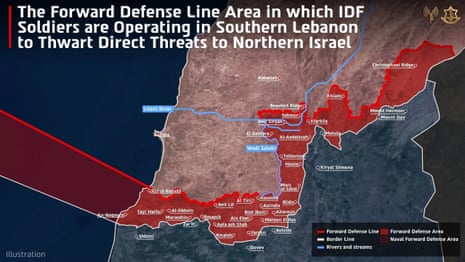
Stretching east to west, the deployment line on the map runs 5-10km (about 3-6 miles) deep from the border into Lebanese territory, where Israel has said it plans to create a so-called buffer zone.
Israeli forces have destroyed Lebanese villages in the area, saying their aim is to protect northern Israeli towns from Hezbollah attacks. It has created buffer zones in Syria and in Gaza, where it controls more than half the enclave.
Israel’s defence minister, Israel Katz, said his military will use “full force” in Lebanon – even during the ongoing ceasefire – should Israeli troops face any threat from Hezbollah.
Lebanon’s military said meanwhile it has reopened a road and bridge between the city of Nabatieh and Khardali that was damaged by Israeli strikes in the south.
Meanwhile, French president Emmanuel Macron will on Tuesday meet with Lebanese prime minister Nawaf Salam in Paris, his office announced, a day after a French peacekeeper was killed in Lebanon.
Donald Trump’s decision to send US officials to Islamabad for further talks on Monday with Iran just 24 hours after Iran once again closed the strait of Hormuz will signal to Tehran that the strategic waterway remains a bargaining asset beyond parallel, writes Patrick Wintour, the Guardian’s diplomatic editor.
In his analysis, Wintour says that with the strait in effect closed, Trump has clearly examined his array of bad options and decided to try diplomacy again.
Iran’s Mizan news outlet is reporting that Iran has executed two individuals accused of involvement in a “spy network linked to Israel”.
Mizan claimed the two men were accused of belonging to a spy network linked to Mossad and had received training abroad, including in Iraq’s Kurdistan region, Reuters reported.
They had been convicted on charges including “enmity against God” and cooperation with hostile groups, and their death sentences were upheld by the supreme court before being carried out, Mizan reported.