2 hours ago
9
2 hours ago
9
An extra 2.7 million lives could be saved in the next pandemic if countries share vaccines in a less selfish way, a new study has found – although the death toll in richer countries would rise.
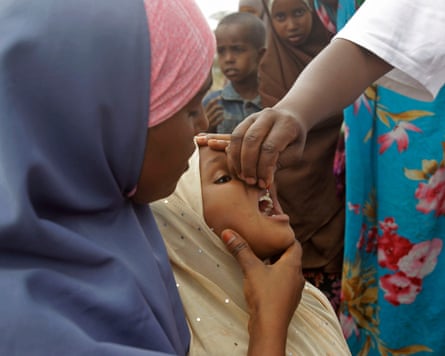
Researchers modelling a hypothetical global outbreak of flu found that fast-tracking vaccine development could cut deaths from 58.5m to 23.9m.
If the vaccines were then distributed equitably, according to population size rather than purchasing power, a further 2.7m lives could be saved overall.
However, in high-income countries, that solidarity-based approach would see deaths rise from 2.4m to 3.9m.
The modelling, looking at a possible future flu pandemic, forms part of a new report from the NUS-Lancet Prime commission, which found that countries needed to adopt a more comprehensive, society-wide approach in order to be prepared for future disease outbreaks.
“Cooperation and solidarity saves the lives of essential first responders, including the health workers who can help stop a pandemic,” said Helen Clark, former prime minister of New Zealand and co-chair of the commission.
“[Taking a] more equitable approach means fewer deaths globally and a fairer chance to protect those who need it most. Stronger regional research and manufacturing capacity will also be essential so that, in the next pandemic, vaccines and treatments reach those who need them first.”
Boosting confidence in vaccines would reduce the death toll by a further 1.9m, the modelling also revealed.
The commission undertook research in 20 countries with communities who had been hit hard by Covid-19 or other crises. They included homeless people in Indonesia, internally displaced people in Ethiopia, and Covid-bereaved families in the UK.
The research revealed how systemic weaknesses put communities at greater risk of illness, death and loss of livelihoods and wellbeing, said co-chair Professor Helena Legido-Quigley of Imperial College London.
“A person living in a crowded apartment cannot socially isolate, a person with no identity papers cannot access a government payment, and a person who doesn’t speak the dominant language cannot understand health advice,” she said.
The commission was set up in 2023 by the National University of Singapore and The Lancet, and includes 41 experts from sectors including health, finance, planning and community.
Traditional approaches to pandemic preparedness have been too reliant on checklists covering things like technical capacity, and failed to evaluate whether resources will reach everyone who needs protection, the researchers said.
A blueprint for action, based on the findings, includes calls on governments to institutionalise community participation in planning, and commit to protection and be accountable for it. It is being published ahead of a United Nations High Level Meeting on pandemic preparedness in New York on Friday.
Dr Githinji Gitahi, global CEO of Amref Health Africa, said countries on the continent had been at the back of the queue for Covid vaccines, and described the modelling results as “both compelling and deeply sobering”.
“Plans written in conference rooms in capital cities often fail to reflect the realities that determine whether people can isolate, obtain reliable information, access care or receive a vaccine,” he said. “Trust cannot be improvised once an outbreak has begun. It must be earned now, before the next crisis, through health systems that listen to communities.”