3 months ago
174
3 months ago
174
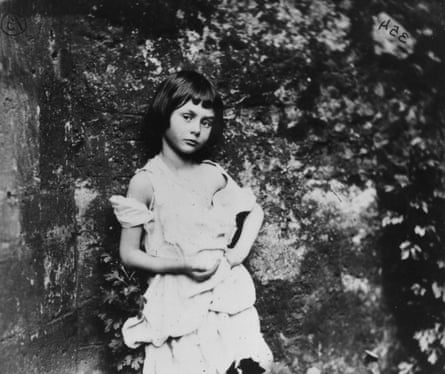
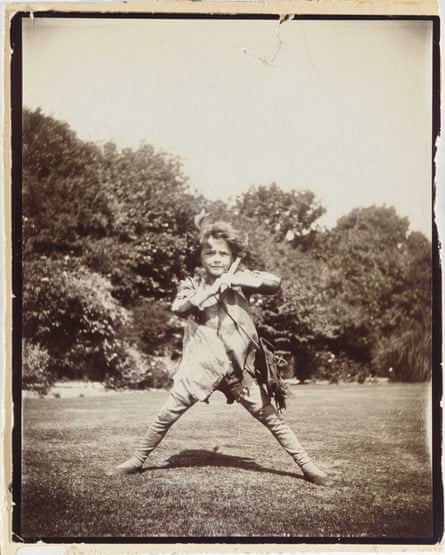
I’d loved the children for years before discovering they were real. I can almost summon the magic I felt when I first saw the photographs that proved it: the little boy clad in an approximation of hunters’ skins, posing victorious. The dark-haired girl with the offset gaze, her interior expression that of a person just growing used to being looked at.
And – this is the one that really kills me – the big-eyed, dimple-chinned seven-year-old in a soft sweater and tenderly mummish haircut, clutching the teddy bear that would end up even more famous than he would.
The first: Michael Llewelyn Davies, who, along with brothers Peter, John and George, gave their names to three children (and one father) in JM Barrie’s Peter Pan. The second, Alice Liddell, whose dozy journey up the Thames with a storytelling mathematician named Charles Dodgson – later and better known as Lewis Carroll – would flower into Alice’s Adventures in Wonderland, and who served as a model for Carroll’s amateur photography. The last, Christopher Robin Milne, son of AA Milne, whose early years and nursery toys (Winnie-the-Pooh chief among them) would be written into the cosiest paradise in children’s literature, the Hundred Acre Wood.
I was terribly jealous of these children. Like most kids, I longed to be noticed, elevated, anointed as extraordinary for doing exactly nothing. If I couldn’t go to Neverland, I wanted at least to be written into it. I think it seemed more glamorous to me at the time (I hadn’t heard of riot grrrls yet) to inspire art than make it.
My perspective shifted as I grew. The photos of Alice – alone, in off-the-shoulder rags like a miniature Carmen, or in a kittenish line with her sisters – began to strike me as troubling. I could no longer push away the reality of the man in the room, watching the child through his camera’s eye. I learned JM Barrie was a stranger to the Llewelyn Davies boys he met in the park, whose interest in them led to a deep connection with their family. He supported them financially after the death of their father, and became their adoptive parent after the death of their mother – and, allegedly, some business with her will. Whether or not he was ultimately a benevolent figure in their lives, there’s something unsettling about the idea of that transformation: from a stranger admiring children in a public park, to those children’s legal guardian.
And consider Christopher Robin Milne. Raised largely by a nanny then sent to boarding school at nine, to come of age in the ruthless company of peers who met him first as a sweet five-year-old in prim shorts and bobby socks, tromping through a friendly wood in the company of his stuffed animals. Milne would later describe the bullying and humiliation of those years, and his sense that his father’s fame had been won by “climbing upon my infant shoulders, that he had filched from me my good name and had left me with the empty fame of being his son”.
More and more these authors I loved, whose work I still love, began to seem like vampires, or dark puppeteers, their ungainly adult bodies lurking just outside the golden borders of a country – childhood – they can write about but never regain. Further complicating this feeling is the fact that it is, in part, that very longing, that ineffable shadow story of never-again running beneath the brightly lit adventures, that has made them so enduring.
The Children grew from this evolving fascination with both classic fantasy books and the relationship between author and child-muse. It’s the story of Guinevere and Ennis Sharpe, a brother and sister written into the pages of their distant mother’s famed portal series. The childhood she writes for them serves as a candied counterbalance to the one she’s actually giving them, of self-made enchantment and deep neglect in the Northeast Kingdom of Vermont. The narrative is split between the true story of that childhood and the adult lives of the siblings – now estranged – 20 years after their parents’ early deaths left them the sole witnesses to their shared youth and its many secrets.
The siblings have dealt in opposing ways with the fame their mother forced on them, and the world’s hungry insistence that it knows and loves them. But each has turned some part of their past into art. Guinevere has just put her name on a highly sanitised, ghostwritten memoir that presents her early life as just the kind of dreamy romp her mother’s readers have always imagined it to be. Ennis takes a thornier approach: gaining fame through large-scale installations that serve as oblique explorations of their mother’s coveted themes, and some she’d never cop to: doors and thresholds, liminal spaces, the artificiality of all tidy narratives.
Then he announces that, after two decades of silence on the subject, he will be opening a new show titled “Mother”. Fear of what, exactly, he’s planning to reveal sends Guinevere reeling back through their childhood, revisiting with fresh eyes its feral glories and hidden tragedies – and reassessing the true nature of its perilous magic.
In creating these grownup children and the invented book series that haunts their lives, I drew first on my early, uncomplicated love of books like Peter Pan and the Chronicles of Narnia (the allegory of which flew directly over my head). But I also wrote from the experience of rereading them as an adult, a writer, a mother, as my fascination with the children behind them curdled into wariness, even pity. As I began to question the adult authors who used their names, their essence, the very fact of their existence as a tantalising anchor for their fictions, allowing that border between life and story to become tantalisingly blurred.
It isn’t a straight line, childhood literary fame determining adult outcomes. Alice Liddell grew up and apparently thrived, marrying a rich and handsome (if not very good) cricketer, receiving an honorary degree from Columbia, and styling herself as Lady Hargreaves, despite having no claim to the title. Christopher Robin found his own place in the literary world, as a memoirist and owner of a bookshop; he even came around to a more accepting place on the subject of his namesake.
The story of the Llewelyn Davies boys had a sadder end. George was killed in action aged 21, Michael drowned with a friend at 20. Cruelly, bizarrely, a London paper saw fit to include Pan’s famous line in their coverage of the tragedy: “To die will be an awfully big adventure.” Peter Llewelyn Davies, who maintained that “miseries” were visited upon him owing to Barrie granting his name to the Boy Who Wouldn’t Grow Up, died by suicide at 63. No clean narrative can be made of this; it’s a tragic coda to a well-loved tale.
In the final pages of Peter Pan, coming face to face again with Peter, a now grownup Wendy sends up a plea that she might be young again: “Something inside her was crying, ‘Woman, woman, let go of me.’” The real people behind these characters make us consider the haunting inverse, which only an enchanted few can understand: the desire to escape the grip of your own child self, trapped in words and images and most of all the hearts of those who love that long-gone version of you, so much they cannot let you go.