3 months ago
104
3 months ago
104
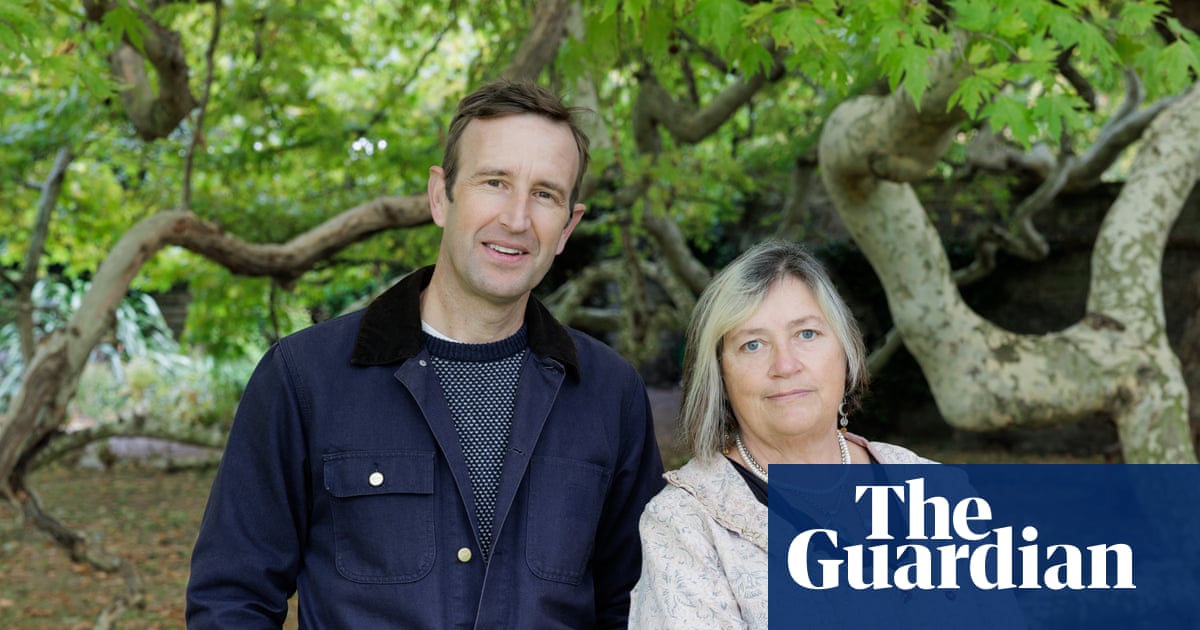
Recently I was at a film event where I was introduced to a big producer by a very nice actor. The actor said, “this is Patrick, he has a debut novel coming out soon.”
The producer looked me up and down and said, “You took your time.”
Her comic timing – unlike my literary timing – was excellent. I laugh when I think of it still. She was the kind of person who prized herself on “telling it like it is”. And this is the “is” like which she told it: I am 51 years old. I have lived half a century. I genuinely forget this unless I pass a reflective surface, but I am grizzled. I do not feel grizzled. Nobody feels grizzled. As the humane and brilliant Terry Pratchett once wrote, “Inside every old person is a young person wondering what happened.”
Why is my first novel coming so late? For some of my fellow late starters there is a gendered aspect. My favourite late novelists are all women – Louise Kennedy, Tessa Hadley, Toni Morrison. Often, women have care responsibilities and patriarchal presumptions to cope with before they can get anywhere. My own reasons for my late arrival as a married man without kids are probably less noble. I was in bands in my 20s and that’s where the creative energy went. There is a lost half novel, left in a flat somewhere in north Dublin, but that’s probably best left lost. It was about a man in his 20s who got drunk a lot and ranted about “corporations”.
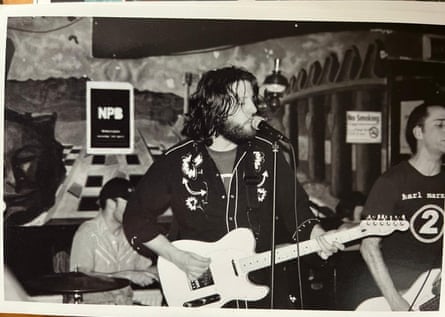
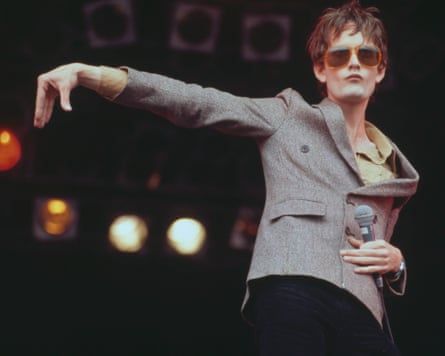
My experience with music was interesting, though. There’s an industry that makes a man feel old. I have never felt older than I felt in my late 20s playing indie music. As my 20s progressed, I really did feel like I had a “best before” label on my forehead and that my time was running out. It was genuinely newsworthy in the world of indie rock when someone had a breakthrough record over the age of 30. “Jarvis Cocker is 31!” we all said when Pulp broke through with His ’n’ Hers.
Consequently, my band were already feeling over the hill when I was 26. When we took on an energetic 22-year-old guitarist, we asked our female friends, “Does Jeremy make us look younger?”
“We think he makes you look older,” they said, sadly.
Around this time I pursued a master’s in music and took a course in composition where the composer/teacher Donnacha Dennehy said, “The great thing about classical music is that you’re still considered a young composer well into your 40s.”
I took that a little bit too much to heart. I considered the notion that there were definitely fields in which youth has different parameters and filed it away for later. In my 30s, I spent a lot of energy that might otherwise have gone into writing a book into writing freelance articles. I had a living to make and needed to salvage some sort of career from the rocktacular wreckage of my 20s.
It took until my 40s before I started experimenting again with extracurricular writing. I wrote a film script with my brother. I wrote short stories that appeared in some of Ireland’s excellent literary journals. My first book, a collection of essays called OK, Let’s Do Your Stupid Idea, was published in 2020 and was shortlisted for the Dalkey Emerging Writers prize because the organisers had kindly chosen the word “emerging” instead of the word “young” for their award. This was a classy move. However, I still internalised the notion that “emerging” more or less meant “young”. I was only a spritely 45 then and because of my self-image issues I was, and still am, vaguely surprised I wasn’t being heralded as a literary wunderkind – the next Sally Rooney.
I am, it has to be said, probably the first hip young gunslinger of Irish literature to travel with a sleep apnoea machine. Is it not possible I’m just making sleep apnoea machines cool like my fellow young people did with mullets and moustaches? Also: mullets and moustaches are easy. Reclaim the combover and bifocal lenses, you cowards.
Even if it’s not as pronounced as in music, there’s still a cult of youth in literature. Everyone is constantly looking for the next big thing, ideally a youthful voice of a generation. In my more petulant moments, I wonder why I can’t be celebrated as the voice my generation. I’ll admit that Generation X already has more than enough voices representing them – Douglas Coupland and Kurt Cobain and Elizabeth Wurtzel and Kathleen Hanna and Johnny Knoxville and David Eggers, all of whom had the good grace to become that generational voice in their actual 20s, but what have they done for us lately? We need spokesfolk for the current moment, people with sore knees and regret!
Unsurprisingly I love stories of artists breaking through later in life. Louise Kennedy, author of the incredible Trespasses and now Stations, was a chef who had never even considered writing until a friend brought her to a writing workshop at the age of 45. It turns out she’s a genius. Tessa Hadley’s brilliant first novel Accidents in the Home was published when she was 46 but she has said herself that that’s nothing on Penelope Fitzgerald, whose first novel was published aged 61.
It is tempting at this point to say that because I am also an older debutant, I am as good as Kennedy, Hadley and Fitzgerald, but the truth is a late start is no more an indicator of quality than a precocious one. I do think being older to the job brings some advantages. I’m pretty confident about what I like nowadays and I’m pretty positively inclined toward my general worldview (“Surely this character’s politics are a little simplistic. We don’t want him to seem like an idiot,” said my well meaning editor at one point. “But those are my politics,” I replied.)
Thematically, my book also deals with issues that might be consistent with middle age. It’s ostensibly about a bunch of Gen-X musicians climbing over the hill, coping with their forgotten promise, their grief, their failures, their waning creativity, guilt, betrayal and death. You know, classic young person stuff.
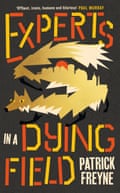
But it goes wider than that – it’s a multivoiced novel from the perspective of a number of characters across the city – financiers, homeless addicts, care workers, priests, children, foxes, God. It encompasses a lot of things I have learned about Dublin and the people who live there as both a resident and an on-the-street journalist. It is, I hope, a sad, funny, weird book about community and creativity and ageing. I think if I’d written it in my 20s I would have channelled the story through the perspective of a more solipsistic first person narrator and not a kaleidoscopic chorus – though I can still channel things through a solipsistic first person narrator when I want to (just look at this essay).
There are other pros to being a debut novelist at 51. I sometimes see writers my age fret about whether their new work is overshadowed by their early literary promise. I have no such worries. I will not be overshadowed by my youthful offerings, unless a novel can be overshadowed by some ramshackle indie albums. I am also pretty sure that nobody is pretending to like my work because of my fresh-faced good looks. Though full disclosure: I hesitated typing that. Even as I sit here now, near no reflective surfaces of any sort, I simply can’t believe that that is true.