3 hours ago
8
3 hours ago
8
At least 30 people are alleged to have been killed in Pakistan-administered Kashmir in the past two days as part of what has been claimed is a brutal state crackdown that has engulfed the disputed region for weeks.
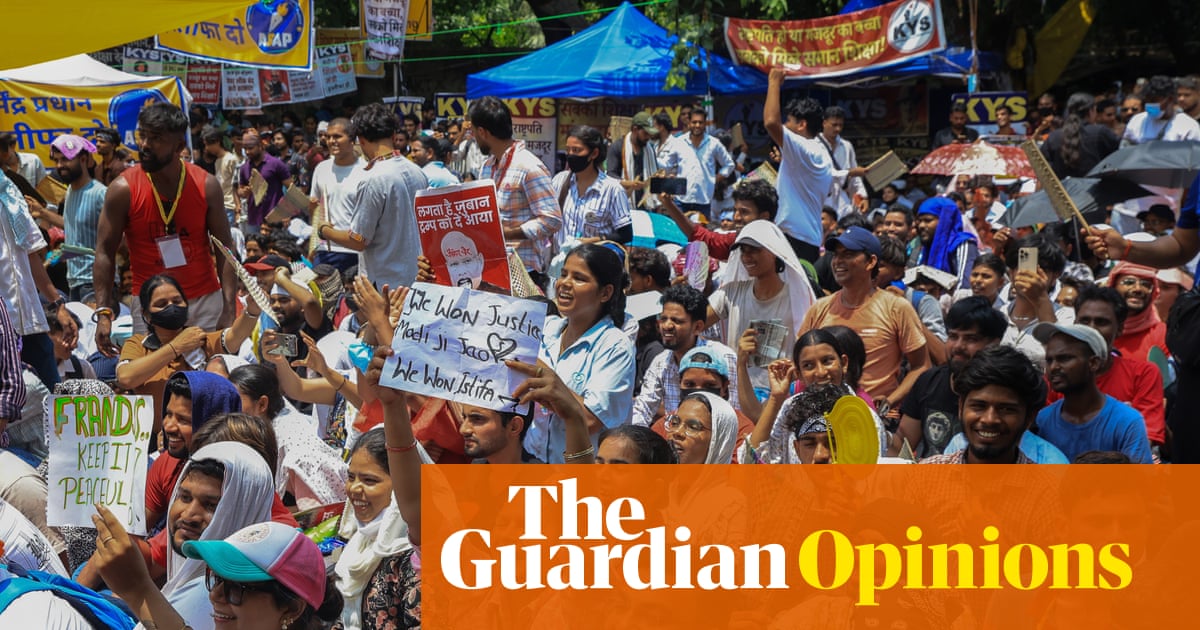
According to a local civil society group, Joint Awami Action Committee (JAAC), the Pakistani security services fired on tens of thousands of peaceful protesters, killing 25 people on Monday and five more on Tuesday.
A wave of protests and violence in Pakistani Kashmir started in June. The state has imposed a severe communication shutdown in response, including an internet blackout that cut the region off from the rest of Pakistan, and began carrying out mass arrests.
Amnesty International on Tuesday called for Pakistani authorities to lift the communications blackout.
JAAC and their supporters had taken to the streets to call for electoral reform in the heavily militarised region. Monday marked the first phase of an election disputed by local groups who say a system of reserved seats for refugees from Indian-administered Kashmir now living across Pakistan gives outsiders too much control over the region.
SA Khan, a spokesperson for JAAC, accused Pakistan’s security agencies of firing on unarmed protesters in Mirpur on Tuesday and then removing the evidence.
“Security forces have taken away the dead bodies and locked away the hospital in Mirpur,” he said. “We have the photos and video evidence of dead bodies lying on streets in a pool of blood. The security forces abducted the dead bodies to erase the evidence.”
A local resident in Mirpur, requesting anonymity for fear of retribution by the authorities, said the violence had erupted early on Tuesday afternoon when people gathered to protest against killings the previous day. “The bodies were shifted to hospital and then they went missing. Now, all shops nearby have been closed after the violence,” they said.
The Guardian could not independently verify the death toll as media were prevented from accessing the area and the internet blackout remained in place, making it hard to reach local communities. Pakistani media have largely ignored the protests and alleged killings.
Pakistani authorities have rejected the accusation of state involvement in the killing of civilian protesters. In a press conference over the weekend, the information minister, Atta Tarar, alleged that the protests in Pakistani-administered Kashmir were receiving “funds and instructions” from India.
JAAC spokesperson Khan rejected the accusations that the unrest was sponsored by India. “It is nothing new: people asking for political or economic rights are termed India-sponsored or anti-state in Pakistan, same goes in India,” he said.
The protests, led by JAAC, have been ongoing for a year, demanding political and economic rights for local people, as well as electoral reforms.
Pakistan-administered Kashmir has been rocked by bouts of deadly violence in recent years. The protests that began in June, calling for the abolition of 12 reserved seats for refugees from Indian-administered Kashmir, have prompted the deadliest crackdown in years. Locals say the reserved seats are used by the central government to retain control over the region and destabilise regional politics.
About 40 people were alleged to have been killed when violence erupted in June and the government accused protesters of killing police. The local government responded by proscribing JAAC as a terrorist organisation, arresting and detaining its political workers en masse and responding to protests with force.
It prompted the UN rights chief, Volker Türk, to call for an investigation into the deadly violence.
Isabelle Lassée, Amnesty International’s action regional director for south Asia, said: “The disturbing reports emerging from Rawalakot are consistent with the Pakistani authorities’ long history of unlawful violence against protesters in Jammu and Kashmir. A prompt, independent, and transparent investigation must be ordered into the security forces’ use of force against protesters.
“So long as an internet and mobile services blackout remains in place, it will severely impede the independent verification of the full extent of the situation on the ground. We urge the Pakistani authorities to restore all communications access and allow media and independent observers into the area.”