2 months ago
155
2 months ago
155
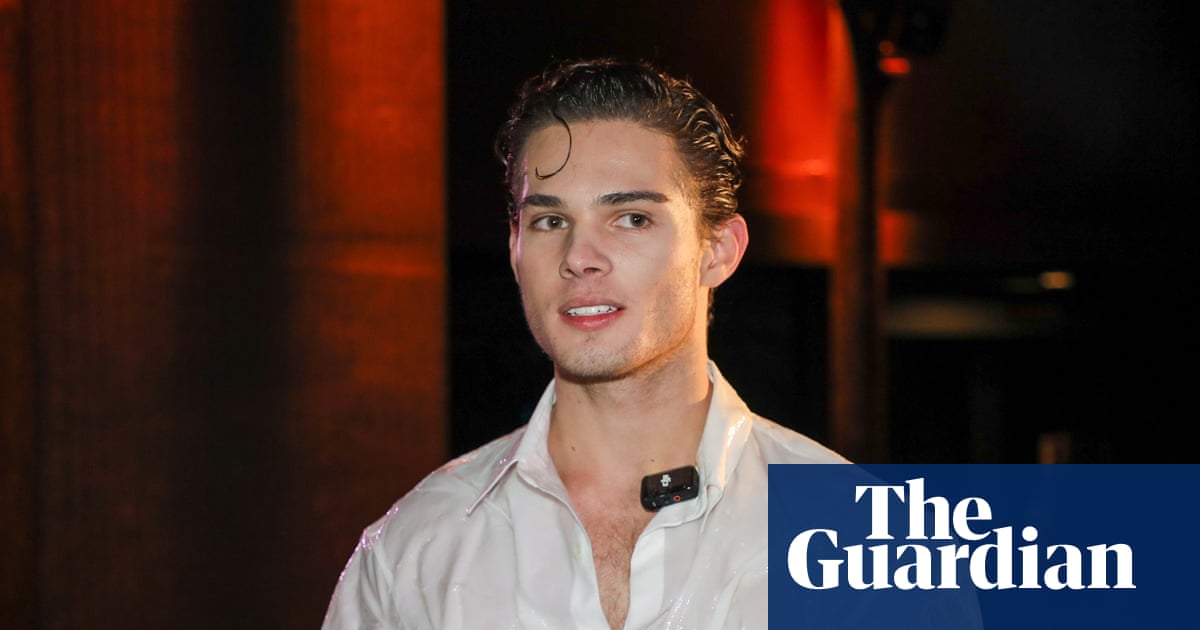
On a cold night in east London, 21-year-old performance poet Sam Browne is telling a packed room of strangers about his second bout of psychosis. “I was in Morocco at 18, completely alone, and I started to feel that things weren’t real,” he says. “It got so bad that one day I turned to a random person and told him I was thinking of killing myself. He just said back to me: ‘Don’t do that – you’ll miss the sunset.’”
The room falls quiet and Browne breaks the tension by launching into a poem inspired by his Moroccan breakdown, You’ll Miss the Sunset. “The world is so beautiful, the least you could do is stick around to watch it,” he says with the hint of a smirk. “But it’s all shit, all of it, isn’t it?”
The crowd of mostly young men and women laugh as Browne gallops through the rest of his set, tackling everything from sexual assault to accidental overdoses and male loneliness. Talking in plain terms and swearwords more than lofty metaphor, he is a poet with a mission, he says: to change the way men see themselves and support each other.
“We need to offer up an alternative masculinity from the one that boys have been trained to live,” he says. “If one way that can happen is through poetry, I’m very happy to lead this movement.”
It might seem like a tall order but Browne’s blend of brutal honesty and droll observation has made him a viral sensation. Counting over 160,000 followers on Instagram, and with videos of his performances regularly attracting millions of views on social media, Browne has turned his teenage experiences into energetic performance poems that aim to skewer our perceptions of mental health and masculinity. It is only 18 months since he began regularly performing at open mic nights, but he has already quit his job as a teaching assistant to tour the country and perform full time. On the face of it, he is living the dream. But it has come at a price.
“I’ve had death threats, people calling me slurs online and even Andrew Tate posting a meme of me on his X account,” Browne says the day after his performance, when we meet in a quiet corner of the National Theatre in London. “I have a love-hate relationship with social media because you don’t know what you’re going to get when you open your messages. We’ve created an environment where people can live on their phones and ignore the world. Men can find simple scapegoats for their problems, and they can avoid what really needs to change. But what I’m trying to do is to use social media to force them to feel something raw and honest – it’s a confrontation where they least expect it.”
It’s a tactic that first gained traction in February 2025 when Browne released a video of his poem Silly Billy and quickly gained more than 15m views. Weaving together statistics on sexual violence with nostalgia-inducing tales of school mischief, Browne’s two-minute poem concludes with an anecdote about a character, Billy, who assaults a girl at a party. One refrain in particular caused the poem to go viral: “Billys aren’t evil, they’re failures of a system / A misguided form of discipline.”
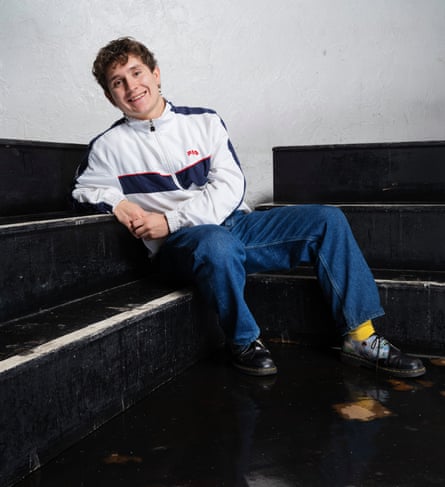
“I wrote it when I realised how prevalent sexual assault is,” Browne says. “I spoke to my female friends and found out it’s something that has happened to almost every woman. I was just ashamed that I had to actually see their pain to understand the extent of it, and the poem was trying to find a different way to get that message across. Rather than just singling out a perpetrator as a rotten apple, it’s actually a rotten system.”
The poem soon reached far-right circles, causing Tate, a leading proponent of the manosphere with 11 million followers, to mock it in a now-deleted post on his X account. The backlash was so severe Browne thought he might be entering psychosis once again. “I was receiving absurd levels of hate and dissociating. It got really bad,” he says. “But for every death threat, I would get far more people messaging me to say my work had changed their perspective. Although the experience was awful, they were watching and the poem was cutting through.”
Browne may not fit most people’s image of a professional poet – but he didn’t grow up knowing what one should look like. He had never read or engaged with poetry seriously until 2025, and the last book he finished was Navy Seal David Goggins’ motivational bestseller Can’t Hurt Me, when he was 15.
“I wrote a couple of poems just out of curiosity when I was 14 but I didn’t want anyone to see them as I thought people would call me gay,” says Browne, who grew up in Southend in Essex and left school at 18. “Andrew Tate started getting popular when I was 17 but we all believed what he was saying before he said it. I became obsessed with the idea of being a man through getting ripped and making money – we all need purpose, especially at that age, and it fed into that. I didn’t hate women but there were elements [of that mindset] I believed in.”
Raised by his mother, who works as a language teacher, and father, a communications consultant, Browne describes spending his school years masquerading as a different person. “I grew up in Love Island country. It’s a look-obsessed culture, a geezer town, and I grew up as a ‘lad’,” he says. “I would spend most of my time at the pub talking about football and women, but it wasn’t who I really was. I realise in hindsight that my queerness was trying to get out.” He now identifies as bisexual.
He was 13 when he smoked weed for the first time, and he traces his mental health problems back to overuse of the drug. “I remember getting very drunk and high when I was 15 and feeling something snap in my brain. I wasn’t the same again for years after that,” he says. “I was depressed, on antidepressants and ADHD medication, and at 17 I developed this irrational fear of sleep. It felt as if I would die if I went to sleep, since it seemed like reality only existed while I was awake. That was my first episode of psychosis – it felt like the world was moving too slowly and I was going to explode.”
Thankfully, Browne sought help from his parents, attended NHS therapy and quit drugs. He turned his attention to standup as a way to channel his emotions and began travelling to London to perform at open mic nights.
On stage in dingy pub basements, though, he struggled to find a sense of community. “Most of the time in standup a good portion of the audience wants you to be bad so they can shout shit at you,” he says. “They want to see you struggle. And I would do gigs wherever I could, including one where two fights broke out while I was on stage, even though there were only eight people in the audience. It’s crazy to think I went through all that when I was a teenager.”
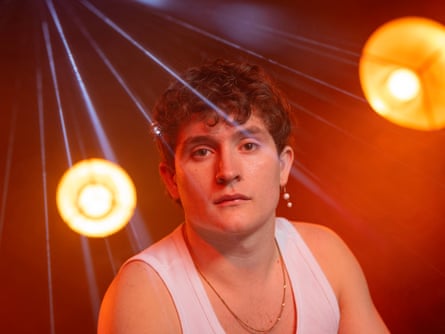
After leaving school, he decided to travel around Australia and south-east Asia, teaching English as a foreign language online. It was during his time abroad that he had an awakening: he discovered his sexuality, found poetry once more and finally relinquished his teen lad culture.
“I gradually realised that all of that manosphere stuff was just a grift – they were only out to make money and they didn’t have any solutions. I ended up in Indonesia instead, surrounded by free-spirited people who encouraged me to express myself,” he says. “I wrote three poems there just about my life and experiences to date, and while I didn’t really do anything with them, it broke the seal.”
His mental health remained a challenge, resulting in another psychotic episode while he was in Morocco – the one he refers to in his sunset poem. After returning from his travels and moving back in with his parents, he describes falling into “a pit of depression”. It wasn’t until he decided to move in with his 96-year-old grandmother in London in 2024 that things took a turn for the better.
He began taking poetry more seriously and attending as many open mic nights as he could. He read work by writers such as Wendy Cope, Matthew Dickman and David Berman, finding a sweet spot in poetry that was accessible to readers but still contained a message. By January 2025, videos of his energetic performances were beginning to find an audience online and he started booking his own shows.
How does he feel about having so many of his personal struggles available for public consumption? “People know a lot about a very specific part of me and I’m comfortable with talking about my mental health because everyone has it,” he says. “It’s vulnerable but it seems worth it since a poet’s job is to be honest. We need people speaking about the ugly realities of mental health.”
He believes this radical honesty is the only way that boys and young men can be led away from damaging role models such as Tate. “You can’t address it head-on and tell a 14-year-old boy what to do – they’ll just laugh at you,” he says. “You have to show them there’s another way to be a man. They’re only one good role model or PSHE [personal, social, health and economic education] lesson away from changing their worldview, but equally they can be easily swayed another way. We have to be vulnerable and show them it’s OK to talk to each other openly.”
Aside from the occasional online pile-on, Browne believes his poems and videos are making a difference. “I get so many messages from people thinking they were going to take their own life and then they would see a video of mine at 2am and it stopped them,” he says. “Growing up I didn’t think the phrase ‘You saved my life’ would be said to me as often as it is, but I do it for myself, too, as it saved me.”
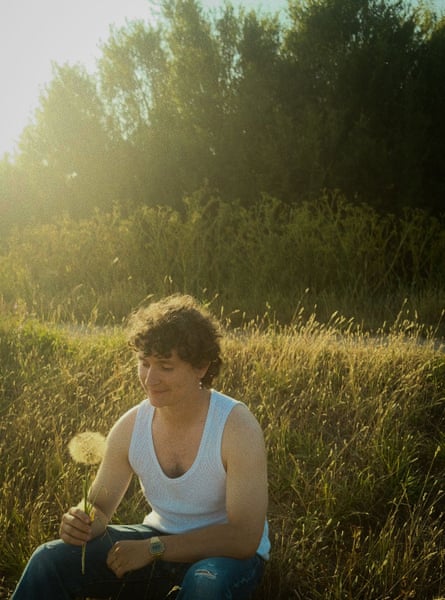
What next for Sam Browne? “I’m working on a book, as well as hopefully some longer-form video content on YouTube and maybe a podcast,” he says. “The manosphere is dead and no one cares about Tate any more. Now it’s pseudo-intellectuals and right-wing commentators on podcasts espousing the same message in a different form, and it will go on to shift again. We need to keep changing with it because if we resort to just name-calling, we’ll only push them further down the rabbit hole.”
He feels his mental health is stable. He no longer speaks to his childhood friends from home, attends therapy when he needs to and has found a new community in poetry. “Poetry accepts everybody, especially those who’ve spent their lives feeling outcast. It’s a place they will be heard,” he says. “I genuinely believe I’ll be OK now – I just want every poem to be a reason for someone reading or listening to stay alive.”
Sam Browne and Friends runs every two months at 93 Feet East, London. The next show is on 23 April. He is also touring the UK with his show The Manosphere and Other Fun Shapes