5 hours ago
10
5 hours ago
10
Google’s Pixel 11 continues to set the standard for what you should expect from the base model of a flagship phone with class-leading cameras, long software support and almost all the bells and whistles of its most expensive phones.
The regular Pixel 11 costs £879 (€999/$899/A$1,499) making it £80 or equivalent more expensive than last year’s model as the cost of RAMageddon continues to bite. It’s not cheap by any stretch of the imagination, but it comes with 256GB of storage and is £200 less than the Pixel 11 Pro, matching rival Samsung’s Galaxy S26.
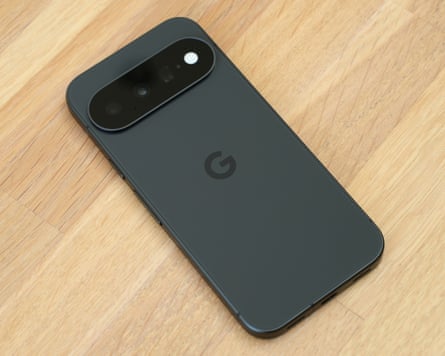
At a glance the Pixel 11 looks very similar to the previous two Google phone iterations: glass front and back with flat aluminium sides and large pill-shaped bar at the back, which is much slimmer this time. Stick it in a case and the protruding camera all but disappears.
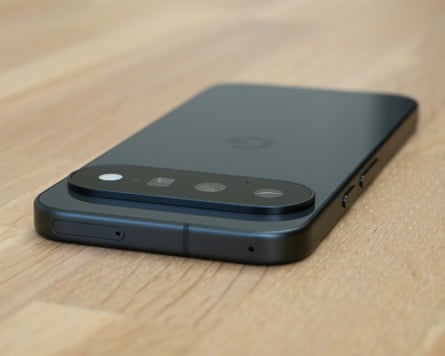
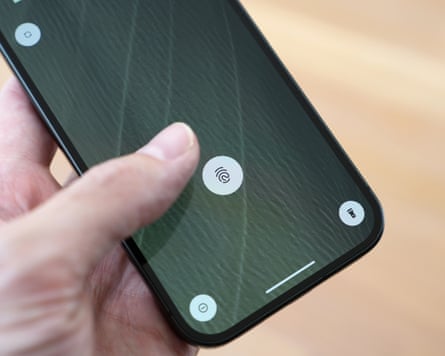
The 6.3in OLED screen is crisp and super bright with up to a 120Hz refresh rate to keep your scrolling smooth. The in-screen fingerprint scanner is fast and accurate, while the camera-based face recognition works well during the day and is secure enough for use with banking apps, unlike similar systems on most Android rivals.
Specifications
-
Screen: 6.3in 120Hz FHD+ OLED (422ppi)
-
Processor: Google Tensor G6
-
RAM: 12GB
-
Storage: 256 or 512GB
-
Operating system: Android 17
-
Camera: 48MP+ 13MP UW + 10.8MP 5x tele; 10.5MP selfie
-
Connectivity: 5G, eSIM, wifi 6E, UWB, NFC, Bluetooth 6 and GNSS
-
Water resistance: IP68 (1.5m for 30 minutes)
-
Dimensions: 152.8 x 72.0 x 8.6mm
-
Weight: 197g
Faster and more efficient Tensor G6 chip
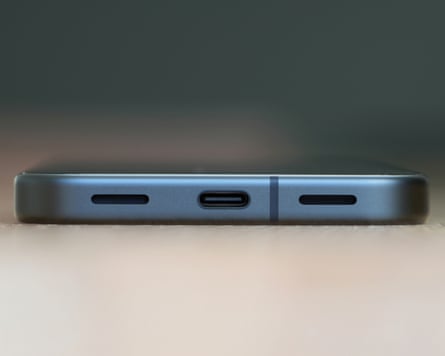
The Pixel has a new generation of Google’s chip, the Tensor G6, which is up to 20% faster in tests. It significantly lags top-end rivals from Qualcomm and Apple, so won’t win any raw performance awards, but feels snappy in daily tasks and can handle mid-level gaming just fine.
The battery life is also improved over previous models, lasting about 54 hours of light use between charges. That includes actively using the screen for more than seven hours for browsing, messaging, apps and photos across a mix of 5G and wifi.
Gaming and more demanding use hits the battery harder, but the Pixel should be able to see out even the heaviest of use days.
Android 17 with more proactive AI

The Pixel 11 runs the latest Android 17 out of the box with operating system and security updates provided until August 2033.
The software is slick, nicely animated and well optimised, with plenty of colourful customisation if you want it. As with previous Pixels, it is a showcase for some of Google’s most advanced AI systems, many of which run on-device, making them fast.
The most interesting of the tools remains Google’s proactive AI systems, which vary a bit depending on where you live. In the UK the expanded Magic Cue from last year pops up in messages and a few other apps with information such as your schedule, flight or order details, and suggestions for good local restaurants from Google maps or photos to share in a chat. In the US, Canada, Australia and a few other regions, the feature is called “Gemini Proactive Assistance” but has similar powers. If you use a supported app, such as Google Messages, the suggestions are low-key great. Unfortunately it doesn’t work in WhatsApp, Signal or other third-party apps I’ve tried, which limits its usefulness.
In the UK and US, Gemini can go further, proactively taking action for you, such as booking a restaurant via OpenTable, which is the type of assistance that has long been promised by various AI agents.
Another useful AI feature is built directly into Google’s keyboard called Rambler, which is voice typing on steroids. You can speak naturally to it and the system will remove your ums and ers and other deviations to produce a succinct, fully formed sentence or paragraph. It makes trying to dictate a rushed messaged while hustling for public transport a lot easier, although it doesn’t show your text until after you hit the stop button, unlike most other dictation tools.
Camera
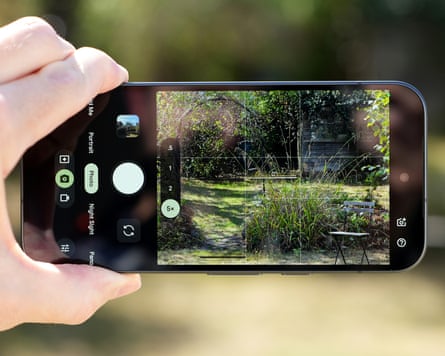
The Pixel 11 has three cameras on the back and a solid 10.5-megapixel selfie camera in the screen.
The improved main 48MP camera captures excellent photos across a range of lighting conditions, including low light where its larger sensor helps capture more of what’s available. The 13MP ultra-wide camera is one of the best on a phone of this class, helpful for fitting more in the shot or providing a different perspective. But it is the 10.8MP 5x telephoto camera that sets it apart from the competition, capable of meaningfully closing the distance to objects. In bright light it can digitally zoom to 30x magnification with surprisingly good results.
Entirely new for the Pixel camera this year is the “Looks” feature, which allows you to customise how the phone captures and processes your photos for very different styles far beyond simple filters applied after the fact.
There are three versions of the default look available – natural, vanilla and shadows – plus six more-distinctive looks, including “digi” that replicates the look of the old digital cameras that has recently become popular. Each look can be customised in colour, tone, grain and sharpness, so you can get arty or replicate a particular film style.
If you are a Pixel user who has ever thought its photos look a little too cold, dramatic or overly processed, this is for you.
The Pixel shoots great video at up to 4K at 60 frames a second. The new Magic Capture feature is a one-button shooting mode that records video and photos automatically that is best used during events such as birthday parties where you want to be more in the moment but still capture the scene.
Google has also added a “Creator Suite” mode to the video capture, which shoots straight to a folder you can quickly storyboard and trim to create a video. It also has a teleprompter mode for shooting face to camera, a social media grid to get the alignment correct and speech enhancement that cuts out background noise.
All these features are in addition to Google’s popular Auto Best Take, Add Me and Camera Coach from last year, which makes the new Pixel camera one of the most feature rich available.
Sustainability
The battery is rated to last in excess of 1,000 full charge cycles with at least 80% of its original capacity. The phone is repairable by Google, third-party shops or self-repair with manuals and parts available.
The Pixel 11 is contains 33% recycled materials by weight. The company breaks down the phone’s environmental impact in its report and will recycle old devices for free.
Price
The Google Pixel 11 costs from £879 (€999/$899/A$1,499) in a choice of four colours.
For comparison, the Pixel 10a costs £499, the Pixel 11 Pro costs £1,079, the Pixel 11 Pro XL costs £1,279, the Pixel 11 Pro Fold costs from £1,799, the Samsung Galaxy S26 costs £879 and the Apple iPhone 17 costs £799.
Verdict
The Pixel 11 isn’t the most advanced Google phone, nor is it the cheapest. But this middle-ground model offers more than enough to beat the competition and question whether you really need to spend more on a Pro phone.
It offers, yet again, a very high-quality experience, great triple camera, long software support and very good battery life. It won’t win any raw performance awards, so those looking for a gaming phone should look elsewhere, but it feels fast and responsive in daily use.
Google’s AI tools are second to none, particularly its Rambler dictation feature in the keyboard and the proactive Gemini features, which offer genuinely useful help even if they are not available in every third-party app.
The new camera looks feature provides more control over photos than ever before on a Pixel, so you can tailor it to your preferences or get creative far beyond simple filters.
It may not have changed all that much from last year’s equally excellent Pixel 10, and it isn’t quite the bargain the Pixel 10a is, but the Pixel 11 is the best phone you can get under £900.
Pros: seven years of software updates, great camera with 5x telephoto, great screen, impressive local AI features, Qi2.2 wireless charging and magnetic accessory support, long battery life, good size, fast fingerprint and face recognition, 256GB starting storage.
Cons: face unlock option not as secure as Face ID, raw performance short of rivals, no physical SIM card slot in the US, heavier than rivals, not a big upgrade on previous model, no wifi 7.