3 months ago
111
3 months ago
111
A leading Jewish refugee advocate has vowed that solidarity work with asylum seekers will continue despite growing harassment from far-right activists targeting Jewish organisations supporting refugees.
Rabbi David Mason, the executive director of the UK Jewish refugee charity HIAS+JCORE, said groups such as theirs had increasingly faced antisemitic abuse and conspiracy theories from far-right activists, most notably online.
“It’s to frighten us,” he said, adding that such abuse would not deter them from their work. “It’s a badge of honour, in a way. I’m doing something and I’m determined, as a Jew and as someone who believes in a strong, cohesive Britain.”
Mason said some of the hostility was driven by conspiracy theories such as the “great replacement”, which falsely claims that Jews are orchestrating migration to undermine western societies. Similar antisemitic conspiracies were cited by the gunman who attacked three Jewish congregations in Pittsburgh, US, in 2018, targeting Jews he believed were helping refugees through organisations such as the US-based refugee agency HIAS.
Speaking at a Refugee Shabbat event in London aimed at highlighting Jewish solidarity with asylum seekers, Mason said many Jewish synagogues and community groups across the UK were continuing to support refugees, though this work was often less visible because of security concerns and rising antisemitism.
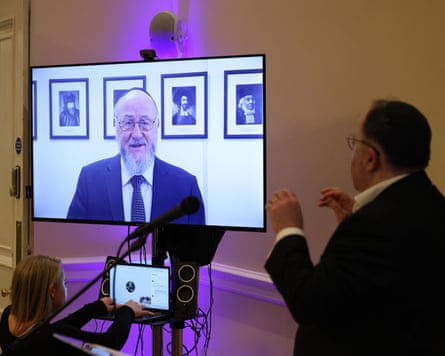
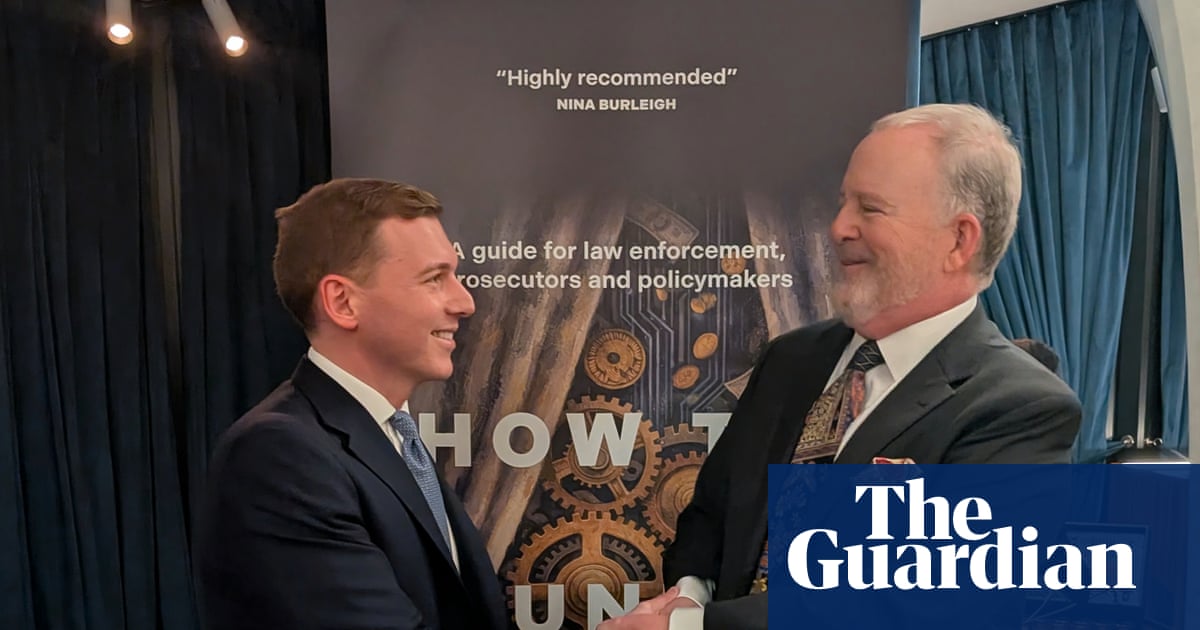
The event brought together leading figures from the Jewish community, other faith groups, refugee organisations, politicians and students. The Progressive Judaism co-chair Rabbi Charley Baginsky and the Rev Guli Francis-Dehqani were among those who spoke, while the CEO of HIAS, Beth Oppenheim, addressed the event by video.
At least 60 synagogues and Jewish student societies plan to mark this Shabbat with activities focused on refugees, such as sermons, Friday-night meal discussions and exhibitions, Mason said. Some synagogues host monthly drop-ins for asylum seekers, as well as initiatives such as choirs, orchestras and LGBT support groups for refugees, he added.
“The values of compassion and social responsibility are really at the heart of Judaism,” Mason said. “My great-grandparents were refugees and came here. They needed help, support and friendship to become part of this place.”
At HIAS+JCORE, a befriending programme called Jump, now entering its 20th year, is central to its work with young refugees. The scheme pairs volunteer befrienders with unaccompanied young people aged 16 to 25, offering social support alongside casework assistance and access to hardship funds.
Ben, a volunteer mentor who has been involved with Jump for about six years, described it as moving and rewarding work. “I’m there to be his mate and to be someone who can be a constant in his life,” he said.

Mason said the 7 October Hamas attacks in Israel and the Israel-Gaza war had made interfaith work more difficult, particularly at a national level. However, he said many local relationships between faith communities remained strong.
He criticised what he called “celebrity interfaith” events that consisted of photo-ops, adding: “There is nothing like faith groups sitting side by side and solving problems in society together.”
While Mason welcomed the Labour government’s focus on social cohesion, he expressed concern about the rhetoric and asylum policies recently proposed. HIAS+JCORE organised an interfaith letter calling for a more compassionate policy and rhetoric from the government after Keir Starmer’s “island of strangers” speech.
“They’re talking about pushing people back to their place of origin if they deem a country safe,” he said. “But if these are people who have already put roots down, whose children are in school – what happens then? My grandparents came here, my mother went to school here, my grandfather became a doctor. And then what, you’d be told to leave? That’s very worrying.”
Mason said that while there was broad support within the Jewish community for refugee solidarity, he acknowledged dissenting voices, including a newly formed Reform Jewish Alliance.
“The events of the last two or three years have been a radicalising force for many people,” Mason said.
But he said he was proud to emphasise Jewish history as one shaped by exile and refuge, which he believes should encourage compassion towards those seeking sanctuary today.
He feared that unless tackled head-on, increasing social division risked pushing communities further apart. “People, cultures and communities don’t meet,” he said. “And if they don’t, you end up with generalisations that create fear.”