3 months ago
128
3 months ago
128
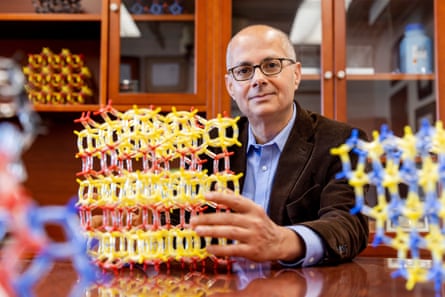
A Nobel laureate’s environmentally friendly invention that provides clean water if central supplies are knocked out by a hurricane or drought, could be a life saver for vulnerable islands, its founder says.
The invention, by the chemist Prof Omar Yaghi, uses a type of science called reticular chemistry to create molecularly engineered materials, which can extract moisture from the air and harvest water even in arid and desert conditions.
Atoco, a technology company that Yaghi founded, said their units, comparable in size to a 20-foot shipping container and powered entirely by ultra-low-grade thermal energy, could be placed in local communities to generate up to 1,000 litres of clean water every day, even if centralised electricity and water sources are interrupted by drought or storm damage.
Yaghi, who won the 2025 Nobel prize award in chemistry, said the invention would change the world and benefit islands in the Caribbean, which are prone to drought. He added that it could be a solution for countries needing to get water to marooned communities after hurricanes such as Beryl and Melissa, which left thousands without water.
“Hurricanes such as Melissa or Beryl unleashed heavy flooding, destroying homes and crops and impacting thousands of lives in the Caribbean. This devastation is a stark reminder of the urgent need for enhanced water supply resilience in vulnerable areas, particularly small island nations susceptible to extreme weather events,” Yaghi said.
The invention, Yaghi added, could provide a climate-friendly and sustainable alternative to other water sourcing options such as desalination, which may pose a threat to ecosystems when concentrated salty brine is released back into the ocean.
Last month, a UN report said the planet had entered a “global water bankruptcy era” with nearly three-quarters of the world’s population living in countries classified as water-insecure or critically water insecure.
“Around 2.2 billion people still lack safely managed drinking water, 3.5 billion lack safely managed sanitation and about 4 billion experience severe water scarcity for at least one month a year,” the report said.
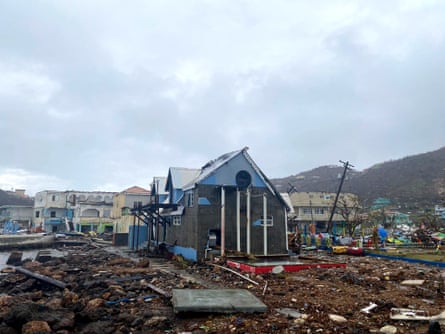
In the three-island Caribbean nation of Grenada, which was devastated by Hurricane Beryl in 2024, Yaghi’s invention offers a ray of hope, particularly for Carriacou and Petite Martinique that bore the brunt of the disaster and face a triple threat of storms, drought and coastal erosion.
“The technology’s ability to function off-grid using only ambient energy is particularly compelling for our context,” said the Carriacou government official and environmentalist Davon Baker.
Carriacou and Petite Martinique, which are still experiencing the after-effects of Beryl, are forced to import water from Grenada to deal with dry seasons that appear to be getting more intense and longer every year.
“We’re currently considering comprehensive recovery and resilience strategies, and the atmospheric water-harvesting technology Prof Yaghi developed addresses several critical challenges we face: the high cost and carbon intensity, as well as the contamination risk, of water importation; vulnerability of centralised systems to hurricane damage; and the need for decentralised solutions that can operate when traditional infrastructure fails,” Baker said.
Yaghi, who grew up in a refugee community in Jordan, said he was inspired by the hardships he endured in a home with no running water or electricity. Giving his Nobel prize banquet speech, he recalled water arriving to his desert community from the government once every week or two.
“I remember the whisper through our neighbourhood, ‘the water is coming’, and the urgency as I rushed to fill every container I could find before the flow stopped.”
Describing the invention as “a science capable of reimagining matter” he urged leaders to “remove barriers, protect academic freedom” and “welcome global talent”.
“On climate, the hour for collective action has already arrived. The science is here. What we need now is courage – courage scaled to the enormity of the task – so we may gift the next generation not only carbon capture, but a planet worthy of their hopes,” he said.