3 months ago
194
3 months ago
194
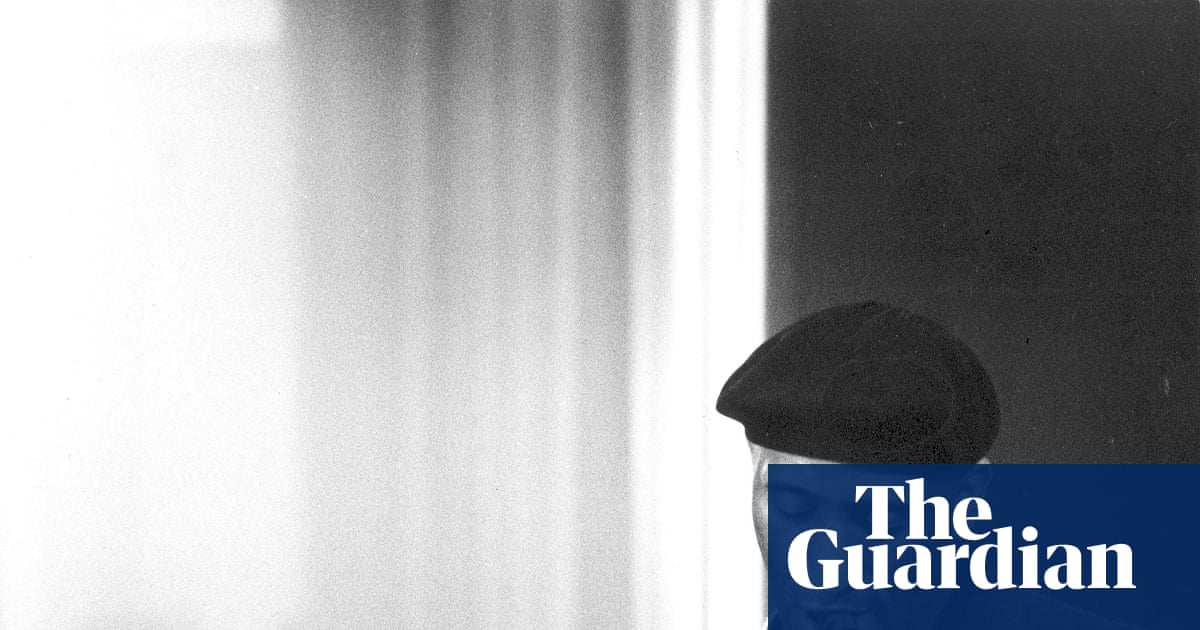
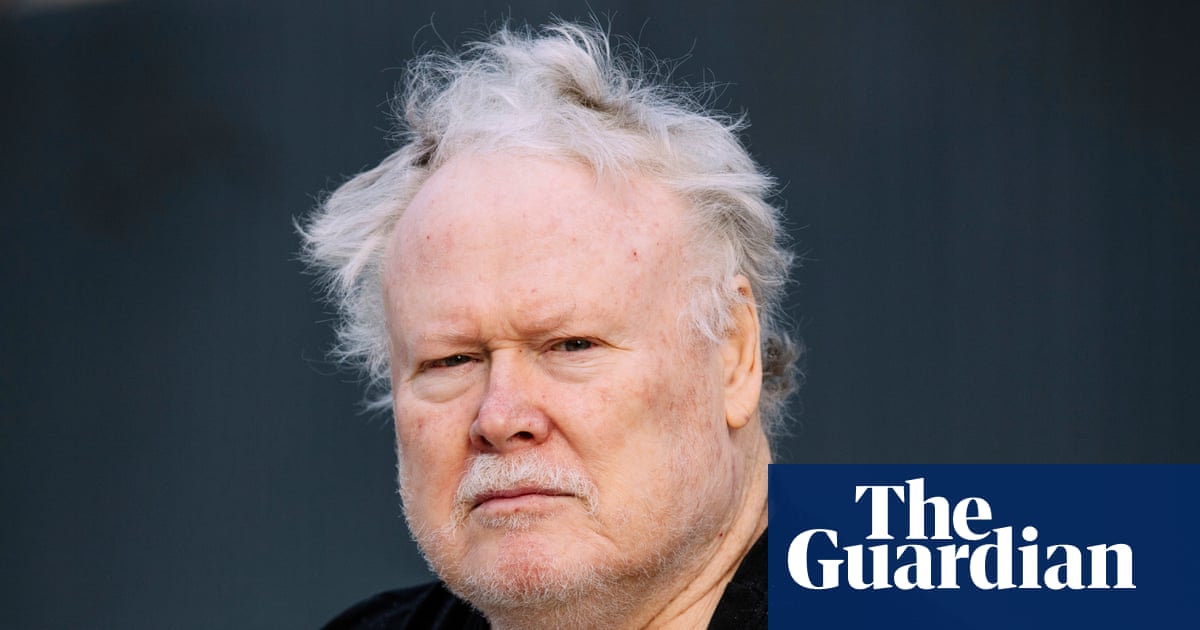
Saif al-Islam Gaddafi, who has died aged 53, shot dead by four masked assailants at his home, was for many years considered the heir apparent to his father Muammar Gaddafi, Libya’s long-time dictator, and was still a potential force in his country’s fractured and violent politics.
He was issued with an arrest warrant by the international criminal court in 2011 – and convicted in absentia by a Libyan court in 2015 – over war crimes committed during the 2011 revolution. Saif had promised that the regime would keep fighting the rebels “until the last man standing, even the last woman standing”.
Since being captured while attempting to flee Libya after his father’s death later that year, he had largely remained, initially as a prisoner, in the western Libyan city of Zintan, where the assassins killed him.
In 2021 he had announced, with the backing of the Gaddafist or “green” Popular Front for the Liberation of Libya, his candidacy in presidential elections, which his rivals feared he might win, but which did not in the end take place.
In a rare 2021 New York Times interview as he contemplated his run, designed to appeal to Libyans disillusioned by economic hardship, instability and the effective partition of the country, he said: “They [Libya’s postwar leaders] raped the country – it’s on its knees. There’s no money, no security. There’s no life here … It’s more than a failure. It’s a fiasco.”
Saif’s career can be roughly divided into three phases: first, that of a wealthy, well-educated – including controversially, as it would turn out, at the London School of Economics – and jet-setting English (and German) speaker – who for a time kept two tigers as pets.
With many western businessmen and politicians, including Peter Mandelson, then a cabinet minister, he was an interlocutor who had shown – both at home, where he pursued a number of humanitarian initiatives, and abroad – an eagerness to democratise the Libyan state.
The second phase was from February 2011, when he shed his reformist stance in favour of backing his father’s violent efforts to quell the revolt, until the end of the civil war.
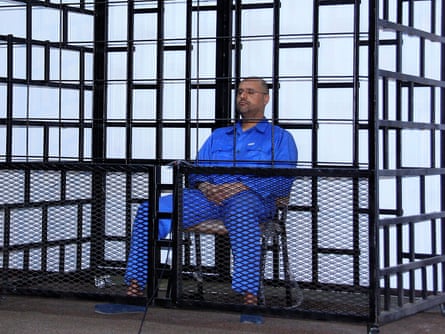
And the third was when, after being captured by a local anti-Gaddafi militia as he was trying to escape the country, and subsequently facing a death sentence which was commuted only in 2017, he began to plan an ultimately unfulfilled comeback as a political player. Explaining that he had been “away from the Libyan people for 10 years,” he told the New York Times: “You have to come back slowly, slowly. Like a striptease.”
He was born in Tripoli, the eldest of the seven children of Muammar Gaddafi’s second marriage, to Safia Farkash. Saif went to a school for children of the Tripoli elite where “national discipline” and Muammar’s Green Book, the eccentric treatise expounding his theories of dictatorial socialism, were, as elsewhere, curriculum staples. He secured a degree in engineering and architecture at Al-Fateh University in Tripoli (now the University of Tripoli), an MBA at the Imadec business school in Vienna (where he was friendly with the Austrian far-right politician Jörg Haider) and by 2002 he was at the LSE to take a PhD. When it was awarded, a charity founded by Saif agreed a donation to the school of £1.5m.
In 2011, after Saif’s role in the civil war became clear, the then LSE head, Howard Davies, resigned. But despite criticisms that Saif’s dissertation on “The role of civil society in the democratisation of global governance institutions” had had outside help, the LSE did not revoke his doctorate. Only the first £300,000 of the donation was ever paid.
Saif had also been actively responding to western efforts – including by the Blair government – to improve relations with his once shunned but oil-rich country. He was involved in the negotiations both on compensation to the victims of the 1988 bombing of Pan Am flight 103 over Lockerbie and in those that led to his father’s abandonment of Libya’s weapons of mass destruction programme in December 2003.
One casualty of western outreach to Libya would be the French ex-president Nicolas Sarkozy, convicted in 2025 of corruption after accusations – persistently promoted by Saif himself – that he had received €50m from Libya to fund his 2007 election campaign.
Saif startled even some of his closest aides with the ferocity with which he lined up behind his father once the revolt had begun, with a televised speech in February 2011 warning the rebels they would unleash “rivers of blood”.
Watching Saif addressing a noisy and excitable youth rally in Tripoli during the Nato bombing the following month, it was hard to believe that his chilling promises of revenge were those of a liberaliser and sometime critic of his father’s regime. Referring to strongholds of the rebel “gangs”, he shouted: “We’re coming to you. Today Ajdabiya, tomorrow Benghazi.”
Yet within 10 months of that speech, and after what the UN estimated were 15,000 deaths in the conflict, his father had been killed by a rebel militia in his home town of Sirte, along with his brother Mutassim; and Saif himself, having earlier survived a Nato strike on a convoy he was travelling in, was captured as he tried to reach Niger. He was released in 2017 by Abu Bakr al-Siddiq battalion, the militia controlling Zintan, after an amnesty announced by Khalifa Haftar, the warlord controlling eastern Libya.
In 2021 Saif denied reports that he had been married and had one son. But in 2012 an Israeli model and actor, Orly Weinerman, said she had had a six-year affair with Saif and appealed to Tony Blair to save him from his then impeding Libyan war crimes trial.
While the perpetrators of his assassination remain unknown, both the Haftar family and the UN-recognised, Tripoli-based, western Libya government of national unity (GNU) led by Prime Minister Abdulhamid al-Dabaiba, may have had something to fear from a Gaddafi comeback because of his probable appeal to those Libyans who believe, despite his father’s egregiously brutal dictatorship up to 2011, that conditions in the country are no better – and in some respects even worse – than when it fell.
Gaddafi is survived by his mother and his siblings Saadi, Hannibal and Aisha, and by a half-brother, Muhammad, from his father’s first marriage. Three other brothers, Saif al-Arab, Mutassim and Khamis, predeceased him.