2 months ago
78
2 months ago
78
Saudi Arabia has urged the US to ramp up attacks on Iran, a Saudi intelligence source has confirmed, while it is weighing a decision on whether to join the fight directly.
The Saudi source confirmed reporting in the New York Times, which said the kingdom’s de facto leader, Crown Prince Mohammed bin Salman, has urged Donald Trump not to cut short his war against Iran, and that the US-Israeli campaign represented a “historic opportunity” to remake the Middle East.
The intelligence source said Riyadh was not just calling for the military campaign to be continued, but to be intensified. Trump appeared to confirm the report about the crown prince’s role, telling journalists on Tuesday: “Yeah, he’s a warrior. He’s fighting with us.”
There are no reports of active Saudi military involvement in the nearly four-week-old war so far, but a Saudi political analyst said the kingdom was likely to take that step if current peace efforts led by Pakistan failed.
“What matters now is Iran’s decision,” Mohammed Alhamed, a Saudi geopolitical analyst, said. “If Iran engages seriously, there is still a path to contain escalation. If it rejects the conditions and continues its attacks, the threshold for Saudi action will be crossed.”
Alhamed added that Saudi Arabia “is not reacting impulsively”.
“It is calibrating its response and preparing for a scenario where escalation, if it happens, will be deliberate and decisive,” he said, adding that Saudi Arabia “has not been pushing for war.”
“It has been trying to avoid being drawn into it, while keeping all options on the table,” he said.
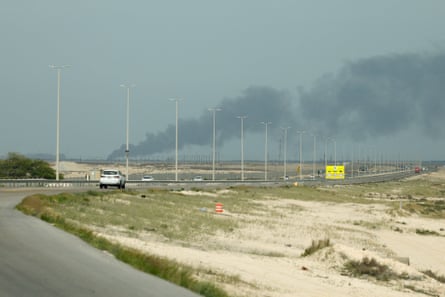
Saudi Arabia has come under Iranian drone attack, as part of Tehran’s response to the US-Israeli attack on 28 February. One drone strike a week ago hit an oil refinery in Yanbu on Saudi Red Sea coast.
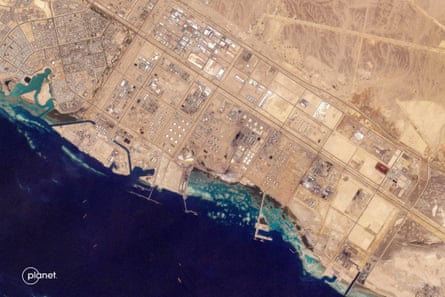
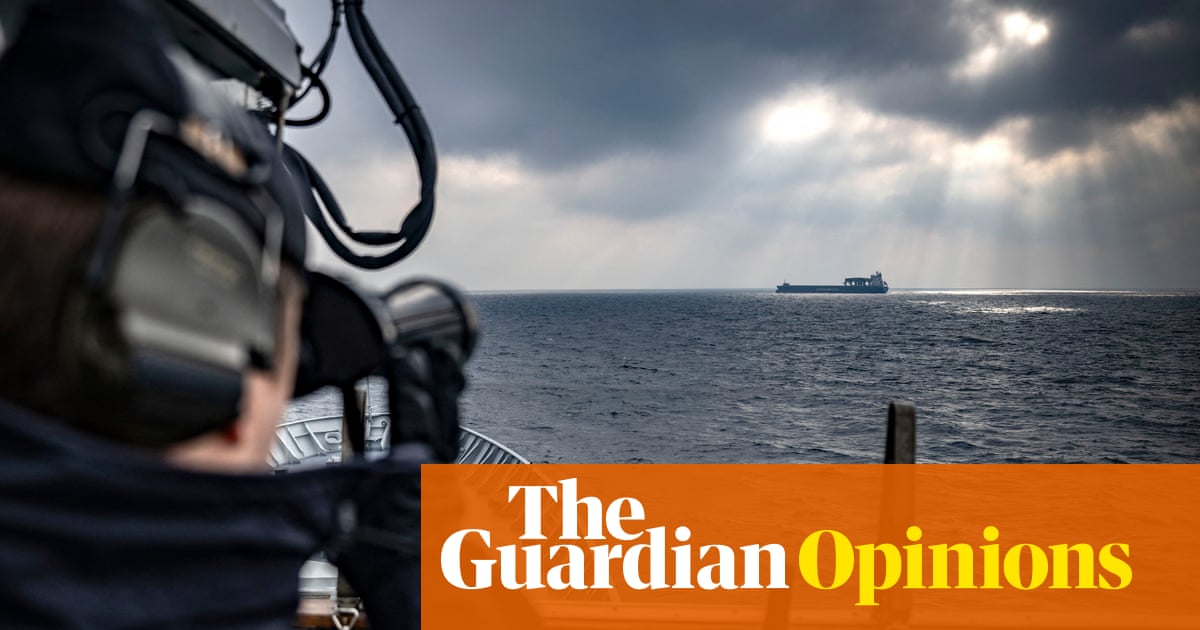
Saudi Arabia’s ability to transport its oil exports by pipeline to the Red Sea has meant it is not as vulnerable as its neighbours to Iran’s tactic of imposing a near-total blockade on oil tanker shipments leaving the Gulf through the strait of Hormuz. The attack on Yanbu signalled an Iranian warning that it could also threaten that economic lifeline.
That threat would be multiplied if Iran’s allies in Yemen, the Houthi movement, joined the war with its own missile arsenal.
“I believe that Saudi Arabia still maintains cautious neutrality in the Iran-Israel-US war,” Hesham Alghannam, a Saudi defence expert told Agence France-Presse. But he added: “If the Houthis strike Saudi assets, Riyadh may shift toward defensive coalition support or limited retaliation.”
Saudi Arabia and Iran, claiming leadership roles of the Sunni and Shia Islamic worlds respectively, have long been regional rivals. According to a leaked US state department cable, the crown prince’s paternal uncle King Abdullah urged the US military in 2008 to “cut off the head of the snake”, a reference to the theocratic regime in Tehran.
Khalid Aljabri, an exile Saudi commentator, said in recent years the kingdom’s preference had been a negotiated solution to the standoff over Iran’s nuclear and missile programmes. However, Trump and the Israeli prime minister, Benjamin Netanyahu, launched the joint attack in the midst of talks focused on nuclear limits.
“In this scenario, when the war occurs anyway and escalation is happening anyway, a partially degraded Iran, a wounded lion, would be more unpredictable and more dangerous. The policy was don’t start the war, but if you start it, finish the job,” said Aljabri, who is also a US-based cardiologist and the son of Saad Al Jabri, a former Saudi security chief who served as intelligence liaison with Washington until he fell out of favour with Prince Mohammed in 2015.
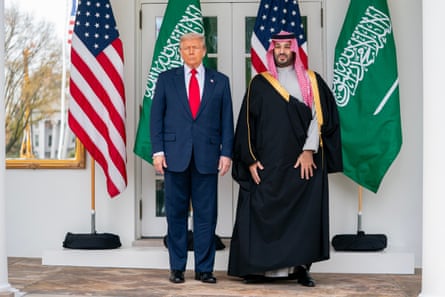
The crown prince solidified his hold on power by cultivating a close relationship with Trump, but will now have to rethink Saudi reliance on the US for its security, observers have argued.
“MBS [Mohammed bin Salman] has lost the bet on all his investments over the last several years,” Ellie Geranmayeh, senior policy fellow at the European Council on Foreign Relations said. “He financially invested in Trump and Trump’s family and his corporation and his White House, but at the end of the day the views of the Saudis and of the whole Gulf have been sidelined by the wishes of Benjamin Netanyahu.”
Prince Mohammed had begun to recalibrate his position after a missile attack on a Saudi oil facility in 2019, which Riyadh blamed on Iran. The US, under the first Trump presidency, offered verbal support but did not carry out the reprisals the Saudis were demanding.
Four years later, Saudi Arabia tried detente by signing a surprise agreement with Iran to restore mutual diplomatic relations, a deal brokered by China.
“After the US refused to come to their defence, the Saudis pivoted to hug Iran close, in the hope it wouldn’t lash out against them in a conflict,” Geranmayeh said. “Now the war has started and MBS lost the bet that Iran wouldn’t retaliate, he has reportedly urged the US to end the Iranian threat once and for all. So Saudi Arabia is now facing the conundrum of whether to get more involved.”
The United Arab Emirates has seen its oil exports comprehensively blocked and has openly called for a decisive military defeat of Iran. The UAE ambassador to Washington, Yousef Al Otaiba, wrote in the Wall Street Journal on Wednesday: “A simple ceasefire isn’t enough. We need a conclusive outcome that addresses Iran’s full range of threats.”
Saudi Arabia, with its Red Sea export option, still has something to lose and has not overtly called for more bombing. Its active military participation could bring forth a more punishing Iranian response targeting its Red Sea oil pipeline, quite possibly in collaboration with the Houthis.
“Once the bombs stop falling there will be some deep thinking in Riyadh,” Geranmayeh said. “It is not about pushing the US away but about having more options.”