2 months ago
104
2 months ago
104
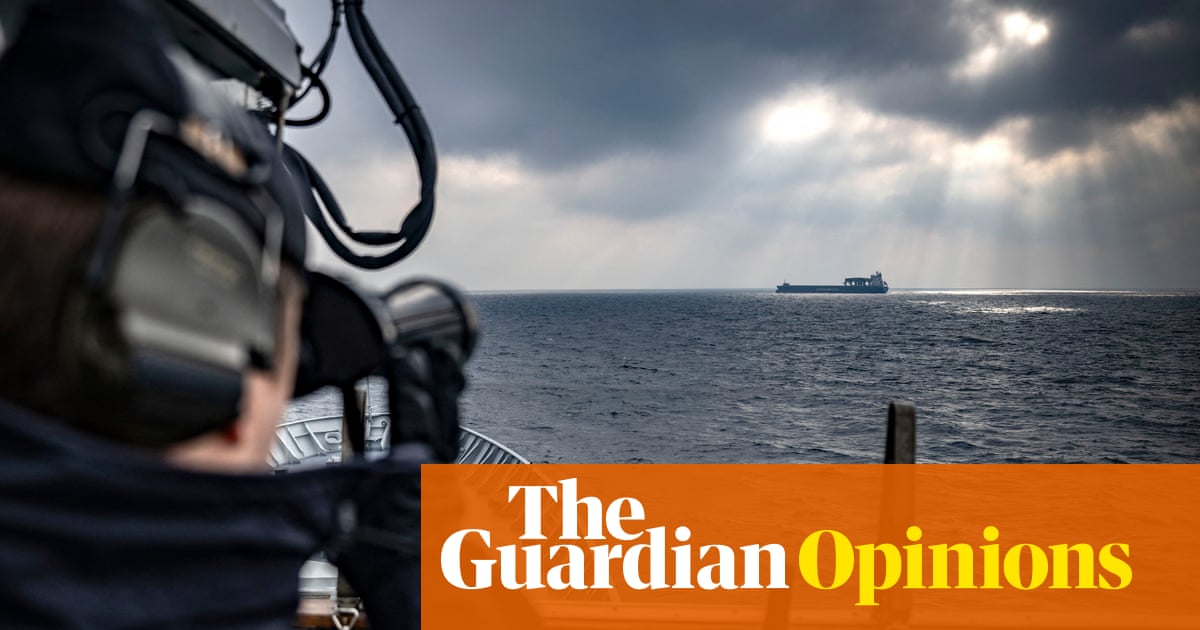
Threats to shipping have effectively closed the strait of Hormuz since the US-Israel war on Iran began four weeks ago – upending global oil and gas supplies and sending energy prices soaring.
In normal times, tankers carry about a fifth of the world’s oil and gas supplies through the narrow channel and on to the rest of the world, while about a third of the global fertilisers necessary for half of the world’s food production pass through in dry bulk vessels.
Before the conflict, 138 ships a day were transiting the waterway on average, according to the Joint Maritime Information Center. That is about the number estimated to have made the journey in the whole month of March, according to Lloyd’s List Intelligence, after 100 exited the Gulf and 40 entered.
More than 20 ships have been attacked across the region during the conflict, according to analysts from Lloyd’s List, including near-misses and those that have sustained minor damage, leading to the deaths of several crew members.
The first oil tanker to be hit was the Palau-flagged Skylight, which was struck off the coast of Oman at the start of the month. Its captain and a crew member, who were both Indian nationals, died following the attack.
While no vessels have been damaged since 22 March, according to Lloyd’s List, analysts are working on the assumption that it will take months for a “normal” shipping trading pattern to return even once the fighting stops.
Given this uncertainty, an estimated 1,000 vessels and their crews – mainly gas and oil tankers but also container ships – Gulf have opted to remain at anchor or in port, with few willing to take the risk of moving.
The UN’s shipping agency, the International Maritime Organization (IMO), has sounded the alarm over the 20,000 seafarers stranded in the Gulf in stressful conditions and facing dwindling supplies.
Yet the data shows a trickle of vessels are still willing to make the crossing, with many taking an alternative route through Iranian waters.
On Tuesday Tehran told the IMO and the UN that it would permit “non-hostile vessels” – which it determines as those not taking part in or supporting “acts of aggression” against it nor those belonging to the US or Israel – to pass through the strait.
Iran has been keen to divert vessels from the standard commercial shipping lane through the middle of the strait to what it calls a “safe corridor”, located in Iranian territorial waters. This is a more northerly route, close to the Iranian coastline, and takes vessels between Larak island and the mainland.
This corridor gives Iranian authorities, including the Islamic Revolutionary Guard Corps (IRGC), the option of visually “verifying” vessels and giving approval to proceed. This has been called “Tehran’s tollbooth” by shipping analysts at Lloyd’s List, who see it as Iran’s way to exert control over traffic in the strait.
It is unclear at this stage whether Iran is requiring payment for safe passage; at least two vessels have paid to transit the strait, according to Lloyd’s List analysts, with one of the payments reportedly as high as $2m (£1.5m) for a VLCC (very large crude carrier).
These payments were reported as having been made in Chinese yuan, probably owing to the fact that the IRGC is sanctioned by several western governments, including the US, EU and UK.
Iranian approval to transit the strait does not guarantee vessel safety, the analysts warn, as the IRGC does not act as a single organisation, meaning factions could still delay or even seize vessels, despite official clearance.
A handful of vessels have transited Hormuz in recent days, with a slight uptick in transits registered on 26 March, although normal commercial navigation has not resumed. That day, Israel announced that it had killed the head of the IRGC navy, Alireza Tangsiri, who it said had been responsible for the de facto closure of the strait.
On Tuesday 24 March, four vessels were observed to have crossed the strait with their transmitters on, according to data from marine intelligence platform Windward. Three vessels transmitting their position using their Automatic Identification System exited the Gulf through the strait, while one other entered.
The inbound traffic included one Panama-flagged tanker and two cargo vessels, while the outbound vessel was a Panama-flagged LPG tanker.
However, it is unclear how many other ships may crossed with their transmitters off, and Windward logged two cargo ships entering the Gulf on 24 March hugging the Oman coastline and sailing without reporting their position.
On the same day, no maritime traffic was recorded in the standard commercial shipping lanes in the strait, while at least 10 large vessels were observed north of Larak island, potentially preparing to transit.
This suggests that vessels are being held or sequenced through the new shipping corridor and “controlled access mechanisms”, according to analysts at Windward, showing the impact of Iran’s move to coordinate and approve vessel movements.
International efforts are concentrated on reopening the key maritime channel. More than 30 countries, including the United Arab Emirates, the UK, France, Germany, Canada and Australia, have signed a joint statement agreeing to work on “appropriate efforts” to safeguard the waterway.
On Tuesday, Britain offered to host an international security summit to draw up a “viable, collective plan” to reopen the strait.
The maritime insurance industry has insisted that cover has remained available throughout the conflict, albeit at higher prices than usual, and brokers have conceded that there has been little recent demand for the strait of Hormuz.
A lack of insurance does not appear to be the reason for lack of sailings in the region; rather the difficulty for shipowners is in ensuring the safety of their crew and vessel if they move.