4 hours ago
7
4 hours ago
7
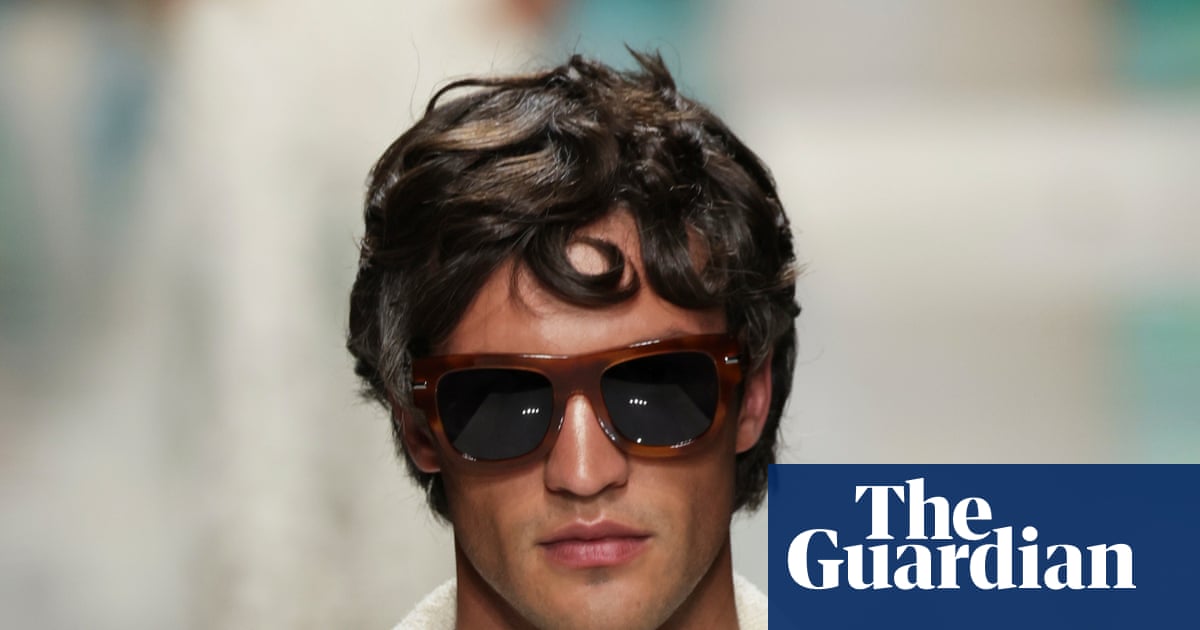
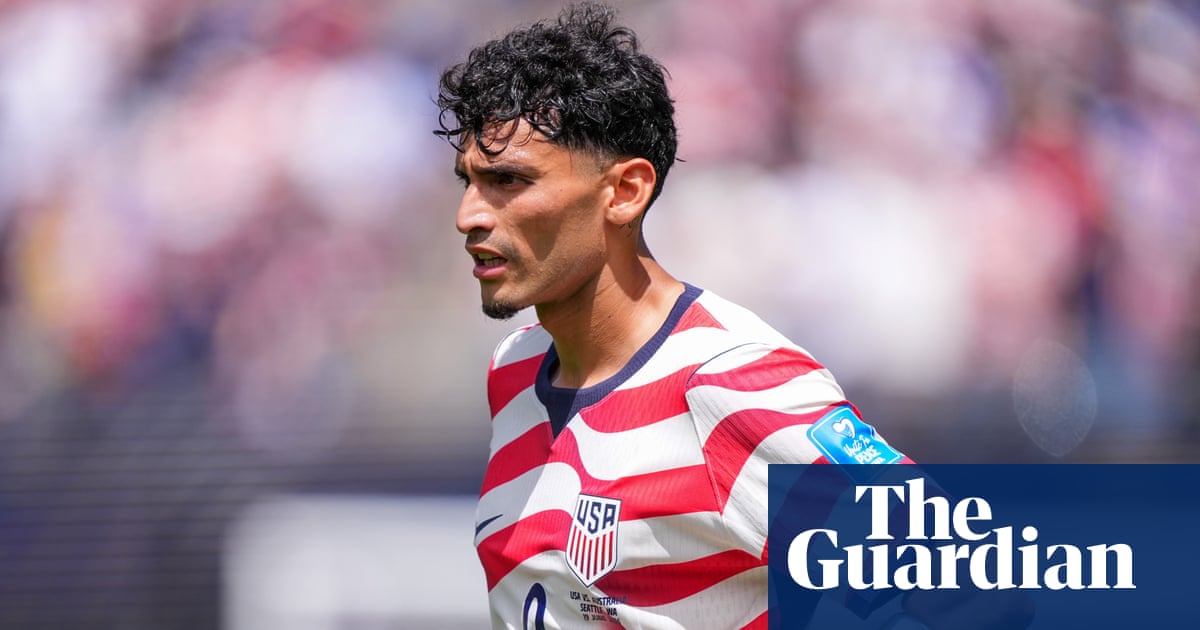
Michael Olise is probably the best creative player in the world at the moment. He racked up 26 assists for Bayern Munich last season. It was his shift into a more central role that transformed France’s game against Senegal from drab slog to impressive victory.
The confidence he always had at Crystal Place has evolved at Bayern into a graceful fluency. In a hugely talented France side, Olise is the standout, the player who it feels might carry them to the World Cup. Yet he is something of an anomaly.
It’s not just that he was born in White City, west London, and grew up loving cricket (his father was British-Nigerian and his mother French-Algerian), or even that, like his former Palace teammate Eberechi Eze, he spends much of his spare time playing chess. It’s that, unusually in this France side, he plays with a sense of freedom and joy. He has not yet submitted fully to Didier Deschamps’s tactical yoke, nor been curdled by his own celebrity. As such, Olise represents a key faultline in history of French football.
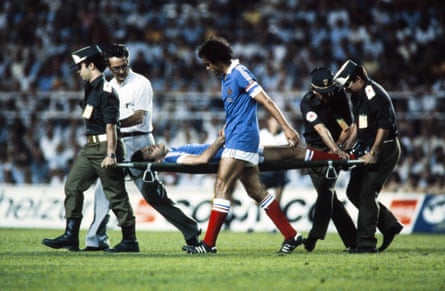
At the 1982 World Cup, France were renowned for their carré magique, the magic square of Michel Platini, Jean Tigana, Alain Giresse and Bernard Genghini. They actually played as a midfield four only in the semi-final defeat by West Germany but Seville became a myth, an idea.
France may have lost on penalties despite leading 3-1 in extra time, an agonising defeat in which Patrick Battiston was knocked unconscious by Toni Schumacher, but they had played with panache, and that was French football. Two years later, as they won the Euros, Genghini had been replaced by the far more defensive but still stylish Luis Fernández, but the idea held. French football was about la gloire.
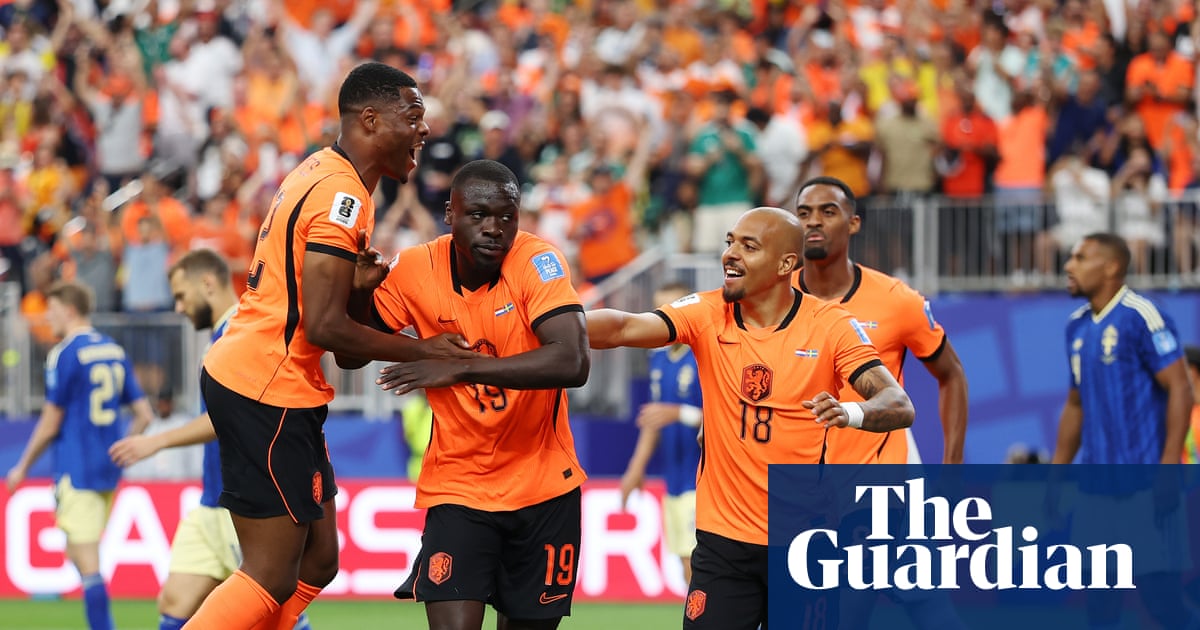
France have a four at this World Cup who could be similarly great. It’s easy to imagine the pundits of a couple of decades’ time leaning back with a warm chuckle, and shaking their heads as they remember Ousmane Dembélé, Kylian Mbappé, Desiré Doué and Olise, three great products of the French academy system and a bloke who started off at Hayes & Yeading, and got his big break playing for Reading (albeit he also had stints in the academies of Arsenal, Chelsea and Manchester City). Imagine a team with that level of attacking talent all on the pitch at once. How could any defence ever have coped with them?
And yet France are not all-conquering. They drew 2-2 with Iceland in qualifying. They did not play with élan. Although they reached the semi-final of the last Euros, they did not score a single goal from open play. Perhaps all nations operate at various points along a spectrum, what distinguishes them is what that spectrum represents.
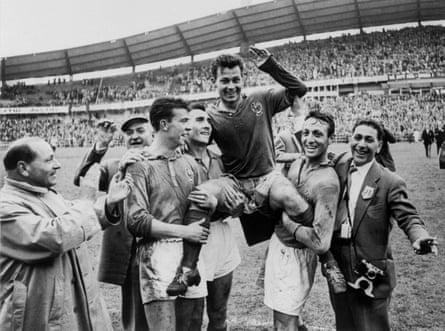
The France side of 1958, which reached the World Cup semi-finals – Just Fontaine, Raymond Kopa, Roger Piantoni et al – building on the achievements of Reims in the European Cup, were built on attacking flair but by 1969, after their successors failed to qualify for the 1962 and 1970 World Cups and went out in the group stage in 1966, there was a reaction.
Georges Boulogne took charge and, echoing the economic rhetoric of the time, spoke of “football labeur” and said the game had to stop being “un activité ludique”. But he proved no more successful and France failed to qualify for the 1974 finals. The former Ajax coach Stefan Kovacs began the shift back towards something more progressive but it was after Michel Hidalgo took over before the 1978 World Cup that the style returned to France.
Hidalgo brought the Euros in 1984, but it was Seville that defined the era for France, something underlined in 1986 when, after a magnificent quarter-final victory over Brazil in Guadalajara, they again lost to West Germany in their semi-final. France were confirmed as glorious losers.
But for most of the public that was fine. What was sport for if not la gloire? This was a nation that, presented in the 1960s with two great cyclists, the efficient Jacques Anquetil, who controlled races in the mountains, dominated time trials and won five Tours de France, or the dashing Raymond Poulidor, an aggressive climber noted for his vainglorious attacks who never won Le Tour, preferred Poulidor. As the philosopher Raymond Aron put it in his documentary series Le siècle du intellectuals, France was less interested in winning than in doing things well.
But not all of France. When Gérard Houllier became directeur technique national for football in 1988, he overhauled the academy system. His stint as France national coach was unsuccessful as they failed to reach the 1994 World Cup (thanks to David Ginola, whom Houllier never forgave, crossing the ball rather than keeping it in the corner in the final minute of the final qualifier against Bulgaria, leading to a counter and Emil Kostadinov’s late winner that put France out), but he paved the way for what came next.
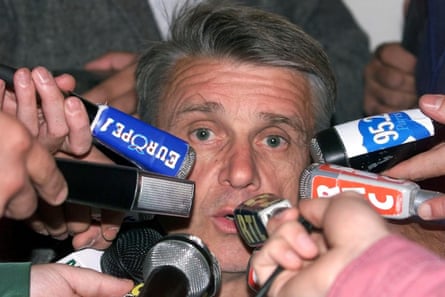
Aimé Jacquet replaced him. His France were dull but they reached the semi-finals of Euro 96. L’Équipe waged war on him, but Jacquet was resolute. The 1998 squad was loaded with creative talent – Youri Djorkaeff, Zinedine Zidane, Thierry Henry, Robert Pires, David Trezeguet, Christophe Dugarry … but they played cautious, safety-first football. They lifted the World Cup and the French found they enjoyed boring winning more than heroic defeat.
Deschamps was Jacquet’s captain, and he learned the lesson. For 12 years he has apparently been engaged in some great absurdist prank: just how boring could you make the greatest squad of attacking players the world has ever seen? It brought a World Cup but after a glum 1-0 win over Belgium in the 2018 semi-final, France found themselves cast as Anquetil as Eden Hazard observed that he’d rather lose than win playing like that.
A string of forgettable tournament appearances has led to a growing feeling in France that Deschamps has been holding them back. Since the Euros, Dembélé has owned the Ballon d’Or and Doué won man of the match in the Champions League final. Mbappé remains Mbappé and was top scorer in La Liga last season. And yet the player causing excitement, the forward charged with restoring la gloire to France, is Olise.