7 hours ago
8
7 hours ago
8
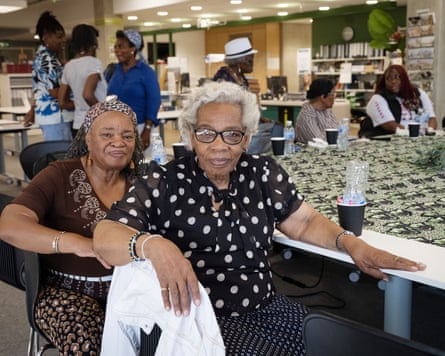
There are faces young and old around a table in Hackney library as people share a meal of curry goat, rice and peas and sorrel cake. There are photos of the smiling faces of Windrush elders scattered around. They will soon become permanent fixtures of the Hackney Archives.
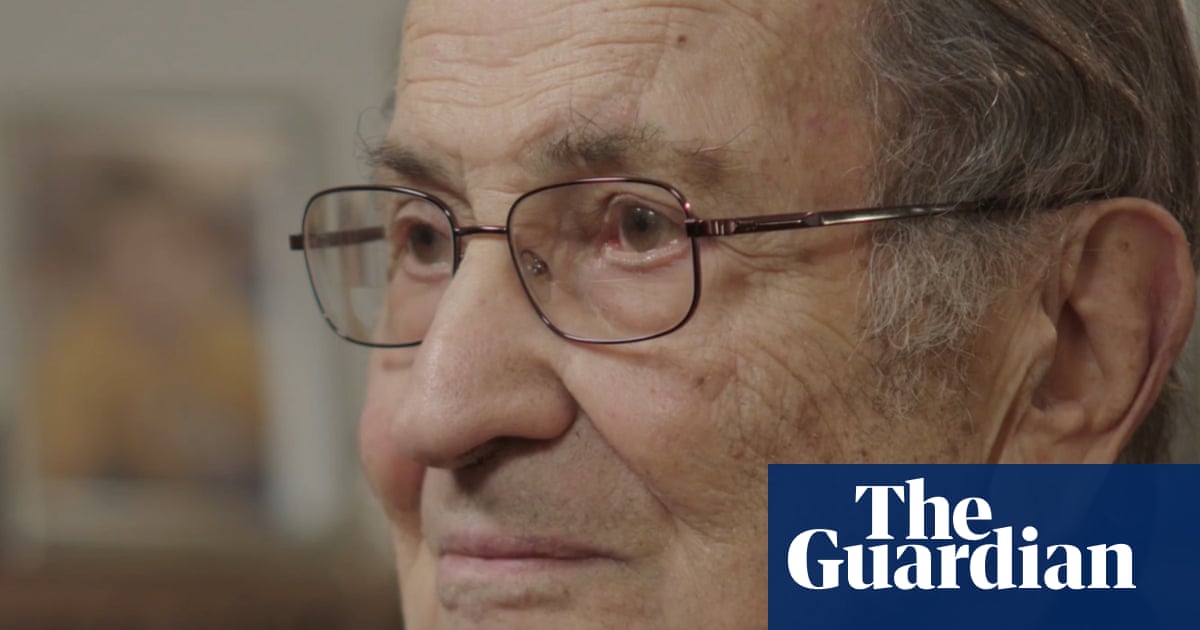
There is a feeling among the group that somebody is missing. Lessept Saunders, the founder of the Hackney Caribbean Elderly Organisation, died in April aged 107. He had been the second-oldest known living man in London and the oldest contributor to Stories of Windrush. Saunders was part of the Windrush generation, having arrived in London from Jamaica in 1944 after hearing stories about higher wages and hope from returning friends who had served in the second world war.
“Saunders had a five-year-plan, like many of the elders who came to the UK,” says Paul Anderson, the CEO of Voyage Youth, a social justice charity leading the archival project. “They would tell themselves ‘I’m only going to be here for five years and go back’ but many were not able to do that. The cost to travel back home was such a barrier that many just stayed.”
Stories of Windrush is one of the first projects in the UK to document first-hand accounts from Windrush elders collected entirely by young people. The accompanying book and photographs and its digital counterparts will have a permanent place in the Hackney Archives.
Zainab Awonoki was 15 when she first started working on the archive four years ago. “I never grew up with my grandparents so speaking to elders has been so eye-opening,” she says. Despite learning briefly about the Windrush generation in her Hackney secondary school, it was only through the archives that she learned about the struggles these elders had faced. “Hearing their stories first hand lets you see that they practically fought for us to actually stay here. It tells our elders that they’re not alone with their past and trauma.”
Research has found that giving young people access to archives can improve educational attainment and increase awareness of local decision-making. It seems to resonate with Diane Abbott, the MP for Hackney North and Stoke Newington, who wrote a foreword for the book. She wrote: “For all those who form part of the Windrush generation, and many who have been subject to scandalous impositions by state agencies, we must not forget their lives, their struggles, their achievements and their legacy are worth celebrating.”
Claudette Barned arrived in the 1960s from Jamaica at the age of nine and was immediately struck by the freezing temperatures in Clapton, east London. Today, the 74-year-old fans herself in the scorching heat, wearing a pink summer dress and recently having dyed her hair blue. “My mother passed away before I could ask her about history,” she says. “Talking to the young people means that when we die our stories are shared and when they’re old they can repeat the cycle.” Now retired, she has not forgotten the loneliness of her first few years in England. She socialises at elderly clubs with other Windrush elders and has passed on her Caribbean traditions to her grandson, who has nicknamed her “Reggae Grandma”.
Through the archives, Anderson hopes to address the youth unemployment crisis, starting with Hackney’s children who experience some of the highest rates of child poverty in England. He says: “For many, it opened a door they had not known was there: a route into the heritage sector, a reason to consider higher education, and a genuine change of pathway into a field where African and Caribbean communities remain significantly under-represented, despite so much of the history held within it being their own.”
after newsletter promotion
Yvonne Straughn was born in Barbados in 1941 as the only girl among five brothers. “I was rebellious,” she told the young archivists, recalling how she would refuse to do chores unless she was paid. At 85, her rebellious spirit seems to live on. As Anderson describes the legacy of the archives, she is quick to remind the elders that none of them will be around to see it.
Straughn’s tale is a classic Windrush story. In 1966 she arrived in England to work in a hospital, treating patients who were often hostile to the sight of a black nurse. Awonoki says it is a big responsibility to be entrusted with stories such as Straughn’s, particularly in the rollback of diversity initiatives. “You need their stories to realise this isn’t something new,” she says. “The older generation had a massive impact on life. They gave us the Equality Act and now we’re talking about getting rid of it?”