3 months ago
238
3 months ago
238
35
The Two Gentlemen of Verona
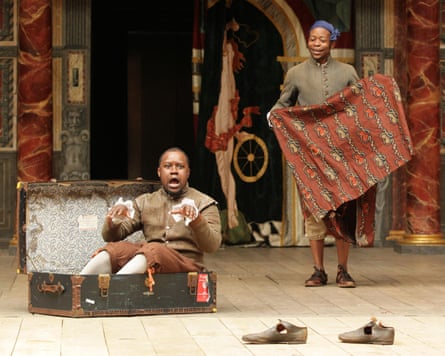
With its improbable plot, comic opera outlaws, and attempted rape being rewarded with the “mutual happiness” of a double marriage, this early study of friendship and betrayal is no one’s favourite comedy. Yet it has hints of later, greater plays, boasts some memorable lines (“The uncertain glory of an April day”) and often works on stage, most recently in a Greg Doran production with Oxford students.
34
Cymbeline
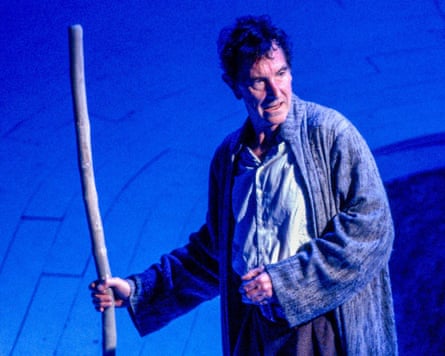
Dr Johnson talked of its “unresisting imbecility” and Shaw called it “for the most part stagey trash of the lowest melodramatic order”. The plot is a mish-mash of Holinshed and Boccaccio, classical Rome and Renaissance Italy, but in Imogen it contains one of Shakespeare’s most celebrated heroines: the soul of honour and faith beautifully embodied over the years by Peggy Ashcroft, Vanessa Redgrave and Judi Dench.
33
The Two Noble Kinsmen
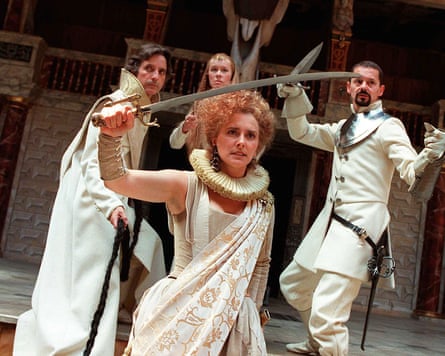
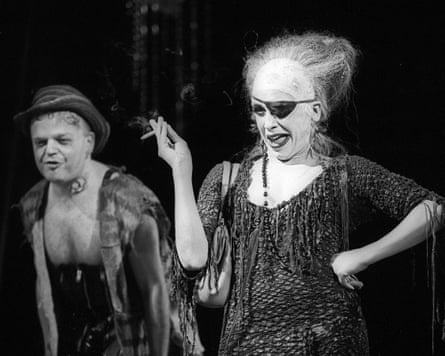
Omitted from the First Folio, this is now accepted as Shakespeare’s final work, on which he collaborated with John Fletcher. Based on Chaucer’s The Knight’s Tale, in which two Theban cousins fall for the same woman, it has some authentically Shakespearean lines (“give us the bones / Of our dead kings that we may chapel them”). However, when the play opened Stratford’s Swan theatre in 1986, it was Fletcher’s scenes, involving a jailer’s crazed daughter played by Imogen Stubbs, that came off best.
32
Henry VIII
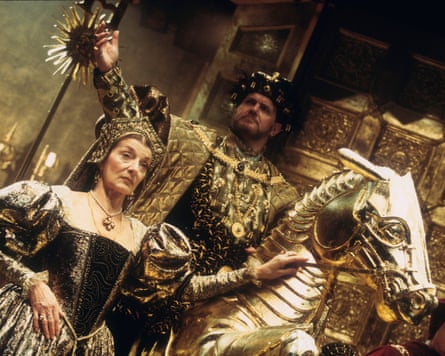
This is the play that in 1613 caused the original Bankside Globe to burn down because of the firing of stage cannon. Also co-written by Shakespeare and Fletcher, it is a bit of a loose cannon itself, but has some fine farewell speeches and works well in performance. I remember Jane Lapotaire playing Queen Katherine as the embodiment of virtue, and there was a stirring revival in Holy Trinity Church in Stratford where the bells rang out to celebrate the birth of the future Queen Elizabeth.
31
All’s Well That Ends Well
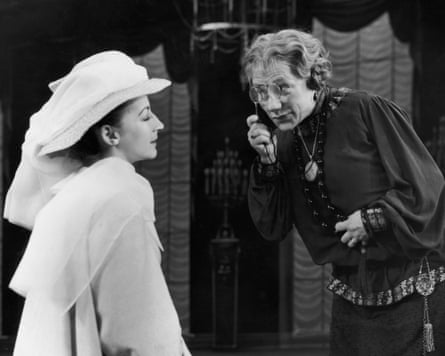
With its stubbornly unheroic hero and its opportunistic heroine, this is a hard play to love: “neither heart-rending nor heart-warming,” wrote the critic John Peter. But since Tyrone Guthrie’s groundbreaking 1959 production, which mixed Chekhov, The Army Game farce and touches of Franz Lehár, successive directors have proved it highly stageable. And in the cowardly Parolles (“Simply the thing I am / Shall make me live”), it has a character who has attracted actors from a young Laurence Olivier onwards.
30
King John
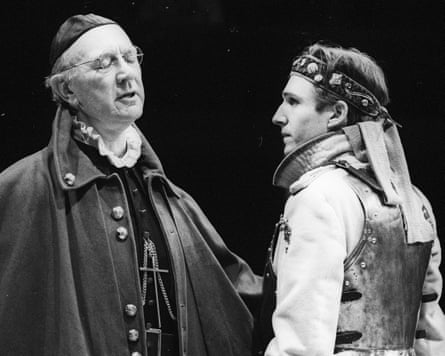
I have had a soft spot for this play ever since, while studying it for A-level, I saw Douglas Seale’s Stratford production seven times. If the play has come back into fashion, with notable revivals by Deborah Warner, and by Barrie Rutter and Conrad Nelson for Northern Broadsides, it is because it is about the destructiveness of the quest for power and the pervasiveness of cynical expediency summed up in the Bastard’s speech about “That smooth-faced gentleman, tickling commodity.”
29
Timon of Athens
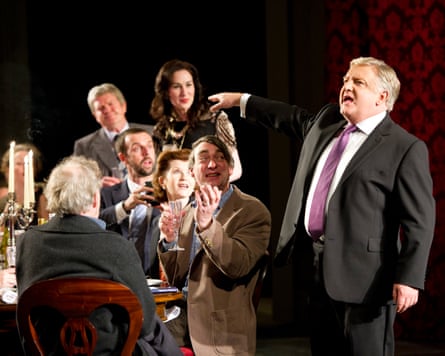
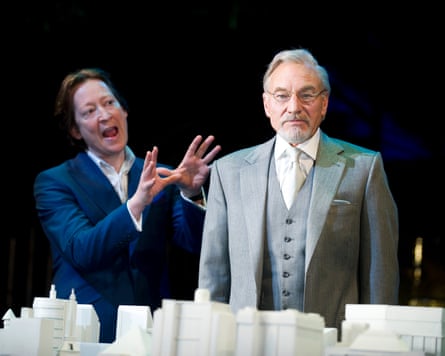
What have Benjamin Britten and Duke Ellington got in common? Both wrote incidental music for this odd play that, like King John, has lately acquired a new popularity. Peter Brook, who directed a brilliant production in Paris in 1974, cited it as an example of how Shakespeare’s plays are like planets that move nearer to us at certain moments in time. This story of a compulsive philanthropist who turns into a neurotic misanthrope has been given extra resonance by modern-dress productions by Cardboard Citizens, Trevor Nunn and Nicholas Hytner in a National Theatre version set amid towering office blocks adjacent to a wasteland frequented by the disenfranchised.
28
Pericles
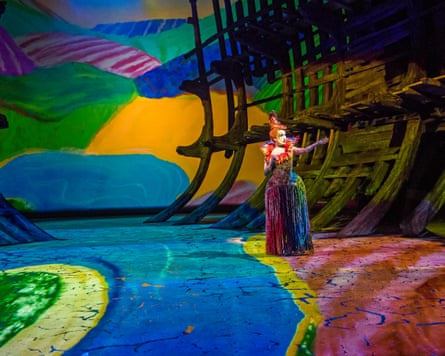
“A mouldy tale,” said Ben Jonson, and one that was clearly co-authored: few things in the canon are more dramatic, after two acts of functional verse, than Shakespeare’s arrival with language of thrilling density (“The seaman’s whistle / Is as a whisper in the ears of death”). And although the plot is a series of loosely linked happenings, modern directors have given it stylistic unity, from Tony Richardson, who treated it as a glittering oriental kaleidoscope, to Yukio Ninagawa, who played it as a parable about contemporary refugees.
27
The Taming of the Shrew
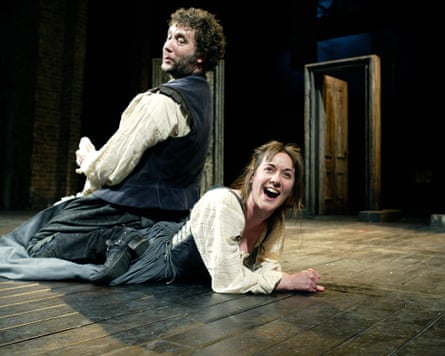
The barbaric idea of female subjugation presents an obvious problem for a modern audience. But while theoretically indefensible, the play remains theatrically popular thanks to the inventiveness of directors and actors. You can treat it as the dream of a drunken tinker. You can make it, as Michael Bogdanov did, a neo-Marxist attack on the cash nexus. Best of all, as Jasper Britton and Alexandra Gilbreath proved under Greg Doran’s direction, you can suggest that Petruchio and Kate are both social outcasts who find a healing power in love.
26
The Merchant of Venice
Another problematic play: it is hard to see it in a post-Holocaust world as the fairytale described by actor-director-theorist Harley Granville-Barker. But it invariably works when given a strong social context. Peter Zadek’s 1995 production set it in a milieu of high finance. Trevor Nunn, at the National in 1999, placed it squarely in 1930s Germany with Nazism on the rise. Rupert Goold in 2011 used modern Los Angeles as a backdrop with Patrick Stewart’s Shylock an urbane tycoon and Susannah Fielding’s Portia starting out as a gameshow host and, unforgettably, ending up as a lonesome bride realising her husband’s real passion is for Antonio.
25
The Tempest
The critic Anne Barton called it “an extraordinarily obliging work of art that will lend itself to almost any interpretation”. It is also a great poem but a flawed play: since Prospero holds all the cards, the tension is minimal. The solution is for actors to create their own internal struggle. John Wood played Prospero as a Freudian wreck who used supernatural powers to shield himself from human contact. Michael Bryant gave us a man who had dabbled in diabolism. Simon Russell Beale was a Prospero swathed in private guilt whose bookish solitude had provoked his usurpation.
24
Julius Caesar
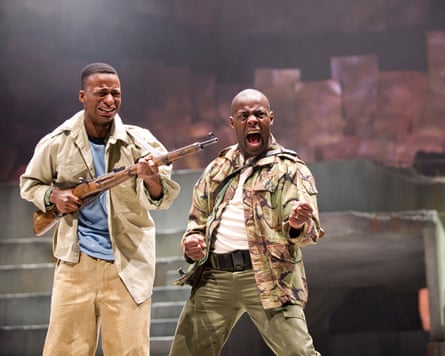
A fascinating play that poses a structural problem: the loss of dramatic momentum after the Forum scene. One answer is to scrap the interval. Another is to find a unifying, preferably topical, concept. Orson Welles in the 1930s gave the play a fascist setting and, more recently, New York’s Public Theater made Caesar a Trump-style dictator. Greg Doran in 2012 transposed the action to modern Africa and deployed a cast of colour headed by Paterson Joseph. No less radical was Phyllida Lloyd’s all-female production that showed a group of women prisoners, led by Harriet Walter as Brutus, staging their own version of political assassination.
23
Romeo and Juliet
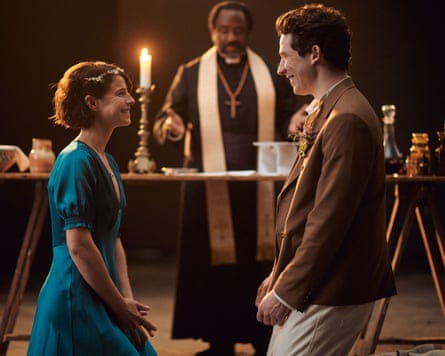
Hugely popular on stage and film. Of the latter, I infinitely prefer Simon Godwin’s NT version with Jessie Buckley and Josh O’Connor to the inflated Baz Luhrmann movie. In the theatre, a terrific first half is followed by a manufactured tragedy more dependent on bad luck than on character. I find I often remember the play for its Mercutio: Alec McCowen jesting until the very point of death, Bernard Lloyd savagely dismembering a life-size doll and Derek Jacobi as an ageing gallant who enjoyed hanging out with the lads.
22
The Merry Wives of Windsor
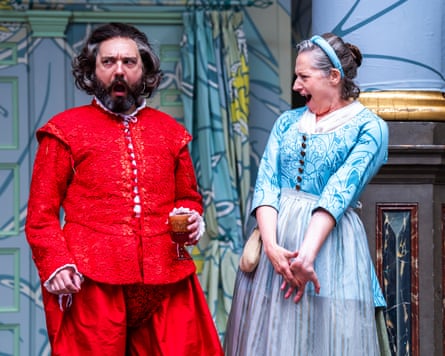
A grossly underrated play. Shakespeare’s one comedy of bourgeois life is ingeniously plotted and shows a cash-strapped courtier, Sir John Falstaff, being outwitted and humiliated by a pair of middle-class housewives. It is a sign of the play’s civic richness that it can adapt to different social contexts: traditional Elizabethan, postwar suburbia, Macmillan’s materialist England and even the recent World Cup. In the character of Ford, brilliantly played by Ian Richardson and Ben Kingsley, Shakespeare shows that jealousy is an extension of the property-owning instinct.
21
Richard III
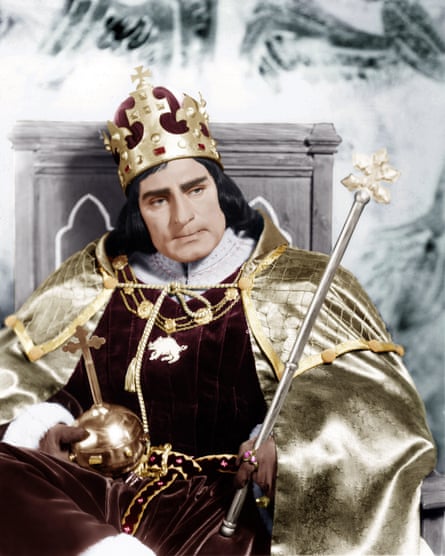
“Long, confusing, elephantine in its ironies,” wrote one editor. “A horrific analysis of power, politics and violence,” said Peter Hall. Either way, the hero has been a gift for actors from Richard Burbage onwards. Olivier on stage and film established the idea of Richard as satanic joker. Later actors have, in various ways, escaped that overpowering image: Ian Holm was part of the grand mechanism of history, Antony Sher turned disability into a source of feverish energy, Ian McKellen was a militaristic 1930s fascist. It’s a play where the part is often greater than the whole.
20
Much Ado About Nothing
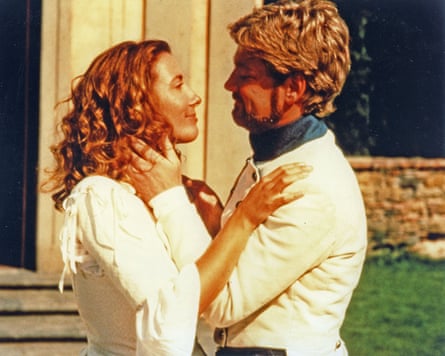
A rare comedy in which the main plot – involving a young girl falsely accused of unchastity – is outclassed by the subplot – which concerns Beatrice and Benedick. Memorable pairings include Judi Dench and Donald Sinden in a production set in colonial India, Sinead Cusack and Derek Jacobi in a world of shining mirrors, Zoë Wanamaker and Simon Russell Beale bonding in a Sicilian mansion complete with swimming pool. Emma Thompson and Kenneth Branagh in the latter’s best Shakespeare movie also scintillated in a sunlit Tuscany.
19
Othello
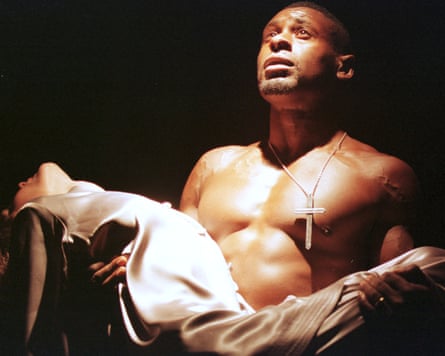
The big divide came in 1981 when Jonathan Miller cast Anthony Hopkins in the title role in a BBC TV production: a decision that provoked such an outcry that it is now rare to see a white actor in the part. The gain has been twofold. It has produced magnificent Othellos such as Willard White, Ray Fearon, Chiwetel Ejiofor and David Harewood. It has also put the eponymous character, rather than Iago, at the centre of a play that has a pulsating excitement, if not the philosophical depth of the other great tragedies.
18
Henry VI Parts One, Two and Three
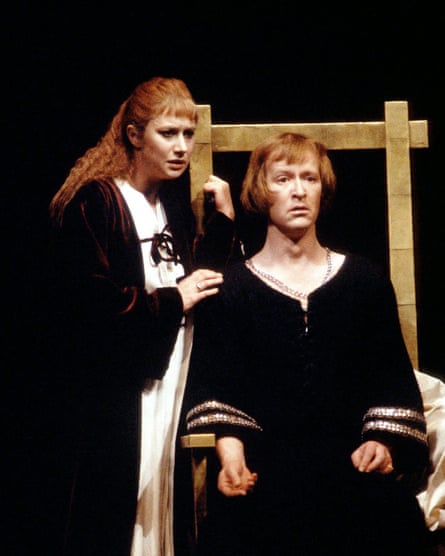
The 1960s Wars of the Roses, directed by Peter Hall and John Barton, was a landmark adaptation. Terry Hands in 1978 gave us the plays uncut with Alan Howard as a saintly king and Helen Mirren as a blood-lusting Queen Margaret. Starting in 2006, Michael Boyd also triumphantly resurrected the complete trilogy, proving that Part Two, with its father-son tensions and panoramic portrait of England, was a harbinger of things to come.
17
The Comedy of Errors
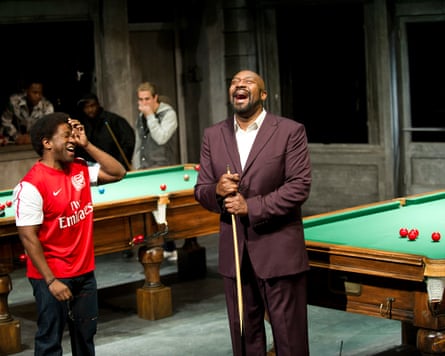
Shakespeare takes his plot from Plautus then ups the ante by giving us not one but two sets of identical twins. The result is a classic farce in which mistaken identity is enriched by an exploration of self and a biblical background of sorcery: Ephesus was for St Paul a place of “curious arts”. The play’s rediscovery began with a 1962 Clifford Williams production where Alec McCowen as the visiting Antipholus, after patiently listening to 37 lines of impassioned blank verse from his supposed wife, gravely inquired: “Plead you to me, fair dame?”
16
Titus Andronicus
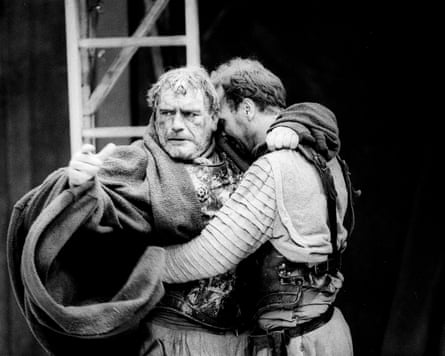
Since Peter Brook’s landmark 1955 production, this play has rightly swung back into fashion. What is fascinating is how often female directors – including Jane Howell (for TV), Deborah Warner, Lucy Bailey and Blanche McIntyre – have been drawn to its wit, learning and rich humanity. Is there a more moving moment in all of Shakespeare than when Titus, responding to his brother’s observation on the mutilated Lavinia that “This was thy daughter”, simply says, “Why, Marcus, so she is”?
15
Troilus and Cressida
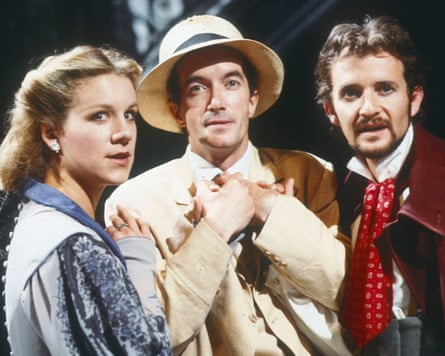
This cynic’s Iliad, which casts a satiric eye on the realities of war, is another play that speaks to our own time: even the brilliant language, from the legal circumlocutions of Ulysses to the gutter eloquence of Thersites, runs what Peter Porter called “the gamut of human depravity”. Ever since Juliet Stevenson played her in a 1985 Howard Davies production, Cressida herself has also been transformed from an icon of female changeability into the victim of a manipulative patriarchy.
14
Richard II
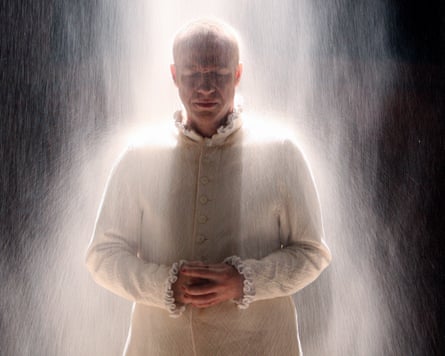
“Charles I in the first half, Jesus Christ in the second,” said the critic Christopher Ricks of Ian Richardson’s king: a brilliant summation of the performance and a seminal John Barton production in which Richardson and Richard Pasco alternated the lead roles, reminding us of the parallels between monarch and actor. Since then Alan Howard, Samuel West, Jonathan Slinger and Adjoa Andoh are among the many fine Richards in this most lyrical of histories.
13
As You Like It
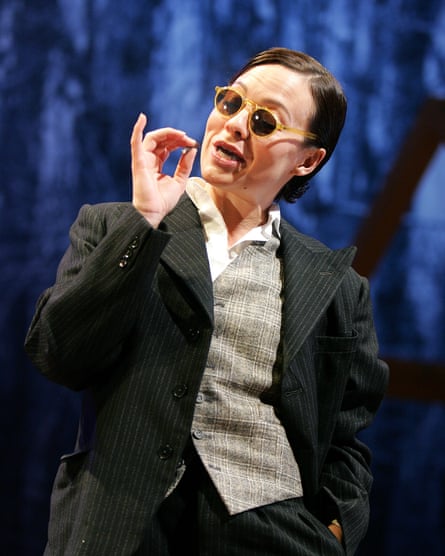
Helen Gardner called this “Shakespeare’s most Mozartian comedy” and went on to show that the Forest of Arden is a place of discovery where each character finds his or her true self. In over-decorated productions, you sometimes can’t see the wooed for the trees but the play tends to be defined by its Rosalinds, who have memorably included Vanessa Redgrave, Susan Fleetwood, Helen McCrory and, in Declan Donnellan’s all-male production, a lithe Adrian Lester.
12
Measure for Measure
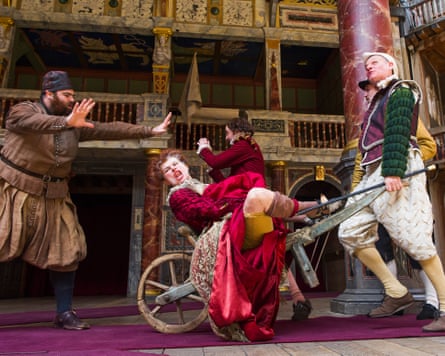
Once deemed unacceptably bawdy (“The play insults the respectability of Melton Mowbray people,” declared a Leicester paper in 1935), this work now seems thrillingly timely in its portrait of the link between sexual and political power. There is always a shock of recognition when Angelo greets his victim’s whistleblowing threat with: “Who will believe thee, Isabel?” Numerous fine productions have included Nicholas Hytner’s with Roger Allam as a strong-voiced Duke, Trevor Nunn’s set in a Freudian Vienna and Simon McBurney’s where political prisoners were clad in Guantanamo Bay uniforms.
11
Antony and Cleopatra
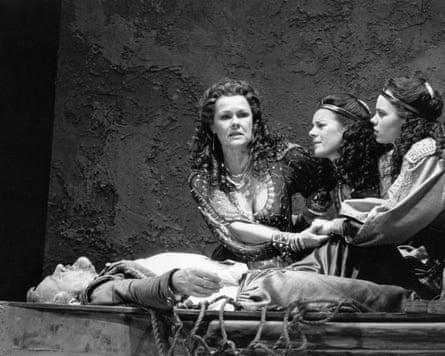
“The last two acts contain the most heart-searching poetry that Shakespeare ever wrote,” said Ivor Brown. True, but they can also be exhausting to watch. My theory is that the play works best when the leads are seen as victims of a self-intoxicating fantasy, and two productions caught this to perfection. For Peter Hall at the National in 1987, Anthony Hopkins and Judi Dench lived in a state of dreamlike self-delusion; and Peter Zadek’s witty 1994 German-language version, starring Gert Voss and Eva Mattes, emphasised the vanity rather than the grandeur of these historic figures.
10
Henry V
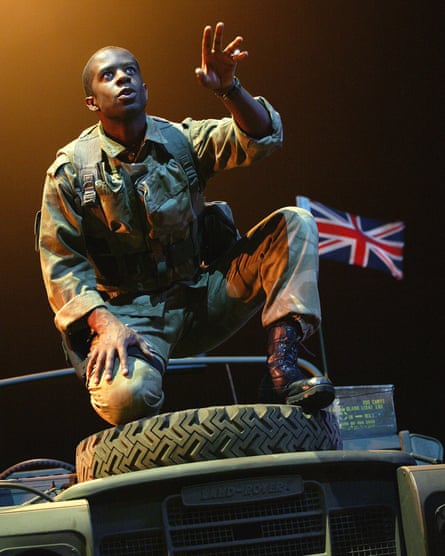
The greatness of the play lies in its ambivalence. As Emma Smith points out in her stage history, it can be seen alternately, or even simultaneously, as “a heroic play about ‘a mirror of all Christian kings’ or a cynical play about a ruthless and hypocritical Machiavellian tyrant”. Olivier and Branagh offered contrasting visions in their respective movies. And on stage, Albert Finney, Alan Howard, Adrian Lester and Geoffrey Streatfeild have all captured Henry’s complexity.
9
The Winter’s Tale
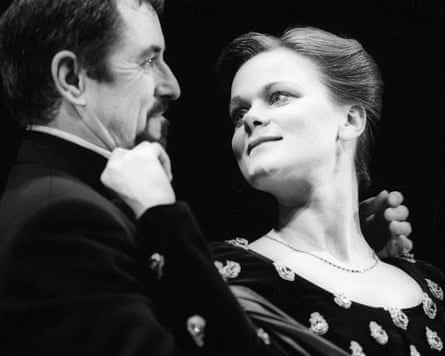
“One of Shakespeare’s most exuberant and resolutely moving achievements,” wrote Paul Edmondson. It is also the finest of the late plays, in that the psychological realism of Leontes’ jealousy co-exists with the potent strangeness of Hermione’s restoration. That is why the play still grips us in the theatre: it is a resurrection myth and I often remember the play for its Hermione – especially as performed by Judi Dench, Samantha Bond and Alexandra Gilbreath.
8
Coriolanus
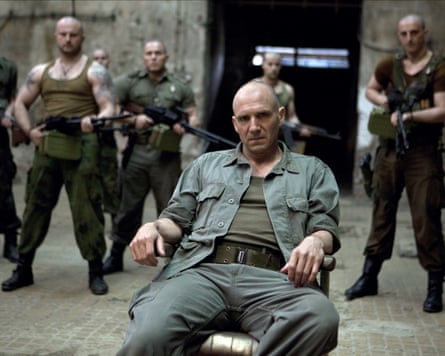
Shakespeare’s greatest Roman play, because of its political, moral and emotional ambivalence, has been claimed by both the left and right. But as Greg Doran once wrote: “Shakespeare sees both sides, empathises with both and yet is critical of both.” Even Coriolanus himself is full of contradictions: an arrogant patrician who still refuses a 10th part of a conquered city’s treasure. No wonder the part has yielded terrific performances from Laurence Olivier, Ian McKellen, Greg Hicks and Ralph Fiennes.
7
Love’s Labour’s Lost
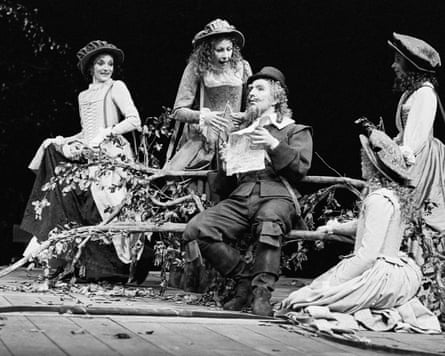
An early comedy that shows the first full flowering of Shakespeare’s genius: a play in which verbal exuberance and high spirits are shadowed by transience, time and death. If I could recapture one production from the past, it would be John Barton’s from 1978 which had a perfect Chekhovian blend of zest and melancholy. The great moment came when Glenda Jackson’s French princess learned of her father’s death and, in the words of Penelope Gilliatt, “the scene behind her darkened as though the wing of a vulture had flapped slowly over the sun”.
6
King Lear
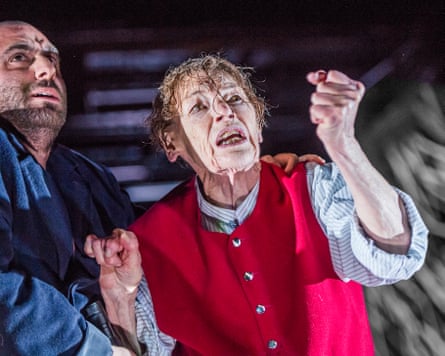
For many, this is the great Shakespearean peak. For me, it is magnificent but flawed. As scholar AC Bradley wrote: “The improbabilities in King Lear surely far surpass those of the other great tragedies in number and in grossness.” Rather than itemise them, I prefer to dwell on some of the memorable Lears I have seen: Paul Scofield’s testy patriarch; John Wood, who stressed the character’s insane contradictions; Ian McKellen’s endless intellectual curiosity; Glenda Jackson for her gender-transcending humanity.
5
Macbeth
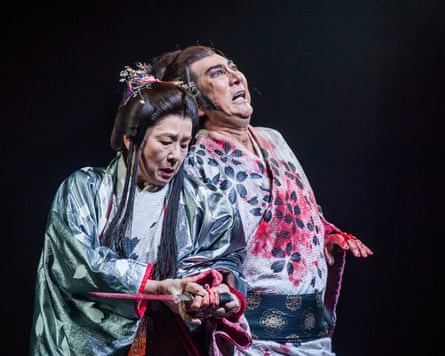
Compact, relentless and intensely musical in its thematic use of language, this is simultaneously a great poem and play. One measure of Shakespeare’s genius, as with Dickens, is his generosity to minor characters. The First Murderer here hauntingly tells us: “The west yet glimmers with some streaks of day.” Despite a chequered stage history, the play has been given new life in the last half-century by intimate stagings from Trevor Nunn, Greg Doran, Rupert Goold and Kenneth Branagh that make us complicit in the action.
4
A Midsummer Night’s Dream
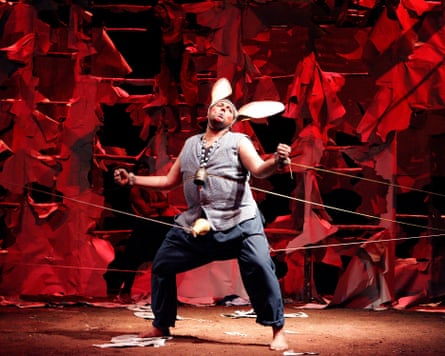
“The most insipid, ridiculous play that I ever saw in my life,” said Samuel Pepys, but it has enchanted audiences over the centuries, has inspired operas, ballets and films, and is open to an endless variety of stagings. Beerbohm Tree in 1900 gave audiences live rabbits and bluebell thickets; Peter Brook in 1970 set the action in a white cube filled with circus expertise; and Tim Supple in 2007 directed an innovative version that deployed seven south Asian languages. The magic lingers on.
3
Hamlet
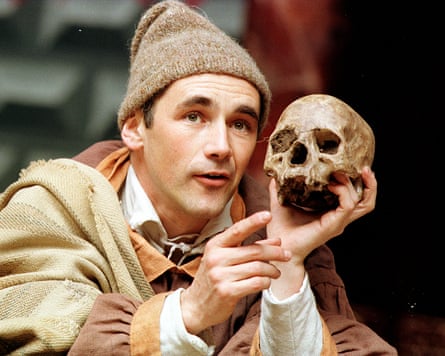
A play whose vitality, as writer Terence Hawkes once said, “resides in its plurality”. What that means is that it takes on different colours depending on the time and place where it is seen, the text used and the way it is cast. As Oscar Wilde said: “There are as many Hamlets as there are melancholies.” The part, like the play itself, is limitless in its variations: Michael Redgrave gave us a tortured sensibility, Albert Finney a dangerous muscularity, Mark Rylance a pyjama-clothed solitariness, Angela Winkler a damaged vulnerability and Maxine Peake a ferocious moral disgust.
2
Twelfth Night
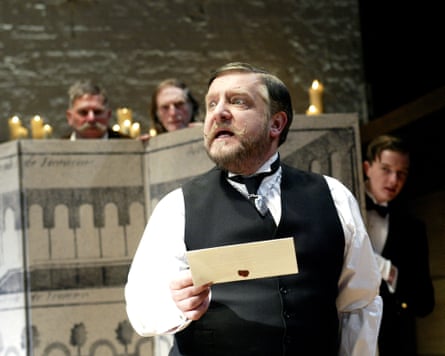
In Shakespeare, wrote scholar Michael Dobson, “the categories of comedy and tragedy are no more mutually exclusive than they are in real life”. This sublime play confirms that in its interweaving of mirth and melancholy, joy and cruelty, reality and dream. The gulling of Malvolio is hilarious in the moment but savage in its consequence. The climactic marital pairings imply a future of erotic confusion, and this most lyrical of plays ends with a song about the transience of human life and theatrical performance. It has yielded many unforgettable productions, including those by Peter Hall and John Barton, while Sam Mendes got it exactly right when he staged it alongside Chekhov’s comparably tragicomic Uncle Vanya with the same cast.
1
Henry IV Parts One and Two
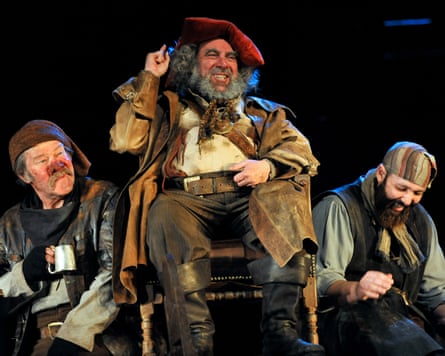
“The twin summits of Shakespeare’s achievement,” wrote Kenneth Tynan 70 years ago and I heartily concur. For a start, they offer so much: a private drama about fathers and sons, a public portrait of a divided realm, a sense of the nation’s diversity stretching from the taverns of London to the orchards of Gloucestershire. As so often in Shakespeare, there is also a rich ambivalence. Hal can be seen as a calculating, cold-blooded politician or as a man undertaking a self-imposed education in kingship. The king himself is simultaneously an unforgiving, rebellion-stirring patriarch and a guilt-ridden insomniac yearning for religious absolution.
And what of Falstaff? He is both a life-enhancing figure of endless wit, vitality and intellectual resourcefulness as well as a ruthless predator with a casual disregard for human life. Over the years, actors have highlighted different aspects of the character. Robert Stephens, whose voice cracked on “If I had a thousand sons”, was tragically aware of his own childlessness. Antony Sher was the archetypal pub-charmer with no home life and a savage underside. More recently, Ian McKellen reminded us that Falstaff starts the second play as a beribboned and totally fraudulent military hero.
Aside from their dual perspective on character, these two plays also boast a fugal delicacy in their portrait of English life. Is there anything in English drama to match those Cotswold scenes where Justice Shallow claims: “Death, as the Psalmist saith, is certain to all; all shall die. How a good yoke of bullocks at Stamford fair?” In showing how the old can leap in a second from thoughts of mortality to the mundane, Shakespeare shows not just a faultless ear but a generous compassion that makes these plays the enduring masterpieces they are.