2 months ago
126
2 months ago
126
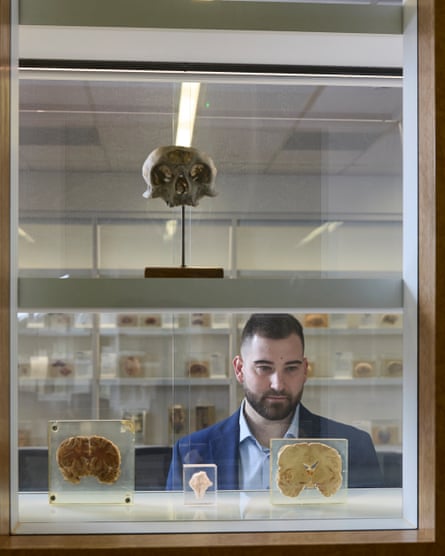
‘I hate it.” I’ve asked the neuroscientist Ben Rein how he feels about the online sea of junk neuroscience we swim in – the “dopamine fasts”, “serotonin boosts” and people “regulating” their “nervous system” – and this is his kneejerk response. He was up early with his newborn daughter at his home in Buffalo, New York, but he’s fresh-faced and full of beans on a video call, swiftly qualifying that heartfelt statement. “Let me clarify my position: I don’t hate it when it’s accurate, but it’s rarely accurate.”
He draws my attention to a reel he saw recently on social media of a man explaining that reframing pain as “neurofeedback, not punishment” activates the anterior cingulate cortex (a part of the brain involved in registering pain). “That’s genuinely never been studied; you are just making this up,” he says. He posted a pithy response on Instagram, pleading with content creators to “leave neuroscience out of it”. “That’s why I think it’s especially important for real scientists to be on the internet,” he says. “We need to show the public what it looks like to speak responsibly and accurately about science.”

Rein has carved a niche doing just that. He’s very much a “real scientist”, who has published in peer-reviewed journals, and did a post-doctoral fellowship at Stanford, where he still teaches. But he’s also a communicator, explaining the complex, imperfectly understood science of the brain in simple but compelling terms. He has 755,000 followers on TikTok and is a regular podcast guest, discussing audience-friendly, often-controversial topics: the causes of autism, empathy, recreational drug use and now, the subject of his first book, Why Brains Need Friends: The Neuroscience of Social Connection.
Could there be a timelier theme? We’re waking up, belatedly, to the fact that we’re living in what Rein himself calls a “post-interaction world”. Anyone wondering what all the recent fetishisation of Jomo (the joy of missing out) and the Covid-fuelled push towards introversion means for our health will find stark answers in Rein’s book. The evidence that isolation is bad for us is presented relentlessly. Reading it, I feel as if I should arrange an emergency gathering with all my friends and acquaintances.
There is much research to illustrate the dramatic impact isolation has on our health and wellbeing. “The thing that always shocks me is the study of strokes in mice,” Rein says, describing how researchers induced identical strokes in mice and found those that lived alone fared significantly worse. “They had more brain damage, they were less likely to recover, more likely to die.” I recall another study referenced in his book, which found that out of just over 300,000 people, those with weaker social relationships were 50% more likely to die over a seven and a half year period. “It’s horrifying,” he agrees. “But it’s also like, why? How is that even possible? I like to use the mouse study to explain that a bit.”
This is Rein’s speciality and one of the reasons he wrote the book: to “pop the hood”, as he puts it, of our social brains by getting granular about what makes us tick at a biochemical level. The book makes a pledge to use “no big words” because, he says: “I’ve noticed people who don’t understand science like to use big words to make it sound like they understand science.” So why is isolation so bad for mice, and what does it mean for people? “When we are isolated, it triggers a stress response,” Rein says. This happens to mice and humans; it’s evolutionary. “The body’s alarm is going off and saying: ‘Hey, why are you on your own? This is dangerous. Find your community.’”
That stress response, he says, causes us to release cortisol. “Your body is preparing for a challenge and one of the things that happens is cortisol suppresses inflammation, because inflammation is not helpful when you’re trying to run away from a sabre-toothed tiger.” The problem is that unlike sabre-toothed tigers, isolation sticks around: the stress is sustained and cortisol loses its ability to suppress inflammation effectively. “When you have this long-term, chronic stress response, it can lead to a buildup of inflammation.”
Inflammation is one of the body’s defence mechanisms against injury, illness and other stressors. It can become a problem if it is too prolonged or arises in the wrong contexts. Rein hates talking about it, he says, because it’s one of those buzzwords that gets used indiscriminately and inaccurately online. “Every time I say it, I think: ‘Oh, now the audience is judging me as being this bogus guy.’ But it’s real in this scenario. It’s one of the serious consequences of chronic stress, and it makes our organs less healthy.” Inflammation was shown to be the culprit in the mouse study: lonely mice no longer suffered worse strokes than their socialised companions when researchers suppressed the inflammation their loneliness caused.
Something similar happens to lonely humans. “People who are isolated have this chronic inflammation buildup that is likely taxing their organs and preventing the healing process,” says Rein. In one study, patients who reported high levels of “emotional support” after their first stroke showed “dramatic improvement” in their functional capacity. Another found that people suffering heart attacks who live alone are twice as likely to die in the three years after than those who live with others.
The converse is also true: when we’re around others, our brains release oxytocin (“the MVP” – most valuable player – of social bonding,” Rein writes in the book). Oxytocin is anti-inflammatory, suppresses stress and promotes wound healing. Married people, who have higher oxytocin rates, have better survival rates for cancer, according to a study in 2013.
That communing with other people feels good has an evolutionary advantage. “Our brains have been shaped to make us want to be around others, because that’s good for our survival,” Rein says. When we release oxytocin in interactions with others, it “triggers this downstream effect, which is stimulating two very powerful neurotransmitters at the same time, serotonin and dopamine”. Dopamine, he explains, “is the brain’s way of saying what you’re doing right now is good for you and you should keep doing it again; serotonin is linked to mood”. The two together are “incredibly powerful at making us feel good”, he says.
If connecting feels so good, why aren’t we doing it more? Our brain, so helpful in some ways, holds us back in others. “Humans are extremely poor at estimating what’s going to happen when we socialise, and how we’re going to feel,” Rein says. Psychology research has shown we think we’ll enjoy interactions less than we actually do, we underrate our own social skills and underestimate how much other people like us (a phenomenon known as the “liking gap”). Rein attributes this inbuilt social anxiety again to our prehistory. “In an ancient world, connection was such a delicate thing – you needed to have intense connection with your group and intense wariness of the other group. All of this caution around our social lives is meant to force us to tread carefully, so that we don’t alienate ourselves from our own group.”
Compounding that is the very modern problem of the internet. Online socialising – from WhatsApp groups to video calls – might have become vastly more popular since the pandemic, but it’s a pale imitation of the real thing for our brain’s social reward systems. “When you see facial expressions, you hear vocal tone, you see body language, you smell social smells, you experience eye contact, all of these things feed into the brain and say you’re interacting with someone.”
Social media users “are more anxious, more depressed and more lonely, which is the exact opposite of what we see in people who socialise more,” says Rein. He has a hypothesis around “virtual disengagement”. “Social cues like facial expressions and body language are the signals our brains use to understand the emotions of others, so in an interaction where there are no social cues, how can your brain understand what someone else is feeling?” This, he believes, is a major cause of online hostility and division. One way to mitigate this, he says, is to use more emojis. “There’s evidence that emojis produce similar brain responses to real human faces.”
So how can you get the best out of real-life interactions? Despite its reputation as a social lubricant, booze might not be as good for socialising as it feels. When people say alcohol is a “depressant”, Rein explains, what they mean is that it depresses nervous system activity, making your neurons “better at shutting one another up” so you’re less thoughtful. Booze also dampens fear and anxiety responses, affecting our empathy and ability to process and react to social cues – not necessarily a recipe for successful socialising.
Illegal drugs, such as psilocybin mushrooms and MDMA (or ecstasy), do the opposite. In lab studies on the impact of MDMA on mice, he found that “MDMA seems to enable a totally unprecedented level of empathy by driving serotonin levels to newfound heights”.
Rein is not suggesting humans take illegal drugs. He does say, however, that getting a dog has similar effects: when dogs and their owners look at each other, they have “a significant rise in oxytocin levels” and humans with dogs have lower cortisol levels and cardiovascular risks. Rein’s simplest tip, though, is, wherever possible, to “upgrade” your interactions. Choose those that offer more social reward: if you are going to text, call; if you are going to call, video call instead, or better still, meet up in person.

While Rein freely admits he’s “definitely an extrovert”, he is clear that there is no one-size-fits-all prescription for socialising, and extroverts and introverts have differing social needs. Everyone, though, benefits from some amount of socialising and suffers from its absence. That can become a vicious circle: research indicates isolated people don’t feel neurochemical social rewards as strongly as those who are well integrated.
There’s a fascinating interplay of selfish and selfless in the neuroscience of connection: we’re individually incentivised by neurochemical rewards to act socially or even altruistically. Seeing someone in pain (including social pain, such as embarrassment or exclusion) activates our own brain areas linked to pain, which could motivate us to intervene. Rein discusses an astonishing study which found that when rats are given benzodiazepines, which inhibit the ability to feel anxiety and unease, their readiness to free a trapped friend is sharply reduced.
There’s something of this interplay mirrored in Rein’s book. His arguments for why we should be social can feel pragmatic, functional, even self-interested: connection is good for us like vitamin D or getting enough sleep; socialising is presented as the kind of longevity hack loved by podcast bros. Rein compares it with exercise: “You have such a clear incentive where you can look in the mirror and say, I look pretty fit and I want that to continue, so I’m going to do it. With socialising, people don’t have that visible incentive.”
By explaining the health benefits, Rein hopes to provide that individual incentive to look outward. But his ambition is actually far more idealistic. “I worry about the way our societies are fracturing. If this book can convince people that talking to a stranger, giving a compliment, connecting positively with people in your life is good for you, then it gives them an incentive to do something that’s good for humanity. When you sleep well, when you go to the gym, it doesn’t make the world a better place. But when you’re nice to people in your community, it actually does make a difference.”
Why Brains Need Friends: The Neuroscience of Social Connection is out now, published by Quercus. To support the Guardian, order a copy from guardianbookshop.com. Delivery charges may apply