1 hour ago
9
1 hour ago
9
European progressives searching for reasons to be cheerful have been finding them hard to come by this autumn. In Germany, the dramatic rise of the Alternative für Deutschland party is threatening the liberal values that underpin the identity of the federal republic. In France, polls continue to point to a likely Marine Le Pen victory in a presidential election, which is months away. Across mainland Europe, centre-left parties are failing to muster an adequate response to nativist movements that have colonised swathes of the working-class support that they once relied on.
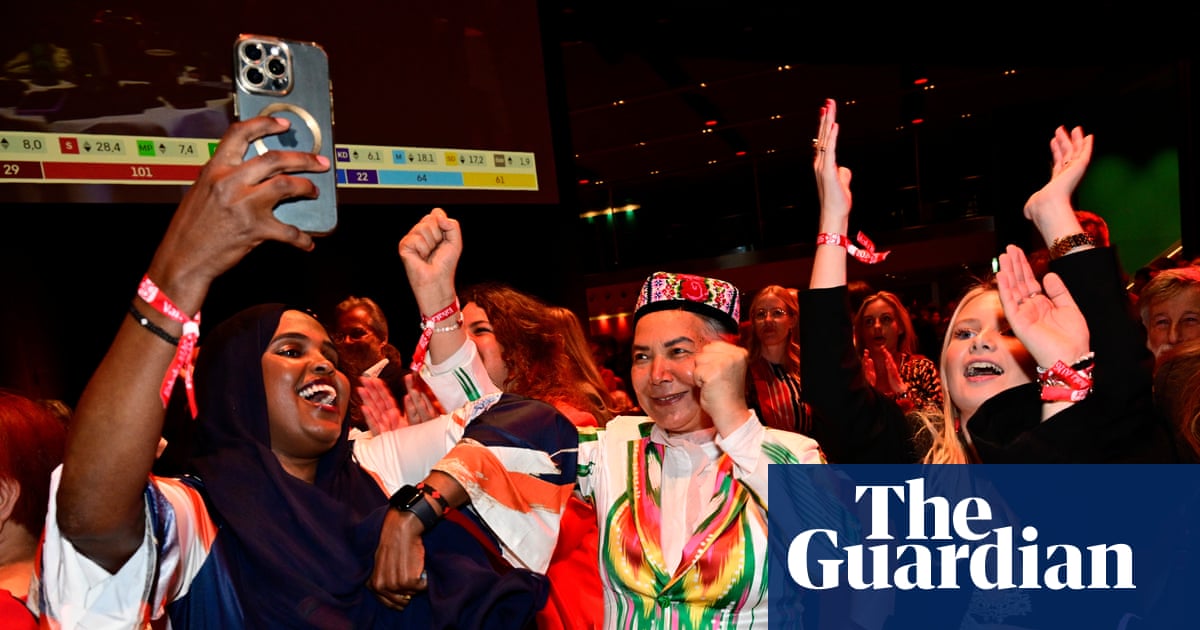
In such an ominous political landscape, the outcome of a cliffhanger Swedish election provides a much‑needed source of optimism – albeit one that comes with heavy caveats. Prior to last Sunday’s poll, the outgoing prime minister, Ulf Kristersson, was explicit that if his rightwing alliance won the largest number of seats, he would invite members of the far-right Sweden Democrats party (SD) to become ministers in the next government.
That would have meant the formal end of the SD’s pariah status in Swedish politics, after four years in which its parliamentary votes have propped up Mr Kristersson’s minority administration. In a Europe where firewalls and cordons sanitaires against the far right have never seemed less secure, another significant threshold would have been crossed.
Voters appear to have instead handed the narrowest of victories to the Social Democratic leader, Magdalena Andersson, and the progressive bloc of parties. The SD’s share of the vote fell for the first time since it began its political journey as an openly neo-Nazi party in the late 1980s, and it slipped from second to third place behind the conservative Moderates.

So much for the good news. As in Germany and France, the Swedish far right has not needed to win power for its agenda to become normalised and partially implemented. Mr Kristersson’s reliance on the SD resulted in a government that behaved with performative cruelty towards migrants, and enacted much of its draconian programme on deportations and citizenship restrictions. Ms Andersson has responded by offering a milder version of the same approach to immigration and asylum. As it leaked support on the left accordingly, her party recorded its lowest vote share for over a century.
Unless traditional powerhouse parties of European social democracy are more courageous in seeking to shift the dial of political debate, the far right will continue to set its terms. The SD’s chosen slogan for its campaign was “Make Sweden Sweden again” – varying the usual Maga trope in order to stress the core ethnocentric message. From the sidelines its rhetoric will become still more extreme, and the defeat of the rightwing bloc is already being invidiously attributed to foreign-born voters.
Should Ms Andersson eventually succeed in forming a centre-left coalition government, she should counter the forces of division by channelling the best of her own party’s traditions. The Social Democratic party historically dominated Swedish politics through the idea of the Folkhemmet, or People’s Home, which encapsulated the inclusive ethos of a welfare society admired around the world. Locating the resources and ambition to develop a similarly attractive politics of the common good for the 21st century is the urgent task for progressives, in Sweden and beyond.